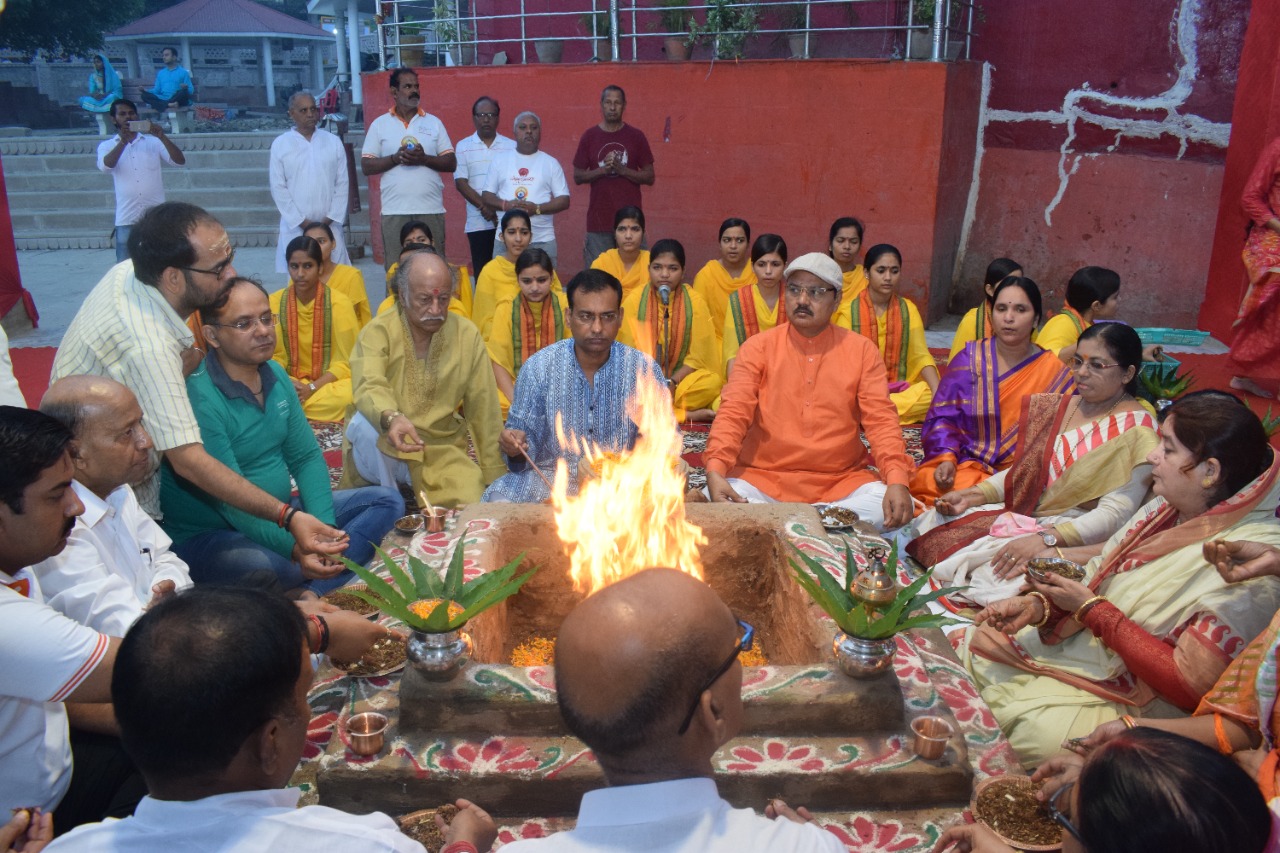
Lolark Shashti is one of Kashi's most moving days. For couples who have waited a long time for a child, it carries enormous emotional weight — and the reality on the ground (a deep, packed stepwell in peak monsoon) can be overwhelming. This guide explains the ritual with respect, and how to experience it calmly.
Come Carrying Hope — We'll Carry Everything Else
For centuries, couples have walked down to Lolark Kund at dawn holding exactly the hope you hold now. There's something quietly beautiful in that: you're joining an unbroken line of faith stretching back nearly a thousand years, on the one day set aside for precisely this longing. Let that be the feeling you arrive with — hope, and a little wonder — not dread.
The practical worries are real too, and almost every couple names the same ones:
"What if we can't even get down the steps in that crowd?"
"We don't know the exact ritual — what if we do it wrong?"
"Will people stare at us? We want this to stay private."
"It's monsoon — how do we even reach the kund if the lanes are flooded?"
"Will someone try to take advantage of us on a day we're this vulnerable?"
Set all of that down for a moment. None of these are yours to solve on the morning itself. The ritual is yours; the logistics, the crowd, the priest and the transport are ours. Your only job on the day is to be present for what matters.
A note of sensitivity: we help couples with the logistics and dignity of this visit. We make no promises about outcomes — this is a matter of faith. Everything is handled privately and without pressure.
How We Make the Morning Feel Calm and Private
Here's what the day feels like when it's handled for you — quiet, unhurried, and dignified:
You're met, not left to find your way. Flood-safe auto/e-rickshaw brings you to the nearest safe drop point; no wading through waterlogged gullies.
A calm hand through the crowd. We guide you down toward the kund so you never feel swept along or lost in the shoulder-to-shoulder press.
A priest ready for your sankalp. The vow, the offering and the dip are done correctly, in order, without you second-guessing a thing.
A quiet waiting spot for family members — especially elders — who would rather not enter the crush.
Complete privacy. No touts, no pushing, no cameras in your face at the most personal moment of the trip.
When it's arranged this way, couples tell us the same thing afterwards: they finally got to feel the day instead of fighting it.
For couples planning to visit Lolark Kund around the provisional 17 Sep 2026 observance: confirm the temple date before booking date-specific queue assistance, priest coordination or transport.
🙏 Priest for sankalp·🧭 Queue navigation help·🪑 Calm family waiting spot·🔒 Handled with privacy
When Is Lolark Shashti 2026?
Provisional date:17 September 2026 — Bhadrapada Shukla Shashti. Panchang calculations span September 16–17 depending on the tithi convention, so confirm the temple's observance before travel.
The main ritual is at dawn; crowds peak in the early morning, so arriving early with guidance is key.
The Ritual, Explained
At sunrise, couples hoping for a child:
Take a holy dip in the turquoise waters of Lolark Kund.
Leave their wet clothes behind in the tank as an offering.
Offer a specific fruit or vegetable — and take a lifelong vow never to eat that item again.
It is an act of sacrifice and faith. The waters are also traditionally believed to relieve certain skin ailments. Visitors are asked to attend as sincere participants or respectful observers, never as sightseers.
About Lolark Kund
An ancient rectangular stepwell in south Varanasi, near Tulsi Ghat.
Roughly 15 metres deep, reached by about 35 steep stone steps.
On Lolark Shashti it fills with tens of thousands of devotees; a makeshift bazaar surrounds it.
The steep, wet steps in monsoon are the main safety concern — especially for elderly family members.
History: The "Trembling Sun" Stepwell
The name Lolark translates to "trembling sun" — a reference to the shimmering reflection of the sun dancing on the water's surface deep in the well. This is one of Kashi's oldest continuously worshipped sites:
~1000 AD origins, heavily patronised by the Gahadavala kings.
Later structurally enhanced by Queen Ahilyabai Holkar (the same 18th-century queen who rebuilt much of Kashi's sacred architecture).
Beyond fertility, the turquoise waters are traditionally believed to cure severe skin diseases — a belief tied to an 18th-century legend that the King of Cooch Bihar was healed after bathing here.
Knowing the depth of this history helps many couples experience the day as part of a thousand-year tradition rather than a one-off ritual.
What the Day Actually Feels Like (Ground Reality)
First-person accounts describe an atmosphere that is intensely emotional and physically claustrophobic:
A makeshift, colourful bazaar erupts around the kund on the festival day.
Families cook traditional puris on open campfires beside the well.
The narrow steps down into the water become shoulder-to-shoulder at sunrise — the single biggest reason to arrive early and with guidance.
Most devotees who come are childless couples, many from surrounding villages, carrying years of hope — so the mood is prayerful, not festive.
Visitors who are not participating are asked to remain quiet, respectful observers and to avoid photographing couples mid-ritual.
Combine with Kashi Vishwanath (Optional)
Many couples pair the dawn ritual with a Kashi Vishwanath darshan later in the morning. Use an official Sugam Darshan pass to skip the long Sawan-season queues:
Footwear: the stepwell and lanes are wet and slick — wear strapped, grippy sandals, never foam clogs. This matters most on the 35 steps.
Water: carry a personal filter bottle (Sawyer-type).
Boats suspended: the Ganga is usually in flood; plan ghat-side/inland and rely on auto/e-rickshaw.
Go at dawn: cooler, calmer, and safer footing before the biggest crush.
Recommended Local Stops
A gentle post-ritual breakfast nearby: Kachori Sabji at Shivshankar Kachori (Nadesar) or Mangru Heeng Samosa (Bhadaini) — before 10 AM. Full list: Banaras Food Trail.
For couples planning to visit Lolark Kund around the provisional 17 Sep 2026 observance: confirm the temple date before booking date-specific queue assistance, priest coordination or transport.
🙏 Priest for sankalp·🧭 Queue navigation help·🪑 Calm family waiting spot·🔒 Handled with privacy
Frequently Asked Questions
When is Lolark Shashti in 2026?
Lolark Shashti falls on Bhadrapada Shukla Shashti. Varanasi panchang calculations place the relevant tithi around 16–17 September 2026, with 17 September used here provisionally. Confirm the temple's local observance before travel. Varanasi monthly panchang
What is the Lolark Shashti ritual at Lolark Kund?
Couples hoping for a child take a holy dip at sunrise, leave their wet clothes behind in the tank, and offer a specific fruit or vegetable that they vow never to eat again for life. Devotees attend as sincere participants and respectful observers.
Where is Lolark Kund and how deep is it?
It is an ancient rectangular stepwell in south Varanasi near Tulsi Ghat, descending about 15 metres via roughly 35 steep stone steps. On Lolark Shashti it draws tens of thousands, so assistance and careful timing make the visit safer, especially for the elderly.
Is Lolark Shashti only for childless couples?
It is best known as a fertility ritual, but the waters are also traditionally believed to help with skin ailments, and many come simply for darshan and blessings. The atmosphere is intense and emotional; visitors are asked to be respectful.
How do we handle the crowds and reach Lolark Kund during monsoon?
Late August is peak monsoon — lanes are wet and the riverfront can flood. We arrange flood-safe transport to a safe drop point, help navigate the queue, arrange a priest for the sankalp, and provide a calm waiting spot.
Can we combine Lolark Shashti with Kashi Vishwanath darshan?
Yes. Many couples pair the dawn ritual with a Kashi Vishwanath darshan (with a Sugam Darshan pass) and a short inland loop. Our package offers a core half-day service plus optional darshan and city add-ons.
 Lolark Kund lies in the calm southern stretch near Tulsi Ghat — best visited at first light.
![Ghats of Varanasi: Visitor Guide [2026]](/images/maps/varanasi-essential-ghats-circuit-map.jpg)