Kashi Vishwanath Temple & Ganga Aarti
The Pilgrimage That Changes Everything
When you search "kashi vishwanath temple aarti," "ganga aarti kashi," or "ganga aarti in kashi," you're not just planning an itinerary. You're embarking on what millions of Hindus consider a once-in-a-lifetime spiritual journey—a pilgrimage that is believed to grant moksha (spiritual liberation) simply through sincere devotion.
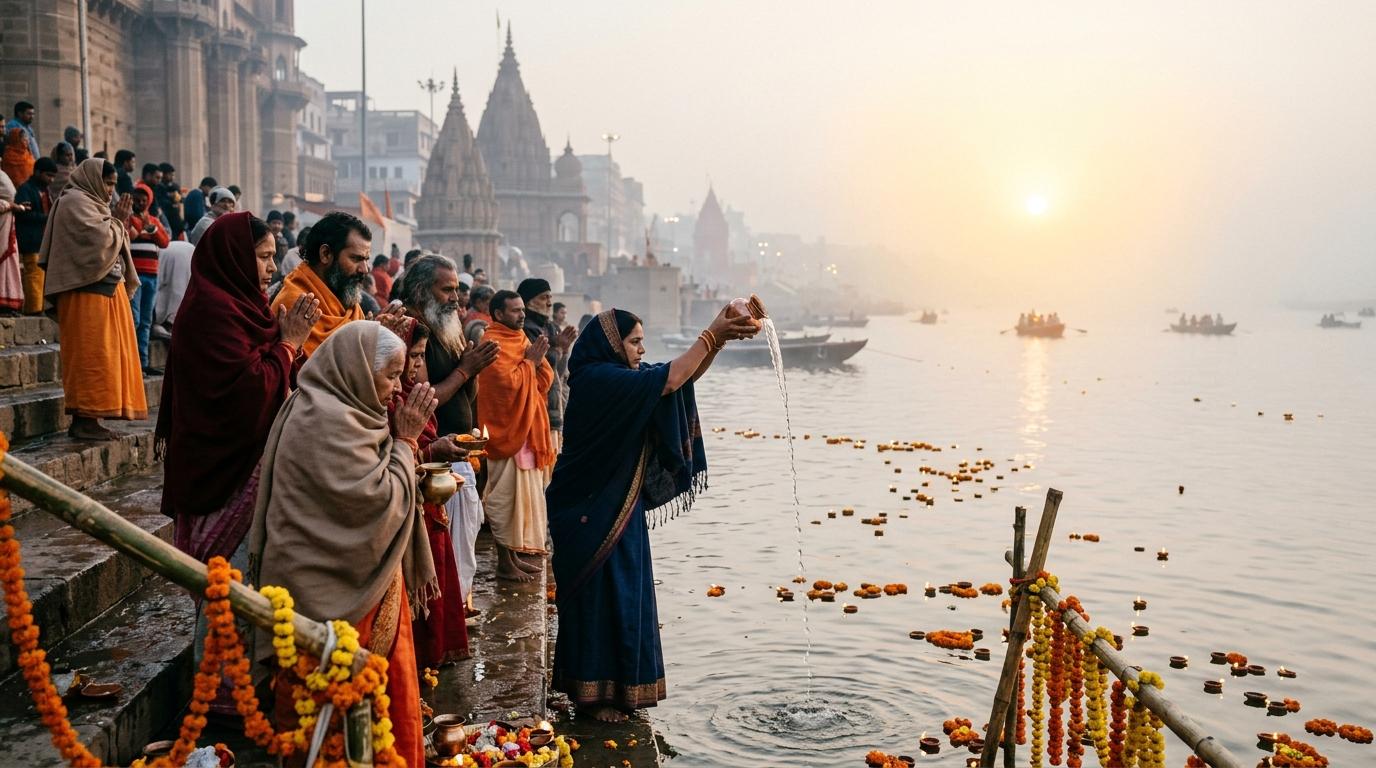
This guide covers both the Kashi Vishwanath aarti timing inside the temple and how to combine it with the famous ganga aarti in kashi at Dashashwamedh Ghat.
This guide is written for:
- First-time pilgrims: Who want to understand the temple's significance before arriving
- Returning seekers: Who want to deepen their practice and experience
- Curious travelers: Who want spiritual depth alongside cultural tourism
Unlike secular tourist guides, this page honors the temple's sacred purpose while providing practical logistics.
Need a Finished Package, Not Just the Guide?
If your question is "who can plan the darshan, pickup, lockers, boat option and evening Aarti flow for us?" then use the booking guide:
If the package also needs hotel or family pacing, then use:
Kashi Vishwanath Temple Significance
What Makes Kashi Vishwanath “The Holiest”?
In Hinduism, there are four primary pilgrimage destinations called "Char Dham" (four abodes):
- Varanasi (Kashi) — Kashi Vishwanath Temple
- Rishikesh — Badrinath Temple
- Dwarka — Dwarkadhish Temple
- Rameswaram — Ramanathswamy Temple
Of these four, Kashi Vishwanath is considered the supreme gateway to moksha because of a specific theological concept.
The Jyotirlinga Principle
"Jyotir" = light; "Linga" = form of Lord Shiva
There are 12 Jyotirlingas (supreme manifestations of Shiva) across India. Kashi Vishwanath is not just one of the 12—it's the most accessible to pilgrims, located in the holiest city (Kashi), on the holiest river (Ganga), making it the most spiritually concentrated location.
Hindu belief: The Jyotirlinga represents Shiva in his pure, formless light. Witnessing it (darshan) in this location is believed to purify the soul of karmic debt.
The Moksha Concept Explained
Moksha (also spelled "Mukti") means liberation from the cycle of birth-death-rebirth (samsara). Hindu philosophy sees physical life as temporary; the goal is spiritual freedom.
Why Kashi Vishwanath grants moksha:
- Lord Shiva is believed to reside here permanently (not just visited, but dwelling)
- Simply dying in Kashi and having one's ashes immersed in the Ganges here grants moksha (the ultimate Hindu belief)
- This isn't reserved for the wealthy or enlightened—even an ordinary person's death here is spiritually liberated
- Therefore, pilgrimage here while alive is seen as preparation for that ultimate moment
Practical implication for your visit: This isn't a casual sightseeing location. Approach with reverence. Local pilgrims believe their presence here influences their spiritual destiny.
Historical Timeline (800 Years of Continuous Worship)
1100 CE (Approximate): Original temple believed built by King Chandradeva. Destroyed and rebuilt multiple times during Muslim rule (when Hindu temples were often targeted).
1776: Current temple structure rebuilt by Maharani Ahilyabai Holkar of Indore (the same female ruler who rebuilt Dashashwamedh Ghat). Her version is the foundation of today's temple.
1835: Gold plating donated by Maharaja Ranjit Singh of Punjab—the temple's gold dome becomes iconic.
1991–2007: "Shringar Mandir" (beautification project) modernizes access, improves security, preserves sanctity.
2021: Kashi Vishwanath Corridor opens—modern walkway connecting temple to Dashashwamedh Ghat. A ₹339 crore ($50 million USD) development project.
2026 Current Status: Active, well-maintained, receiving 10,000–15,000 pilgrims daily (30,000+ on festival days).
Temple Darshan Process
Darshan Types & Timing (Multiple Entry Options)
Understanding the Kashi Vishwanath darshan time options helps you plan efficiently. The Kashi Vishwanath temple darshan procedure varies based on which darshan type you choose.
Type 1: General (Sthul) Darshan
- Cost: Free
- Duration: 30 minutes–2 hours depending on crowd
- Timing: 4:00 AM–11:00 PM daily
- Process: Queue with other pilgrims, pass security, enter temple, view Shivling, receive prasad
Type 2: Sugam Darshan (Recommended for first-timers)
- Cost: ₹300–500
- Duration: 10–15 minutes total
- Timing: 6:00 AM–6:00 PM daily
- Benefits: Dedicated entry, Shastri (priest) accompaniment, faster access, special prasad
- How to book: Online at shrikashivishwanath.org or at temple counter
Type 3: Aarti Darshan (Special experience)
- Cost: ₹500–1,000 (depends on aarti type)
- Times: Mangala Aarti (5:45 AM), Bhog Aarti (11:15 AM), Sandhya Aarti (7:15 PM), Shringaar Aarti (9:00 PM)
- Duration: 30 minutes (aarti itself) + 15 min darshan = 45 min total
- Benefit: Witness priest performing rituals directly
- Booking: Online 1 week in advance recommended
Step-by-Step Darshan Process (First-Timer’s Guide)
Step 1: Arrival (Plan 30–45 min travel)
- From hotel, take taxi/auto to "Kashi Vishwanath Temple" (most famous address in Varanasi)
- Temple entrance has multiple gates (Gate 1, 2, 3, 4)
- First-timers: Enter via Gate 4 (marked for general darshan; clearest directions)
Step 2: Belongings Management (5 min)
- Mobile phones NOT allowed inside temple proper
- Shoes removed at entrance
- Valuables (wallet, keys) stored in paid lockers (₹20–50) at nearby shops
- Carry: Small prayer book (optional), flowers for offering (₹50 from vendors)
Step 3: Security Screening (10–15 min)
- Police-managed metal detector
- Pat-down check
- Bag inspection (if carrying bag)
Step 4: Entry Queue Management (Varies 15 min–2 hours)
- Separate lines: General, Sugam Darshan, VIPs, priests
- Move in single file down narrow corridor
- Priest/volunteer directs queuing (follow their hand gestures)
Step 5: Shivling Darshan (30 seconds–2 min)
- You reach the main sanctum (garbha griha = innermost sacred chamber)
- The Shivling (stone phallus symbol of Shiva) is before you
- Bow, make silent prayer/wishes, offer flowers if carrying
- Priest may apply tilak (mark) on forehead
- Move forward; don't linger (hundreds waiting behind you)
Step 6: Prasad Distribution (1 min)
- Exit the temple
- Priest or volunteer hands you sacred food (typically sugar/jaggery candy, or wheat porridge)
- Consume immediately or save as blessed offering
Step 7: Post-Darshan Reflection (5–10 min)
- Walk to nearby café or ghat
- Sit, reflect on your experience
- Many pilgrims cry here (emotional release common after darshan)
- Perfectly normal and respected
Total time in temple: 45 minutes–2.5 hours (depending on crowd and whether you arrive during peak hours)
Best Times for Shorter Queues
Weekday mornings (Mon–Thu, 7:00–9:00 AM): 30 min queue, pleasant atmosphere Weekday afternoons (Mon–Thu, 1:00–3:00 PM): 20–30 min queue, fewer foreigners Festival nights (Maha Shivaratri, Janmashtami): Skip entirely; 10+ hour waits
Worst times: Friday–Sunday evenings (tourist surge), festival days (10,000+ person queues)
Kashi Vishwanath Temple Dress Code (What to Wear)
There is no rigidly enforced uniform, but the temple is an active place of worship, so modest, respectful clothing is expected — and dressing right also means a smoother security check.
- Is jeans allowed in Kashi Vishwanath Temple? Yes, clean, non-torn jeans are generally allowed for both men and women. Avoid ripped jeans, very short shorts, or sleeveless/revealing tops.
- Dress code for ladies: Salwar kameez, saree, kurti with leggings, or any outfit that covers shoulders and knees is ideal. A dupatta or light scarf is handy to cover the head inside the sanctum.
- Dress code for men: Full-length trousers or a kurta-pyjama work best; many pilgrims wear a dhoti for aarti darshan. Shorts are best avoided.
- Practical tip: Footwear and leather items (belts, wallets) must be removed/deposited before entry, so wear slip-on shoes and carry minimal metal to speed up the queue.
Getting to the Temple from Varanasi Junction & Airport
Most pilgrims arrive via Varanasi Junction (Cantt) railway station. A shared auto to Godowlia runs ₹30–50 per seat; a reserved auto from the railway station to Kashi Vishwanath Temple is roughly ₹150–250, and a pre-booked taxi that clears the Godowlia corridor barricade is ₹300–500. From the airport it is 25–26 km. For fixed, tout-free fares and corridor drop, see the Varanasi Airport to Kashi Vishwanath taxi guide or WhatsApp 💬 99354 74730.