Tour Package

3 Day Varanasi Tour Package | Complete Kashi Cultural Immersion

Slow-paced 3-day Kashi immersion with twin boat rides, complete temple loop, Sarnath deep dive, Ramnagar Fort, silk ateliers, cultural performances and premium concierge support.

TL;DR: 3-day Kashi package (₹7,988+) with 2 nights hotel, twin boat rides (sunrise + sunset), complete 10+ temple circuit, Sarnath deep dive, Ramnagar Fort & museum, silk weaving atelier, guided shopping crawl, and optional cultural performances. The complete Varanasi experience without rushing a single moment. Scroll for day-by-day breakdown, seasonal guide, pricing tiers, and hotel area recommendations.

Why Three Days Is the Sweet Spot

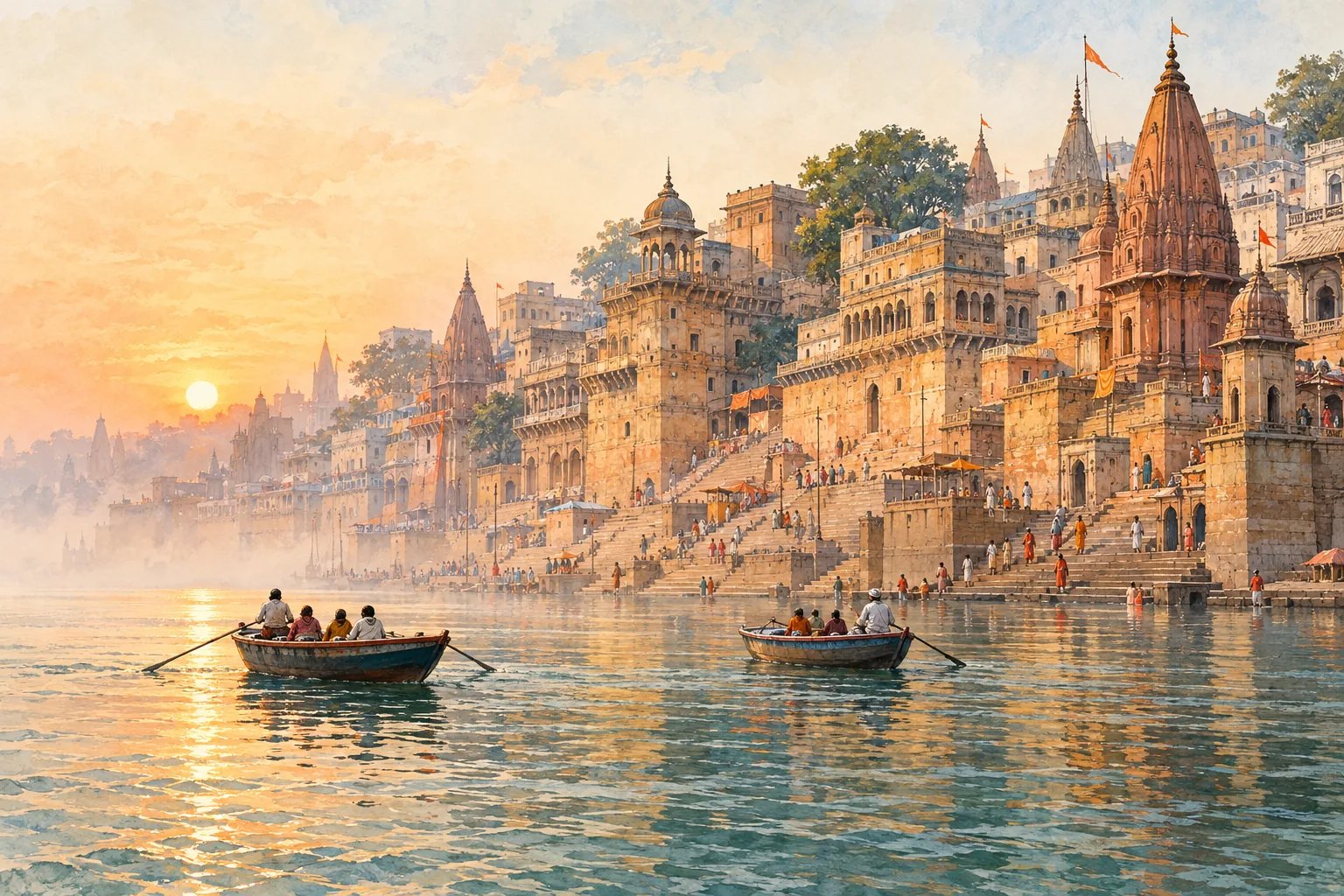
Varanasi ghats at dawn — three days gives you time to absorb this slowly Dawn on the ghats — by Day 3 you'll recognise individual boatmen, know which chai stall opens earliest, and understand why people keep coming back.

After running this route hundreds of times, we can tell you — three days is where Varanasi opens up. Two days covers the spiritual core but feels compressed (you skip either Ramnagar or the silk ateliers, and rush through Sarnath). Four days is luxurious but most travellers can't spare it. Three gives you breathing room to absorb Kashi's layered rituals, heritage pockets, and culinary chaos without ever feeling behind schedule.[^overview]

The critical additions over a 2-day package: you get Ramnagar Fort (the Maharaja's 1750 palace with its UNESCO-listed Ramlila tradition), an extended temple circuit (10+ temples vs 7–8), a deep silk weaving atelier visit (90 minutes with master weavers, not a 15-minute peek), and the cultural evening — a private classical music recital or Kathak performance in an intimate heritage setting.

  • Duration: 3 days / 2 nights with curated 3-star+ stay options.
  • Perfect for: Spiritual seekers, families, photography enthusiasts, cultural travellers, and anyone who wants the unhurried version.[^audience]
  • Core experiences: Both boat rides (sunrise + sunset), Ganga Aarti, complete temple circuit, Sarnath deep dive, Ramnagar Fort, silk weaving atelier, guided shopping, curated food walks, cultural performance.

Same-Day vs 2-Day vs 3-Day — Which Is Right?

FactorSame-Day2-Day3-Day (this page)
Duration8–10 hours2 days / 1 night3 days / 2 nights
Boat rides1 (sunset)2 (sunrise + sunset)2 (+ optional Ramnagar boat)
Temples5 (core loop)7–810+ (complete circuit + Tridev, ghat shrines)
SarnathQuick 60 minFull 2–2.5 hrsDeep dive 3+ hrs (museum, monasteries)
Ramnagar FortNoOptional add-onFull visit included
Silk shoppingQuick peekBrief atelier visitDeep 90-min atelier + guided shopping crawl
Cultural performancesNoNoClassical music or Kathak evening
Food1–2 quick stopsCurated food walkMultiple food crawls + evening tasting
Sunrise experienceNoYesYes
Price from₹2,500₹3,999₹7,988
Best forTransit / layoverWeekend / first-timersComplete immersion / families

Arrival & Check-in (12:00 – 13:30)

Fly into Lal Bahadur Shastri Airport (VNS) or arrive by rail at Varanasi Junction / Cantt. Chauffeured pickup in a sanitized AC vehicle, hotel check-in, briefing over welcome drink, and a quick lunch stop.[^arrival]

Flight timing note: Ideal arrival is by noon. If your flight lands after 3 PM, we compress the temple circuit to the 2–3 essential stops (Kaal Bhairav + Kashi Vishwanath + Annapurna) and prioritize the sunset boat ride. Remaining temples shift to Day 2 morning.

Detailed Itinerary

Arrival & Check-in (12:00 – 13:30)

Fly into Lal Bahadur Shastri Airport (VNS) or arrive by rail at Varanasi Junction / Cantt. Chauffeured pickup in a sanitized AC vehicle, hotel check-in, briefing over welcome drink, and a quick lunch stop.[^arrival]

Gaya Varanasi Ancestor Liberation Circuit

Flight timing note:

Ideal arrival is by noon. If your flight lands after 3 PM, we compress the temple circuit to the 2–3 essential stops (Kaal Bhairav + Kashi Vishwanath + Annapurna) and prioritize the sunset boat ride. Remaining temples shift to Day 2 morning.

Kaal Bhairav Temple (13:30 – 14:15)

Kaal Bhairav Temple — the divine guardian of Kashi Kaal Bhairav — the Kotwal (divine police chief) of Kashi. Traditional belief says you must seek his permission before exploring the city.

We start here, following the pilgrimage sequence locals have followed for centuries. Kaal Bhairav is the guardian deity of Kashi — the tradition says no journey into the city's sacred geography begins without his permission.[^kaal]

Unique tradition: This is one of the rare Hindu temples where alcohol is offered as part of the ritual — madira (liquor) offering is the traditional practice. Your guide handles the cultural context.

Entry: Free. Hours: 5:00 AM – 10:00 PM. Time needed: 30–40 minutes. Queue is typically short.

Kaal Bhairav Temple (13:30 – 14:15)

Kaal Bhairav — the Kotwal (divine police chief) of Kashi. Traditional belief says you must seek his permission before exploring the city.

Ayodhya Varanasi Complete Guide

Unique tradition:

This is one of the rare Hindu temples where alcohol is offered as part of the ritual — madira (liquor) offering is the traditional practice. Your guide handles the cultural context.

Prayagraj To Varanasi Shortest Route Comparison

Entry:

Free. Hours: 5:00 AM – 10:00 PM. Time needed: 30–40 minutes. Queue is typically short.

Kashi Vishwanath Complex (14:30 – 16:00)

Kashi Vishwanath — the Ganga Dwar entrance to the spiritual axis of Varanasi The Ganga Dwar entrance to Kashi Vishwanath — where the ₹339-crore corridor meets the 1780 temple.

The spiritual axis of Varanasi. With 3 days, there's no rush — you get the full complex, not just the Jyotirlinga darshan. The circuit covers three temples walkable within the KV Corridor:[^kv]

  1. Kashi Vishwanath Temple — One of twelve Jyotirlingas. Rebuilt 1780 by Maharani Ahilyabai Holkar. Daily footfall: 10,000–15,000 pilgrims.
  2. Annapurna Temple — Goddess of nourishment, famous for the annadan (community kitchen) tradition.
  3. Vishalakshi Temple — One of 51 Shakti Peethas. Adjacent to KV, easy to include in the same visit.

Practical notes:

  • Sugam Darshan (fast-track): ₹300. Reduces queue from 20–120 min to 10–15 min. Book at shrikashivishwanath.org or same-day at the helpdesk.
  • Security: Mobile phones, leather items, and cameras prohibited inside. Lockers ₹20–50 at nearby shops. Enter through Gate 4 for shortest queue.
  • Queue reality: Weekday afternoons (Mon–Thu): 20–40 min. Weekends: 60–120 min. Festival days: 2–10+ hours.
  • KV Corridor accessibility: The 2021 corridor has accessible pathways suitable for elderly visitors and wheelchairs.
Kashi Vishwanath Complex (14:30 – 16:00)

The Ganga Dwar entrance to Kashi Vishwanath — where the ₹339-crore corridor meets the 1780 temple.

Kashi Vishwanath Temple

One of twelve Jyotirlingas. Rebuilt 1780 by Maharani Ahilyabai Holkar. Daily footfall: 10,000–15,000 pilgrims.

Annapurna Temple

Goddess of nourishment, famous for the annadan (community kitchen) tradition.

Prayagraj Varanasi Same Day Timeline

Vishalakshi Temple

One of 51 Shakti Peethas. Adjacent to KV, easy to include in the same visit.

Practical notes:

Prayagraj Varanasi Same Day Timeline

Sugam Darshan (fast-track):

₹300. Reduces queue from 20–120 min to 10–15 min. Book at shrikashivishwanath.org or same-day at the helpdesk.

Prayagraj To Varanasi Shortest Route Comparison

Security:

Mobile phones, leather items, and cameras prohibited inside. Lockers ₹20–50 at nearby shops. Enter through Gate 4 for shortest queue.

Queue reality:

Weekday afternoons (Mon–Thu): 20–40 min. Weekends: 60–120 min. Festival days: 2–10+ hours.

Ayodhya Varanasi Vande Bharat Taxi Calculator

KV Corridor accessibility:

The 2021 corridor has accessible pathways suitable for elderly visitors and wheelchairs.

Old City Heritage Walk (16:00 – 16:45)

A 45-minute stroll from KV Complex through the living lanes of Varanasi:

  • Vishwanath Gali — Silk shops, religious item stalls, flower garland vendors threading jasmine and marigold.
  • Thatheri Bazaar — Brassware artisans hammering idols and utensils in workshops that have been here for generations.
  • Silk weaving peek — Ducking into a loom workshop for a first taste of the weaving world (the deep atelier visit is on Day 3).
  • Quick food stop — Kachori-sabzi at Ram Bhandar (₹25–35/plate) or a lassi at Blue Lassi Shop (₹60–120) if hunger strikes.[^oldcity][^food]
Old City Heritage Walk (16:00 – 16:45)

A 45-minute stroll from KV Complex through the living lanes of Varanasi:

Ayodhya Varanasi Vande Bharat Taxi Calculator

Vishwanath Gali

Silk shops, religious item stalls, flower garland vendors threading jasmine and marigold.

Ayodhya Varanasi Vande Bharat Taxi Calculator

Thatheri Bazaar

Brassware artisans hammering idols and utensils in workshops that have been here for generations.

Silk weaving peek

Ducking into a loom workshop for a first taste of the weaving world (the deep atelier visit is on Day 3).

Quick food stop

Kachori-sabzi at Ram Bhandar (₹25–35/plate) or a lassi at Blue Lassi Shop (₹60–120) if hunger strikes.[^oldcity][^food]

Sunset Boat Ride (17:15 – 18:15)

Sunset boat ride on the Ganges — golden hour on the ghats Golden hour from the water — the stone steps glow amber as evening prayers begin on individual ghats.

Your private boat departs from Assi Ghat and winds north through the ghat panorama: Tulsi Ghat, Chet Singh (where history buffs get the 1781 battle story), Scindia (the "leaning ghat"), Man Mandir, and onward to Dashashwamedh. Along the way, evening prayers light up on individual ghats. The cremation fires at Manikarnika are visible at a respectful distance — your boatman knows exactly which angle preserves dignity while allowing understanding.[^boat]

Boat pricing (included in package):

TypeCapacityIf Booked Separately
Private rowboat1–4 guests₹1,800–2,400
Private motorboat5–15 guests₹3,500–4,500
Luxury bajraNegotiable₹8,000–15,000+
Sunset Boat Ride (17:15 – 18:15)

Golden hour from the water — the stone steps glow amber as evening prayers begin on individual ghats.

Varanasi Group Boat Cost

Boat pricing (included in package):

Dashashwamedh Ghat Ganga Aarti (18:15 – 19:15)

Ganga Aarti at Dashashwamedh — the emotional peak of Day 1 Seven priests, multi-tiered brass lamps, 800+ onlookers — the moment most travellers describe as the emotional peak of Varanasi.

Seven priests perform a synchronized 45-minute ceremony with multi-tiered brass lamps, conch shells, and sacred chants that build from whisper to crescendo. Your boat anchors in prime position — unobstructed symmetrical view, ideal for photography.[^aarti]

Aarti timing (approximate — shifts gradually through season):

SeasonStart Time
Winter (Nov–Feb)5:15–5:45 PM
Shoulder (Mar, Oct)5:45–6:00 PM
Summer (Apr–Jun)6:30–7:15 PM
Monsoon (Jul–Sep)~6:45 PM

For exact month-by-month aarti + sunrise times, see the seasonal table below.

Dashashwamedh Ghat Ganga Aarti (18:15 – 19:15)

Seven priests, multi-tiered brass lamps, 800+ onlookers — the moment most travellers describe as the emotional peak of Varanasi.

Aarti timing (approximate — shifts gradually through season):

Post-Aarti Food Walk (19:15 – 20:00)

The lanes around Dashashwamedh and Godowlia are at their electric best after aarti:

StopWhat to TryCost
Deena Chaat BhandarTamatar chaat — tangy, spicy, exists nowhere else in India₹30–50
Baba ThandaiAlmond-fennel-saffron cold milk (est. 1943)₹40–80
Keshav Tambul BhandarBanarasi paan — saada ₹20–30, meetha ₹30–50, special ₹50–100₹20–100
Ksheer SagarRabri-jalebi (hot crispy jalebi + cold thick rabri)₹50–80

Seasonal bonus (Nov–Feb): Malaiyo — saffron milk foam cloud dessert. Catch it at Thatheri Bazar the next morning (sold out by 11 AM).

Dinner & overnight at hotel. MAP/AP meal-plan upgrades available at booking.

Post-Aarti Food Walk (19:15 – 20:00)

The lanes around Dashashwamedh and Godowlia are at their electric best after aarti:

Prayagraj To Varanasi Shortest Route Comparison

Seasonal bonus (Nov–Feb):

Malaiyo — saffron milk foam cloud dessert. Catch it at Thatheri Bazar the next morning (sold out by 11 AM).

Family Trip Planning Tips
NIGHT

Dinner & overnight

at hotel. MAP/AP meal-plan upgrades available at booking.

Subah-e-Banaras — Sunrise Boat Ride (Pre-dawn)

Sunrise over the Ganges — the Subah-e-Banaras experience from Assi Ghat The indigo-to-saffron palette lasts roughly 14–18 minutes. Miss early boarding and you compress the best part.

This is the moment that separates a multi-day trip from a day visit. The pre-dawn Ganges is a different river — quieter, cooler, and drenched in ceremony.[^subah]

What unfolds from the boat:

  • Subah-e-Banaras ceremony at Assi Ghat — musicians, chants, cultural performance (not just a religious aarti)
  • Yoga practitioners and devotees taking holy dips as the first light hits
  • Priests performing fire offerings on individual ghats
  • The colour shift (indigo → saffron → gold) lasting 14–18 minutes — the best photography window
  • Manikarnika's eternal flames from a respectful distance

Monthly boarding schedule:

MonthSunriseBoard ByPre-Dawn TempNotes
Oct05:5005:1520–22°CPeak season. Book ahead.
Nov06:1505:3516–18°CBest month. Comfortable cool.
Dec06:4006:0012–14°CLayer up. Fog possible.
Jan06:4806:0010–13°CColdest. Fog risk high. Blankets on boat.
Feb06:3005:5014–16°CGood. Shivaratri month.
Mar06:0005:2018–20°CPleasant pre-summer.
Apr05:3004:5022–24°CEarly start but mild dawn.
May–Jun05:1004:3526–29°CVery early. Hot by 8 AM.
Jul–Sep05:15–05:4004:40–05:1025–27°CMonsoon. Boating may be suspended.

Monsoon fallback (Jul–Sep): If river conditions suspend boating, we pivot to Assi Ghat steps (ground vantage for Subah-e-Banaras) and add an earlier Sarnath morning visit.

Subah-e-Banaras — Sunrise Boat Ride (Pre-dawn)

The indigo-to-saffron palette lasts roughly 14–18 minutes. Miss early boarding and you compress the best part.

Whatsapp Bg

What unfolds from the boat:

Subah-e-Banaras ceremony at Assi Ghat

musicians, chants, cultural performance (not just a religious aarti)

Lucknow Varanasi Flight Train Taxi Comparison

Yoga practitioners and devotees taking holy dips as the first light hits

Priests performing fire offerings on individual ghats

The colour shift (indigo → saffron → gold) lasting 14–18 minutes

the best photography window

Manikarnika's eternal flames from a respectful distance

Monthly boarding schedule:

Ayodhya Varanasi Vande Bharat Taxi Calculator

Monsoon fallback (Jul–Sep):

If river conditions suspend boating, we pivot to Assi Ghat steps (ground vantage for Subah-e-Banaras) and add an earlier Sarnath morning visit.

Sankat Mochan Hanuman Temple (09:30 – 10:15)

Founded by Tulsidas (the poet who wrote the Ramcharitmanas). This is where Varanasi's devout come for travel blessings and to resolve anxieties. The famed besan laddus are legendary — buy a box as prasad. Monkeys are residents; our guide manages the dynamic.

Entry: Free. Time needed: 30–40 minutes.

Sankat Mochan Hanuman Temple (09:30 – 10:15)

Founded by Tulsidas (the poet who wrote the Ramcharitmanas). This is where Varanasi's devout come for travel blessings and to resolve anxieties. The famed besan laddus are legendary — buy a box as prasad. Monkeys are residents; our guide manages the dynamic.

Family Tour Varanasi 3 Day Timeline

Entry:

Free. Time needed: 30–40 minutes.

Durga Kund & Tulsi Manas Temple (10:15 – 11:00)

Two temples, side by side, with different energies:

  • Durga Kund (Monkey Temple): Red sandstone, sacred pond, Shakti traditions. Entry free, open 5:00 AM – 10:00 PM. Watch for aggressive monkeys — bags zipped, food hidden.
  • Tulsi Manas Temple: Where Tulsidas wrote the Ramcharitmanas. The walls are inscribed with verses from the text — the actual poetry carved into marble. Open 5:30 AM – 12:00 PM, 3:30 PM – 9:00 PM (midday closure). Free entry.
Durga Kund & Tulsi Manas Temple (10:15 – 11:00)

Two temples, side by side, with different energies:

Durga Kund (Monkey Temple):

Red sandstone, sacred pond, Shakti traditions. Entry free, open 5:00 AM – 10:00 PM. Watch for aggressive monkeys — bags zipped, food hidden.

Tulsi Manas Temple:

Where Tulsidas wrote the Ramcharitmanas. The walls are inscribed with verses from the text — the actual poetry carved into marble. Open 5:30 AM – 12:00 PM, 3:30 PM – 9:00 PM (midday closure). Free entry.

Banaras Hindu University & New Vishwanath Temple (11:00 – 12:00)

Asia's largest residential university. After the intensity of the old city, BHU's tree-lined drives and manicured lawns feel like a different planet.[^bhu]

  • New Vishwanath Temple (Birla Temple): Free entry. Open 4:00 AM – 12:00 PM, 1:00 PM – 9:00 PM. Marble architecture — the antidote to old-city temple crowds.
  • Bharat Kala Bhavan Museum: Miniature paintings, ancient sculptures, textile collections. One of India's finest university museums. Hours: 10:30 AM – 4:30 PM. Closed: Sundays + university holidays. Entry: ₹20 (Indians), ₹500 (foreigners).
  • Campus drive: 15 peaceful minutes through tree-lined avenues before heading to Sarnath.
Banaras Hindu University & New Vishwanath Temple (11:00 – 12:00)

Asia's largest residential university. After the intensity of the old city, BHU's tree-lined drives and manicured lawns feel like a different planet.[^bhu]

New Vishwanath Temple (Birla Temple):

Free entry. Open 4:00 AM – 12:00 PM, 1:00 PM – 9:00 PM. Marble architecture — the antidote to old-city temple crowds.

Ayodhya Varanasi Vande Bharat Taxi Calculator

Bharat Kala Bhavan Museum:

Miniature paintings, ancient sculptures, textile collections. One of India's finest university museums. Hours: 10:30 AM – 4:30 PM. Closed: Sundays + university holidays. Entry: ₹20 (Indians), ₹500 (foreigners).

Campus drive:

15 peaceful minutes through tree-lined avenues before heading to Sarnath.

Sarnath Deep Dive (12:30 – 16:00)

Dhamek Stupa at Sarnath — the traditional site of Buddha's first sermon The Dhamek Stupa (43.6m high) — marking the traditional site where the Buddha, already enlightened at Bodh Gaya, delivered his first sermon.

With 3.5 hours (vs 90 minutes on a same-day tour), you get the most thorough Sarnath experience possible. The 10–13 km drive from BHU takes 25–35 minutes.[^sarnath]

What you'll cover:

  1. Dhamek Stupa — 43.6m cylindrical tower with Gupta-period stone carvings. The traditional site of the first sermon (Dhammacakkappavattana Sutta).
  2. Chaukhandi Stupa — Where Buddha first met his five disciples post-enlightenment.
  3. Ashoka Pillar — Original shaft in situ. The Lion Capital (inside the museum) became India's National Emblem.
  4. Archaeological Museum — India's first site museum (est. 1910). 6,832 artifacts. Crown jewel: Lion Capital + Dharmachakra wheel (24 spokes → India's flag).
  5. Mulagandha Kuti Vihar — Modern temple (1931) with Japanese frescoes by Kosetsu Nosu. Sacred Bodhi tree from the Anuradhapura lineage.
  6. International monastery cluster — Thai, Tibetan, Cambodian, Sri Lankan temples (free, open daily). With 3 days, you have time to actually step inside 2–3 monasteries rather than drive past.
  7. 80-ft Buddha statue — The seated bronze Buddha near the monasteries.

Entry fees:

VenueIndiansForeignersHoursClosed
Archaeological Site only₹25₹3006:00 AM – 6:00 PMNever
Museum only₹5₹1009:00 AM – 5:00 PM (last entry 4:30)Fridays + national holidays
Combo (site + museum)₹20₹250
Camera fee₹25₹25
Children under 15FreeFree

Friday fallback: Museum closed → extended archaeological site + Mulagandha Kuti Vihar + monastery deep dives. You still experience 80% of Sarnath.

Sarnath Deep Dive (12:30 – 16:00)

The Dhamek Stupa (43.6m high) — marking the traditional site where the Buddha, already enlightened at Bodh Gaya, delivered his first sermon.

Whatsapp Bg

What you'll cover:

Dhamek Stupa

43.6m cylindrical tower with Gupta-period stone carvings. The traditional site of the first sermon (Dhammacakkappavattana Sutta).

Chaukhandi Stupa

Where Buddha first met his five disciples post-enlightenment.

Ashoka Pillar

Original shaft in situ. The Lion Capital (inside the museum) became India's National Emblem.

Gaya Varanasi Ancestor Liberation Circuit

Archaeological Museum

India's first site museum (est. 1910). 6,832 artifacts. Crown jewel: Lion Capital + Dharmachakra wheel (24 spokes → India's flag).

Mulagandha Kuti Vihar

Modern temple (1931) with Japanese frescoes by Kosetsu Nosu. Sacred Bodhi tree from the Anuradhapura lineage.

Family Tour Varanasi 3 Day Timeline

International monastery cluster

Thai, Tibetan, Cambodian, Sri Lankan temples (free, open daily). With 3 days, you have time to actually step inside 2–3 monasteries rather than drive past.

80-ft Buddha statue

The seated bronze Buddha near the monasteries.

Entry fees:

Friday fallback:

Museum closed → extended archaeological site + Mulagandha Kuti Vihar + monastery deep dives. You still experience 80% of Sarnath.

Cultural Evening (18:00 – 20:00)

This is the 3-day exclusive — the experience that makes the extra night worth it.

Option A — Private Classical Music Recital (60–90 min, ₹2,000–5,000)

An intimate session in a musician's home, heritage haveli, or hotel courtyard. Varanasi is the historical seat of the Banaras Gharana — one of Hindustani classical music's most important lineages. Expect sitar or sarod (melody) + tabla (rhythm) + tanpura (drone), moving through alap (slow exposition) → jod (rhythmic development) → gat (full composition). Evening ragas like Yaman or Desh, with the artist explaining the emotional structure to listeners. Groups of 5–20 maximum — far more personal than a concert hall.[^culture]

Option B — Kathak Performance (60 min, ₹2,000–5,000)

Solo or duet Kathak in a cultural centre or heritage space. Rhythmic footwork (tatkar), spins (chakkar), and expressive storytelling (abhinaya) depicting episodes from Krishna's life or Radha-Krishna love poetry. Accompanied by tabla, harmonium, and vocalist. Both the Lucknow and Banaras Gharanas of Kathak have strong local practitioners.

Option C — Guided Deep Food Walk (90 min, ₹1,200–2,000)

A structured walk through Godowlia, Chowk, and ghat-side lanes covering 6–8 stops beyond what Day 1's post-aarti walk covered: street chaat stalls, sweet shops, thandai variations, and seasonal specialties.

Dinner & overnight at hotel.

Cultural Evening (18:00 – 20:00)

This is the 3-day exclusive — the experience that makes the extra night worth it.

Option A — Private Classical Music Recital (60–90 min, ₹2,000–5,000)

Option B — Kathak Performance (60 min, ₹2,000–5,000)

Option C — Guided Deep Food Walk (90 min, ₹1,200–2,000)

NIGHT

Dinner & overnight

at hotel.

Ghat-Side Temples (07:00 – 08:30)

These sit along the riverfront, walkable in sequence:

  • Kedareshwar Temple (Kedar Ghat) — Part of the Panch Tirtha pilgrimage circuit. This temple connects Varanasi to the Kedarnath tradition — pilgrims who can't travel to the Himalayas complete their Kedar darshan here. Free entry.
  • Mankameshwar Temple (near Lalita Ghat) — "Wish-fulfilling" Shiva temple. Local families visit before major life decisions. Free entry.
  • Sakshi Vinayak (Scindia Ghat) — "Witness Ganesha," considered the divine witness to all events in Kashi. Small but significant. Free entry.
  • Ratneshwar Mahadev (near Scindia Ghat) — The famous "leaning temple" partially submerged in the Ganges. Lean varies by river level — monsoon shows maximum tilt. Best photographed from the water or adjacent ghat.
Ghat-Side Temples (07:00 – 08:30)

These sit along the riverfront, walkable in sequence:

Ayodhya Varanasi Complete Guide

Kedareshwar Temple (Kedar Ghat)

Part of the Panch Tirtha pilgrimage circuit. This temple connects Varanasi to the Kedarnath tradition — pilgrims who can't travel to the Himalayas complete their Kedar darshan here. Free entry.

Major Cities To Varanasi Transport Comparison

Mankameshwar Temple (near Lalita Ghat)

"Wish-fulfilling" Shiva temple. Local families visit before major life decisions. Free entry.

Sakshi Vinayak (Scindia Ghat)

"Witness Ganesha," considered the divine witness to all events in Kashi. Small but significant. Free entry.

Jageshwar Mahadev Rangbhari Ekadashi 1

Ratneshwar Mahadev (near Scindia Ghat)

The famous "leaning temple" partially submerged in the Ganges. Lean varies by river level — monsoon shows maximum tilt. Best photographed from the water or adjacent ghat.

Tridev Temple (08:30 – 09:00)

Houses Brahma, Vishnu, and Shiva in one temple — rare because standalone Brahma temples are extremely uncommon in Hinduism. Visiting Tridev completes the theological trinity circuit that the core darshan loop (Shaiva at KV + Shakti at Vishalakshi) doesn't cover.

Entry: Free. Hours: 5:00 AM – 12:00 PM, 3:00 PM – 9:00 PM. Time needed: 20–30 minutes.

Breakfast (09:00 – 09:30) at hotel or morning food stall.

Tridev Temple (08:30 – 09:00)

Houses Brahma, Vishnu, and Shiva in one temple — rare because standalone Brahma temples are extremely uncommon in Hinduism. Visiting Tridev completes the theological trinity circuit that the core darshan loop (Shaiva at KV + Shakti at Vishalakshi) doesn't cover.

Family Tour Varanasi 3 Day Timeline

Entry:

Free. Hours: 5:00 AM – 12:00 PM, 3:00 PM – 9:00 PM. Time needed: 20–30 minutes.

Breakfast

(09:00 – 09:30) at hotel or morning food stall.

Ramnagar Fort & Museum (10:00 – 12:00)

The 1750 Chunar sandstone palace of the Kashi Naresh (Maharaja of Benares) sits on the eastern bank of the Ganges, opposite Tulsi Ghat. Built by Maharaja Balwant Singh, it's Mughal-influenced architecture with carved balconies, open courtyards, and two distinctive white towers. The current Maharaja (Anant Narayan Singh) still resides here — when the flag flies, he's in residence.

Getting there: 14 km from main ghats, 30–40 min by road. Fastest route: Ramnagar Bridge from BHU side (~10 min from campus).

What's inside the Saraswati Bhawan Museum:

  • Vintage American cars — A rare automobile collection housed in the fort courtyard.
  • Royal armoury — Swords, ornate matchlocks, daggers from Africa, Burma, Japan, and hookahs. The weapons gallery alone takes 20 minutes.
  • Astronomical clock (1852) — Made by the court astronomer. Shows time, year, month, week, day, and positions of the Sun, Moon, and planets. One of India's most unusual horological artifacts.
  • Durbar Hall — Original frescoes, royal reception rooms, portraits of the Maharaja lineage.
  • Medieval costumes — Including kimkhwa silk (the finest Varanasi weaver product), bejeweled palanquins in lotus-flower shape, and silver elephant saddles.
  • Manuscripts — Religious texts and 535 Mughal miniature-style illustrations with ornate floral borders.

The Ramlila tradition (UNESCO Intangible Cultural Heritage, 2008): This is the world's longest continuous Ramayana performance — 31 days (vs the typical 10-day abridged version elsewhere). Started c. 1830 under Maharaja Udit Narayan Singh, the entire area becomes an open-air theatre with audiences walking alongside performers through permanent stages (Ashoka Vatika, Janakpuri, Lanka). The Maharaja rides a decorated elephant at the head of the procession. Over a million pilgrims attend across the season (September–October). Some roles have been inherited by the same families since 1835.

Hours: 10:00 AM – 4:30 PM (winter), 10:00 AM – 5:00 PM (summer). Closed during Dussehra (the Ramlila is hosted here). Entry: ₹15–75 (Indians), ₹150–200 (foreigners).

Accessibility note: The fort has steps and uneven surfaces — not wheelchair-friendly. Ground-level courtyards are manageable but the white towers require climbing. For elderly travellers who find it difficult, we substitute a relaxed ghat-side morning or car-side photo stop on the bridge with fort views.[^ramnagar]

Ramnagar Fort & Museum (10:00 – 12:00)

The 1750 Chunar sandstone palace of the Kashi Naresh (Maharaja of Benares) sits on the eastern bank of the Ganges, opposite Tulsi Ghat. Built by Maharaja Balwant Singh, it's Mughal-influenced architecture with carved balconies, open courtyards, and two distinctive white towers. The current Maharaja (Anant Narayan Singh) still resides here — when the flag flies, he's in residence.

Prayagraj To Varanasi Shortest Route Comparison

Getting there:

14 km from main ghats, 30–40 min by road. Fastest route: Ramnagar Bridge from BHU side (~10 min from campus).

Whatsapp Bg

What's inside the Saraswati Bhawan Museum:

Vintage American cars

A rare automobile collection housed in the fort courtyard.

Ayodhya Varanasi Vande Bharat Taxi Calculator

Royal armoury

Swords, ornate matchlocks, daggers from Africa, Burma, Japan, and hookahs. The weapons gallery alone takes 20 minutes.

Family Tour Varanasi 3 Day Timeline

Astronomical clock (1852)

Made by the court astronomer. Shows time, year, month, week, day, and positions of the Sun, Moon, and planets. One of India's most unusual horological artifacts.

Durbar Hall

Original frescoes, royal reception rooms, portraits of the Maharaja lineage.

Ayodhya Varanasi Vande Bharat Taxi Calculator

Medieval costumes

Including kimkhwa silk (the finest Varanasi weaver product), bejeweled palanquins in lotus-flower shape, and silver elephant saddles.

Ayodhya Varanasi Vande Bharat Taxi Calculator

Manuscripts

Religious texts and 535 Mughal miniature-style illustrations with ornate floral borders.

Prayagraj Varanasi Same Day Timeline

The Ramlila tradition (UNESCO Intangible Cultural Heritage, 2008):

This is the world's longest continuous Ramayana performance — 31 days (vs the typical 10-day abridged version elsewhere). Started c. 1830 under Maharaja Udit Narayan Singh, the entire area becomes an open-air theatre with audiences walking alongside performers through permanent stages (Ashoka Vatika, Janakpuri, Lanka). The Maharaja rides a decorated elephant at the head of the procession. Over a million pilgrims attend across the season (September–October). Some roles have been inherited by the same families since 1835.

Hours:

10:00 AM – 4:30 PM (winter), 10:00 AM – 5:00 PM (summer). Closed during Dussehra (the Ramlila is hosted here). Entry: ₹15–75 (Indians), ₹150–200 (foreigners).

Ayodhya Varanasi Vande Bharat Taxi Calculator

Accessibility note:

The fort has steps and uneven surfaces — not wheelchair-friendly. Ground-level courtyards are manageable but the white towers require climbing. For elderly travellers who find it difficult, we substitute a relaxed ghat-side morning or car-side photo stop on the bridge with fort views.[^ramnagar]

Silk Weaving Atelier — Deep Visit (12:30 – 14:00)

This isn't the 15-minute peek from Day 1's heritage walk. This is a 90-minute guided session in a dedicated weaver's workshop in one of Varanasi's master weaving clusters (Sarai Mohana, Madanpura, or Kotwa).[^silk]

What unfolds:

  1. Warping demonstration — Setting up the parallel warp threads on the loom. A single saree's warp setup takes a full day.
  2. Jacquard mechanism — See how the punched cards (traditional) or digital input controls which threads lift for each weft pass, creating intricate patterns.
  3. Zari work close-up — Real gold/silver-wrapped thread woven as supplementary weft. Learn the burn test (real gold melts safely; cheap imitation burns) and weight test (quality zari adds 200–400g per saree).
  4. Kadhua technique — The most labour-intensive method, where each motif is woven individually and threads cut behind. A single kadhua saree can take 3–6 months.
  5. Conversation with master weaver — Understand design lineage, family traditions, market pressures, and the tension between handloom heritage and powerloom economics.

Guided shopping (optional, no pressure):

VarietyPrice RangeNotes
Pure Katan Silk₹15,000–50,000+100% silk, 22-carat gold zari, lifetime pieces
Tanchoi₹8,000–25,000Single-warp weave, Persian-origin, subtle elegance
Jamdani₹10,000–30,000+Extra-weft technique, motifs appear to float
Georgette Banarasi₹5,000–15,000Lightweight, silver zari, 10–15 year durability
Organza/Tissue₹3,000–12,000Contemporary designs, lighter weight
Dupattas & Stoles₹500–2,500Best souvenirs for budget-conscious travellers

Authenticity checklist: Look for the GI certification tag (Registration No. 130), Handloom Mark, and Silk Mark (SMOI). If the shop can't show any of these, walk away.

Silk Weaving Atelier — Deep Visit (12:30 – 14:00)

This isn't the 15-minute peek from Day 1's heritage walk. This is a 90-minute guided session in a dedicated weaver's workshop in one of Varanasi's master weaving clusters (Sarai Mohana, Madanpura, or Kotwa).[^silk]

Whatsapp Bg

What unfolds:

Warping demonstration

Setting up the parallel warp threads on the loom. A single saree's warp setup takes a full day.

Jacquard mechanism

See how the punched cards (traditional) or digital input controls which threads lift for each weft pass, creating intricate patterns.

Prayagraj To Varanasi Shortest Route Comparison

Zari work close-up

Real gold/silver-wrapped thread woven as supplementary weft. Learn the burn test (real gold melts safely; cheap imitation burns) and weight test (quality zari adds 200–400g per saree).

Ayodhya Varanasi Vande Bharat Taxi Calculator

Kadhua technique

The most labour-intensive method, where each motif is woven individually and threads cut behind. A single kadhua saree can take 3–6 months.

Family Tour Varanasi 3 Day Timeline

Conversation with master weaver

Understand design lineage, family traditions, market pressures, and the tension between handloom heritage and powerloom economics.

Guided shopping (optional, no pressure):

Ayodhya Varanasi Vande Bharat Taxi Calculator

Authenticity checklist:

Look for the GI certification tag (Registration No. 130), Handloom Mark, and Silk Mark (SMOI). If the shop can't show any of these, walk away.

Shopping Crawl & Farewell (14:00 – 16:00)

A structured 2-hour guided tour through Varanasi's key bazaars. With a guide, you avoid tourist-trap markups and commission-agent shops.[^shopping]

Markets covered:

BazaarWhat to BuyWatch Out
Vishwanath GaliSilk sarees, rudraksha, mala beads, brass idols, pooja thalis, sandalwood itemsHigh-markup tourist zone — negotiate firmly or use for browsing
Thatheri BazaarHand-hammered brass idols (₹200–5,000+), copper vessels, lamps (₹150–2,000), bellsWorking artisan workshops you can watch
GolgharSpices (asafoetida, turmeric, cardamom), packaged sweets (pedas, laddoos, khurchan)Best for takeaway gifts — packaged items last
GodowliaCurated selection with English-speaking staff; post-aarti food stalls nearbyHigher markup but more accessible for tourists

Tourist trap warnings: Commission agents at hotels/ghats lead to 20–40% markup shops. "Government emporium" claims are often false. Powerloom sold as handloom — check for Handloom Mark, slight irregularities (handloom has natural imperfections), and selvedge edges. Pure silk sold as blend — do the burn test (real silk smells like burnt hair).

Culinary farewell:

StopWhatCost
Blue Lassi ShopSignature thick overflowing lassi, 70+ flavours₹60–120
Banarasi paanMeetha or special — the farewell ritual₹30–100
Takeaway sweetsPedas, laddoos, khurchan for home₹200–500/box

Departure (16:00+) — Assisted hotel checkout, onward drop to airport (25 km, 45 min) or railway station.

Shopping Crawl & Farewell (14:00 – 16:00)

A structured 2-hour guided tour through Varanasi's key bazaars. With a guide, you avoid tourist-trap markups and commission-agent shops.[^shopping]

Markets covered:

Prayagraj To Varanasi Shortest Route Comparison

Tourist trap warnings:

Commission agents at hotels/ghats lead to 20–40% markup shops. "Government emporium" claims are often false. Powerloom sold as handloom — check for Handloom Mark, slight irregularities (handloom has natural imperfections), and selvedge edges. Pure silk sold as blend — do the burn test (real silk smells like burnt hair).

Culinary farewell:

Ayodhya Station Confusion Comparison

Departure

(16:00+) — Assisted hotel checkout, onward drop to airport (25 km, 45 min) or railway station.


Where to Stay — Area Guide

AreaBest ForWhyWatch Out
Assi GhatCouples, solo travellers, balancedCafé culture, morning boat access, relaxed vibe. Best for 3-day stays.Some hotels require 10-min walk from car drop
Dashashwamedh / GodowliaFirst-time spiritual visitorsWalking distance to Ganga Aarti, intense Banaras atmosphereNarrow lanes, car can't reach hotel. Not ideal for elderly
Cantonment (Cantt)Families with elders, childrenRoad connectivity, easier pickup/dropLess immersive — daily cab needed for ghats
Sarnath sideBuddhist circuit travellersLess dense, quieterLonger daily commute to ghats and KV

Our recommendation for 3 days: Assi Ghat area — with 3 days you'll use it as a daily base, and Assi rewards repeat visits. Families with elderly should consider Cantonment.

Accommodation Tiers

CategoryExample PropertiesRange (per night, double)
BudgetClean 3-star near ghats₹1,500 – 2,500
Standard3-star+ with partial AC, in-house dining₹3,000 – 5,000
Deluxe4-star, river-view options₹6,000 – 10,000
Luxury5-star / heritage (Taj Ganges, Brijrama Palace)₹10,000+

Everything That's Included (and Not)

IncludedDetails
2 nights hotelDouble/twin, breakfast included. MAP/AP upgradeable.
Private AC cabSedan / Innova Crysta / tempo traveller for full tour duration
Storyteller-guideEnglish-speaking, ritual-savvy, manages queues and logistics throughout
Airport/rail pickup & dropLBS Airport, Varanasi Junction, or Cantt
Sunset + sunrise boat ridesPrivate boat with safety gear, both evenings/mornings
Sarnath entry coordinationTicketing handled, guide narration throughout
Ramnagar Fort visitFull museum access + heritage narration
Silk weaving atelier90-minute deep session with master weaver
UtilitiesParking, tolls, driver allowance, chilled water packs
Not IncludedDetails
Lunches/dinnersUnless MAP/AP upgrade at booking
Sugam Darshan tickets₹300 (fast-track KV access)
Museum camera fees₹25
Cultural performances₹2,000–5,000 (classical music/Kathak)
Food walk upgrade₹1,200–2,000 (guided 90-min walk)
Temple donationsPersonal discretion
Shopping, insurance, gratuitiesPersonal expenses

Transparent Pricing

Package TierWhat's In ItPer Person (twin sharing)
Budget3-star hotel + breakfast + standard cab + boats + guide₹7,988 – 10,000
StandardBetter 3-star + selective meals + dedicated guide₹15,000 – 18,000
Deluxe4-star stay + all meals + premium boats + VIP darshan₹22,000 – 27,000
Luxury5-star/heritage + all meals + private add-ons + cultural evening₹35,000 – 50,000+

Festival pricing: Expect 20–40% surcharge during Dev Deepawali (November), Maha Shivaratri (February/March), and other peak festivals.


Best Time to Visit — Month by Month

MonthTemp RangeCrowd LevelAarti StartSunriseVerdict
Oct22–32°CMedium–High5:45 PM05:50Great — Navratri energy, comfortable weather. Ramnagar Ramlila season.
Nov14–28°CPeak5:30 PM06:15Best month. Dev Deepawali + Kartik Purnima. Book 10–15 days ahead.
Dec8–22°CHigh5:15 PM06:40Excellent — cool, malaiyo season. Fog possible for sunrise.
Jan5–18°CMedium5:30 PM06:48Cold mornings, fog risk. Blankets on sunrise boat.
Feb8–24°CMedium5:45 PM06:30Good. KV crowds spike during Maha Shivaratri.
Mar15–33°CMedium6:00 PM06:00Pleasant shoulder season.
Apr22–40°CLow6:30 PM05:30Hot. Discounts available.
May–Jun28–45°CLow6:45 PM05:10Extreme heat. 30–40% hotel discounts.
Jul–Sep26–35°CLow6:45 PM05:15–05:40Monsoon. Boat rides may be suspended.

Booking Intelligence

  1. Peak season (Oct–Mar): Book 10–15 days ahead. Hotels and premium boats fill fast.
  2. Shoulder (Apr, Sep): 5–7 days notice is sufficient.
  3. Off-season (May–Aug): 2–3 days notice. Discounts of 30–40% on hotels and services.
  4. Late arrivals: Share flight/train details at booking. We restructure Day 1 around your actual landing time.
  5. Dietary needs: Indicate Jain, vegan, sattvic, or allergy requirements upfront. Varanasi is overwhelmingly vegetarian — Jain-friendly by default.
  6. Cultural evening: Book the classical music recital or Kathak performance at booking time — artist calendars fill during peak season.
  7. ID proofs: Keep digital copies for Sugam Darshan. Aadhaar or passport accepted.

What to Pack (3-Day Checklist)

  • Clothing: Modest, loose cotton layers. Shoulders and knees covered for temples. Dupatta/scarf for head cover at KV. A warm layer for December–February sunrise boats (8–13°C on the water). You'll need 2–3 temple-ready outfits.
  • Footwear: Slip-on shoes or sandals — you'll remove them at 10+ temples over 3 days. No leather (prohibited at KV).
  • Essentials: Sunscreen, reusable water bottle, hand sanitizer, power bank, ₹5,000–10,000 cash in small denominations.
  • Shopping prep: Leave space in luggage for silk purchases and packaged sweets. Bubble wrap for brass items.
  • Optional: Mosquito repellent (monsoon), waterproof phone pouch (monsoon boat rides), binoculars (sunrise bird activity), a camera with telephoto for Ramnagar Fort details.

Add-On Experiences

ExperienceDurationPrice RangeBest For
VIP darshan at Kashi Vishwanath (concierge-managed, above Sugam)45 min₹500–1,000Skip-the-line families
Yoga on the ghats (sunrise)60 min₹800–1,500Wellness seekers
Classical music recital60–90 min₹2,000–5,000Culture enthusiasts
Kathak performance60 min₹2,000–5,000Culture enthusiasts
Guided deep food walk (6–8 stops)90 min₹1,200–2,000Foodies
Professional photography session2–3 hrs₹3,000–5,000Couples, families
84-Ghat premium boat tour3–4 hrs₹4,000–8,000Photography / heritage
Heritage decorated boat for Aarti75 min₹6,000–10,000Celebrations, proposals
Yoga/meditation on Saryu or Ganga ghats60 min₹800–1,500Spiritual seekers

Why Kashi Taxi for Your 3-Day Immersion

  • Local concierge desk monitoring festival detours, crowd advisories, and weather alerts in real time. We restructure your day if a procession blocks the old-city route.
  • Verified guides who weave mythology, history, and etiquette — not Wikipedia recitals. They know which KV gate has the shortest queue today and which Ramnagar museum rooms reopen after lunch.
  • Priority access to trusted boats, drivers, hotels, and cultural performers with real-time backup plans.
  • 24/7 WhatsApp support for emergencies, route changes, or "my train is delayed by 3 hours" adjustments.
  • Story-forward guiding that connects mythology, archaeology, and modern living — the thread that makes 3 days feel like a story, not a checklist.

Frequently Asked Questions

Is 3 days enough for Varanasi? Three days is the sweet spot for most visitors. You cover everything the 2-day package includes (sunrise and sunset boats, complete temple circuit, Sarnath, food walks) plus Ramnagar Fort, deeper cultural experiences (classical music, Kathak), extended silk weaving ateliers, and a relaxed shopping crawl. Four days adds Ayodhya or Prayagraj side trips, but 3 days fully absorbs Kashi's core.

What is included in a 3-day Varanasi tour package? 2 nights hotel with breakfast, private AC vehicle throughout, airport/rail pickup and drop, storyteller-guide, sunset and sunrise private boat rides, Sarnath entry coordination, Ramnagar Fort visit, and silk weaving studio access. Optional upgrades include meal plans (MAP/AP), VIP darshan, cultural performances (₹2,000–5,000), food walks, photography tours, and yoga/meditation sessions.

What is the best time to visit Varanasi for 3 days? October to March is ideal — pleasant weather (5–28°C), festival energy (Dev Deepawali, Kartik Purnima, Maha Shivaratri), and comfortable boat rides. November is the single best month. Book 10–15 days ahead during peak winter. May–August is off-season with 30–40% hotel discounts.

How much does a 3-day Varanasi tour package cost? Budget: ₹7,988–10,000 per person twin sharing (3-star, breakfast). Standard: ₹15,000–18,000 (3-star+, selective meals). Deluxe: ₹22,000–27,000 (4-star, all meals, premium boats). Luxury: ₹35,000–50,000+ (5-star/heritage, private add-ons). Festival surcharge of 20–40% applies October–March.

Can I customize the 3-day itinerary? Yes — the itinerary is fully flexible. Common customizations: swap Ramnagar Fort for extra temples, add yoga sessions, extend food walks, include an Ayodhya day trip (requires early start), add a photography tour, or adjust pacing for elderly travellers. Share preferences at booking and we restructure.

Is Ramnagar Fort worth visiting? Yes — the 1750 palace of the Maharaja of Benares houses rare American vintage cars, an 1852 astronomical clock, royal armoury, medieval costumes, and riverside Ganges views. The fort also hosts the UNESCO-recognized 31-day Ramlila tradition (September–October). Allow 1.5–2 hours. Entry ₹15–75 (Indians), ₹150–200 (foreigners).

What is the difference between 2-day and 3-day packages? The 2-day covers the spiritual core — both boat rides, 7–8 temples, Sarnath, and food walk (from ₹3,999). The 3-day adds Ramnagar Fort, extended temple circuit (10+ temples including Tridev and ghat-side shrines), deep silk weaving atelier visit, guided shopping crawl, cultural performances, and breathing room so nothing feels rushed (from ₹7,988).

Where should I stay for a 3-day Varanasi visit? Assi Ghat area for couples and solo travellers (café culture, morning boat access, relaxed vibe). Dashashwamedh/Godowlia for first-time spiritual visitors (walking distance to Ganga Aarti, intense atmosphere). Cantonment for families with elders or children (road connectivity, easier pickup/drop). With 3 days, Assi Ghat is ideal — you have time to explore the lanes daily.

Is the 3-day package suitable for elderly travellers? Yes. Sugam Darshan (fast-track) at KV avoids long queues, the KV Corridor has accessible pathways, Sarnath is flat and wheelchair-friendly, and we add rest stops throughout. Ramnagar Fort has steps and uneven surfaces — we can swap it for a relaxed ghat morning or car-side photo stop. Hotel in Cantonment area ensures easy logistics.

Can I add Ayodhya or Prayagraj to the 3-day package? Yes — both work as Day 3 modifications. Ayodhya is 4–5 hours by road (3 hrs by Vande Bharat); requires early start and replaces Ramnagar Fort and shopping. Prayagraj (Sangam) is 2.5–3 hours. Alternatively, extend to a 4-day package. See our dedicated Ayodhya-Varanasi 3-day tour for the combo circuit.


Location

🚕 Quick Booking

Get instant quote

Prefer talking? Call 80621 82380

Plan your 3-day Kashi stay

Heritage hotels, premium boats, Ramnagar Fort access, and festival-proof routing arranged end-to-end.