I've coordinated Pitru Paksha rites for families in Kashi for years, and the pattern is always the same: the ritual itself is deeply moving, but the logistics — finding an honest purohit, the right samagri, and a spot that isn't swallowed by tourist crowds — are what exhaust people. This guide fixes exactly that.
Performing Shradh in Kashi Is an Act of Love
Before anything practical, hold on to this: what you've come to do is one of the most loving, meaningful things a person can offer. Kashi is the moksha-kshetra — Hindus believe Shradh and Tarpan performed here carry a grace available almost nowhere else, gently releasing ancestors toward peace. You are not "getting through a chore." You are keeping a promise to the people who made you, in the one city where that promise means the most.
The only thing that dulls that feeling is worry — and it's worry you can set down. The concerns we hear most:
"How do I find a purohit I can actually trust — not someone who'll pressure me for money mid-ritual?"
"Where do I even buy the samagri, and what if I get the wrong things?"
"I don't want to do this surrounded by tourists and selfie crowds."
"I'm a daughter performing the rite — will that be a problem here?"
"It's monsoon and the ghats are flooded — how do we manage the elders?"
Breathe. On the morning of the rite, your only responsibility is your ancestors' names and gotra. Everything else — the honest purohit, the exact samagri kit, a calm ghat, the transport — is arranged before you arrive.
How We Make the Rite Feel Calm and Dignified
A verified, respectful purohit who knows the full liturgy and is briefed on your family situation in advance — including if a daughter is the karta.
A quiet, serene ghat (Tulsi or Kedar), seated away from foot traffic, never the Dashashwamedh crush.
The full samagri kit ready — no hunting shops in the rain; you carry only the names and gotra.
Dakshina quoted in writing beforehand — no "give as your heart says" pressure at the emotional moment.
Flood-safe auto/e-rickshaw transport and, if you wish, a calm riverside stay within walking distance for elders.
Families tell us this is what let them simply grieve and honour — instead of managing a city.
🪔 Shradh & Pind Daan — a verified purohit, a calm ghat
We connect you with a vetted Kashi purohit, arrange the full samagri kit (til, jau, kusha), and give you a serene spot at Tulsi or Kedar Ghat — away from the Dashashwamedh crowd. Dakshina quoted upfront in writing, no last-minute demands.
🙏 Verified Kashi purohit·📜 Dakshina fixed in writing·🧺 Samagri kit arranged·🚗 Flood-safe transport
Why Tulsi Ghat & Kedar Ghat (not Dashashwamedh)
Most first-time visitors assume Shradh happens at the famous Dashashwamedh Ghat. It doesn't have to — and it shouldn't, if you want a calm ceremony. During Pitru Paksha (and especially the monsoon quarter), Dashashwamedh is dense with tourists, aarti crowds, and photographers.
Ghat
Character
Why families choose it
Tulsi Ghat
Quiet, southern, historic (linked to Tulsidas)
Serene mornings, resident purohits, easy Ganga access for Tarpan
Kedar Ghat
Peaceful, temple-side, south Varanasi
Dignified setting, less foot traffic, strong purohit tradition
Dashashwamedh Ghat
Loud, crowded, tourist-heavy
Best avoided for solemn rites
Both Tulsi and Kedar sit in the calmer southern stretch near Assi, away from the Godowlia chaos.
Why dawn matters: experienced travellers on Varanasi forums are unanimous — do outdoor rituals at first light. In the pre-monsoon window temperatures hit 40–42°C, so the practical local rule is to be at the ghats by around 5:30 AM (when Assi Ghat's Subah-e-Banaras aarti begins) and wrap up before roughly 9 AM, then retreat from the heat. Dawn is also when the ghats are least crowded — ideal for a solemn rite.
When to Perform: Pitru Paksha 2026 Dates
Pitru Paksha 2026: September 26 – October 10.
Your tithi: Shradh is ideally done on the lunar day (tithi) that matches your ancestor's passing.
Sarva Pitru Amavasya (final day): used when the exact tithi is unknown, or for all ancestors together.
Varshik Shradh: the annual death-anniversary rite can be done at these same ghats year-round — you don't have to wait for Pitru Paksha.
Because this is Kashi's busiest ritual fortnight, purohits and morning slots fill fast. Book early.
The Rite, and Why Kashi
Varanasi is a moksha kshetra — alongside Gaya, it is considered one of the most potent places on earth to perform ancestral rites and help a departed soul's onward journey. That is why families travel from across India specifically to do Shradh here.
Tarpan — offering water mixed with black sesame (til) to the ancestors from the ghat steps.
Shradh — the fuller ceremony with sankalp, pind offerings, and feeding of the departed's soul.
Pind Daan — offering pind (balls of rice and black sesame); many families extend this to Gaya (see below).
A verified purohit walks you through each step and the Sanskrit sankalp, using your ancestors' names and gotra.
Who Performs the Rite (Including Daughters)
Traditionally the karta (the person performing the rite) is a male descendant — the belief links ancestral connection to the male line. In practice, Kashi's discourse has moved on: women, including daughters, increasingly perform Tarpan and Shradh independently, and resident purohits will guide them fully. If you are a daughter performing rites for a parent, tell us in advance and we brief the purohit so the ceremony proceeds with dignity and no awkwardness.
Where to Stay for the Rites
Families who want to be within walking distance of the calm southern ghats often prefer heritage riverside stays such as Guleria Kothi near the Tulsi/Assi stretch — quiet, close to the ritual ghats, and comfortable for elders. We can match a vetted stay to your budget and pair it with pickup so you are not dragging luggage through the gullies.
Samagri (Items) Checklist
You carry only the details; we arrange the kit. A standard Shradh kit includes:
Black sesame seeds (til) and barley (jau)
Kusha grass and a cotton sacred thread (janeu)
Raw rice, flour for pind, and a kalash of Ganga water
Flowers, roli, and a simple dona-pattal set for offerings
Cost & Dakshina — Transparent Ranges
Travellers' number-one worry (all over Reddit and travel forums) is hidden costs and on-the-spot dakshina demands. We remove that:
What
Typical range (2026)
Single ritual — Tarpan / simple Shradh
₹5,000 – ₹8,000
Full Pind Daan with havan & extended puja
₹8,000 – ₹11,999
Combined 1-day package (pooja + hotel + cab)
from ₹11,000
Dakshina is quoted in writing before you arrive. No "give as your heart says" pressure mid-ceremony.
Pair It with Gaya (Optional Extension)
Many families complete the ancestral circuit by extending to Gaya (and Prayagraj's Triveni Sangam). If that's your plan, the sequencing, itinerary and vehicle options are covered here:
🪔 Shradh & Pind Daan — a verified purohit, a calm ghat
We connect you with a vetted Kashi purohit, arrange the full samagri kit (til, jau, kusha), and give you a serene spot at Tulsi or Kedar Ghat — away from the Dashashwamedh crowd. Dakshina quoted upfront in writing, no last-minute demands.
🙏 Verified Kashi purohit·📜 Dakshina fixed in writing·🧺 Samagri kit arranged·🚗 Flood-safe transport
Frequently Asked Questions
Which is the best ghat for Shradh and Tarpan in Varanasi?
For calm, dignified rites most families choose Tulsi Ghat or Kedar Ghat rather than the crowded Dashashwamedh Ghat. Both are quiet in the early morning, have resident purohits who know the full liturgy, and sit close to the Ganga for Tarpan. We seat your family away from the main foot traffic so the ritual stays serene.
When is Pitru Paksha in 2026?
In 2026 Pitru Paksha runs from September 26 to October 10. Shradh is performed on the tithi matching your ancestor's date of passing; Sarva Pitru Amavasya on the final day is used when the exact tithi is unknown. Book your purohit and slot early — this is Varanasi's busiest ritual fortnight.
What samagri (items) are needed for Shradh and Tarpan?
Core items are black sesame (til), barley (jau), kusha grass, raw rice, water in a kalash, a cotton thread (janeu), flowers, and cooked pind for Pind Daan. We arrange the full samagri kit so you don't hunt for shops — you only carry your ancestors' names and gotra details.
How much does Shradh in Varanasi cost, including dakshina?
A single ritual with a verified purohit and samagri typically runs ₹5,000–₹11,999 depending on the rite. We quote the dakshina in writing before you arrive so there are no last-minute demands.
Can a daughter or woman perform Shradh in Varanasi?
Yes. Women — including daughters — increasingly perform Tarpan and Shradh, and Kashi purohits will guide them through the sankalp and offerings. Tell us your family situation and we brief the purohit in advance.
Are boat rides available for Tarpan during Pitru Paksha?
During the monsoon the Ganga is often in flood and wooden boats are suspended, so Tarpan is done from the ghat steps rather than mid-river. We plan everything ghat-side and inland, using auto/e-rickshaw transport to bypass waterlogged lanes.
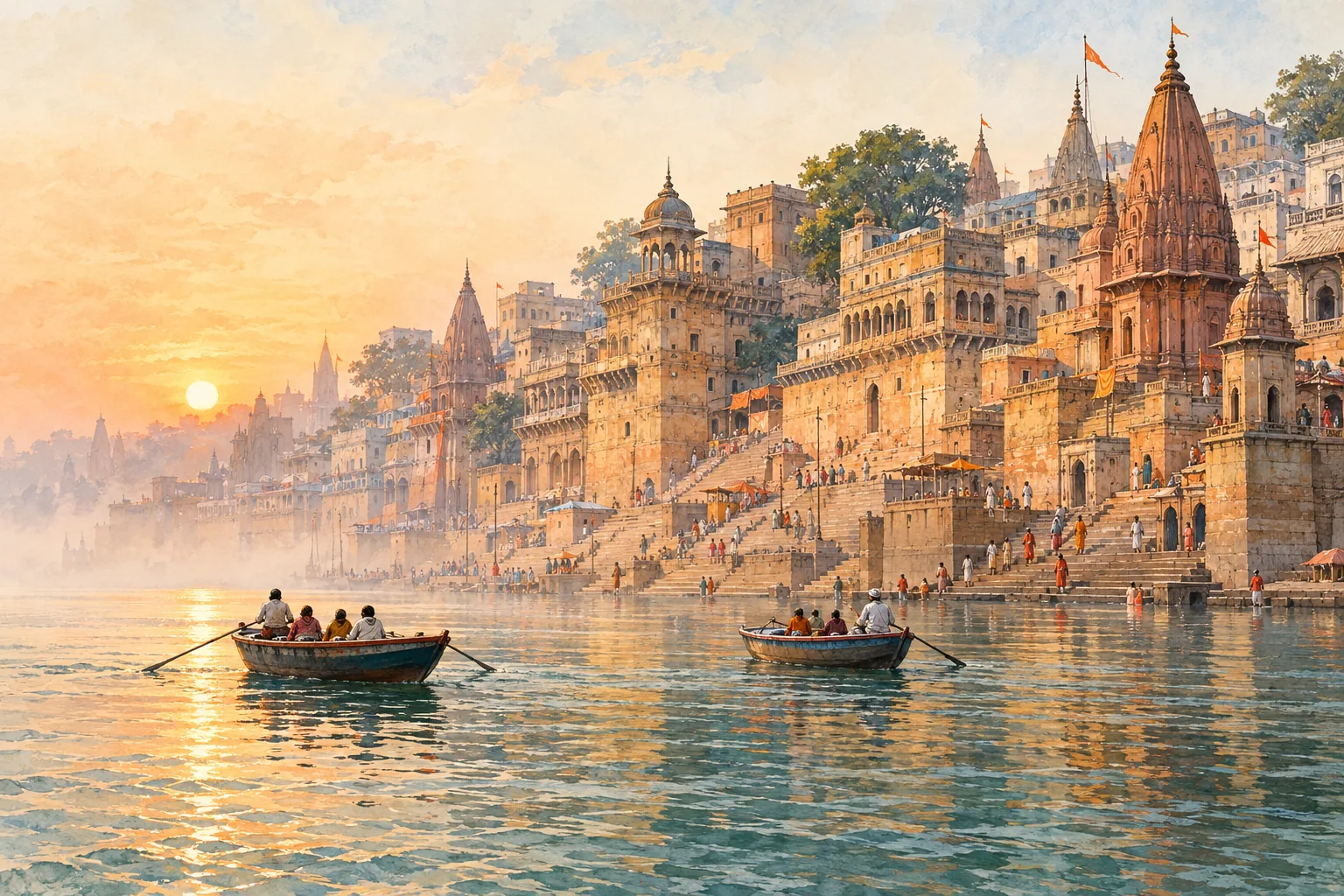
 A quiet dawn at the ghats — the right setting for solemn ancestral rites.
![Ghats of Varanasi: Visitor Guide [2026]](/images/maps/varanasi-essential-ghats-circuit-map.jpg)