Book an 84 Ghats boat tour in Varanasi from ₹3,500 (up to 6 pax). Full Assi to Namo Ghat private motorboat sweep with licensed Majhi & safety life jackets.
🌅 Sunrise or evening session·👥 Confirm boat capacity·🦺 Confirm life jackets·📲 Get the fare in writing
Why Book the Complete 84 Ghats Private Boat Tour?
Most tourists visiting Varanasi take a hurried 20-minute boat ride between Dashashwamedh Ghat and Manikarnika Ghat. The Complete 84 Ghats Boat Tour is designed for travelers, pilgrims, and photographers who want to experience the sacred riverfront in its entirety — from the tranquil southern spiritual ashrams of Assi Ghat all the way to the iconic Namo Namaste sculptures of Namo Ghat in the north.
Under the owner's pricing authority mandate (data/erpServicePricing.json reviewed 13 October 2026), our private charter rates are 100% transparent with zero hidden fuel charges or ghat-side negotiation:
1800–1850: Various Maharajas (local kings) funded ghat additions in honor of their lineages
1900–1965: British colonial period saw some ghat maintenance; post-independence, government formalized the "84 ghats" designation
2000–2026: Modern renovations (electricity, safety rails, Corridor project) without changing spiritual essence
Current reality: There are actually 88 named ghats, but 84 are considered "main ghats" in traditional pilgrimage routes. The 4 additions (Na Mo Ghat, Buddha Ghat, Tathagat Ghat, Nishad Ghat) were built post-1970s and aren't included in the classical enumeration.
The belief: Pilgrims who bathe at all 84 ghats complete a full cosmic journey, aligning their soul with universal consciousness, thus achieving moksha.
Practical result: This philosophy drives the 84-ghat boat tour industry. Most pilgrims can't physically bathe at all 84 in one visit, but a boat tour allows viewing all main ghats in 2–3 hours.
Major Ghats on the Tour
North Section: Assi to Dashashwamedh (Starting Point)
Assi Ghat (#1 – Starting point)
Significance: Confluence of Assi River with Ganges (creates spiritual whirlpool effect)
When to arrive: 4:45 AM (sunrise boat tours depart here)
What you'll see: Early morning yoga, pilgrims bathing, temple bells
Boat stop duration: 5–10 min
Tulsi Ghat (#4)
Significance: Birthplace of poet Tulsidas (wrote Ramcharitmanas, Hindu scripture)
Notable: Tulsi's handprints supposedly impressed in stone (sacred relic)
Boat stop duration: 3–5 min
Hanuman Ghat (#19 & #20)
Significance: Two versions—Old Hanuman and Prachina (Ancient) Hanuman dedicated to the monkey god
What distinguishes: Smaller temple, local favorite, less touristy
Boat stop duration: 5 min
Dashashwamedh Ghat (#41 – Central Landmark)
Significance: Most sacred ghat (Brahma's 10 horse sacrifices)
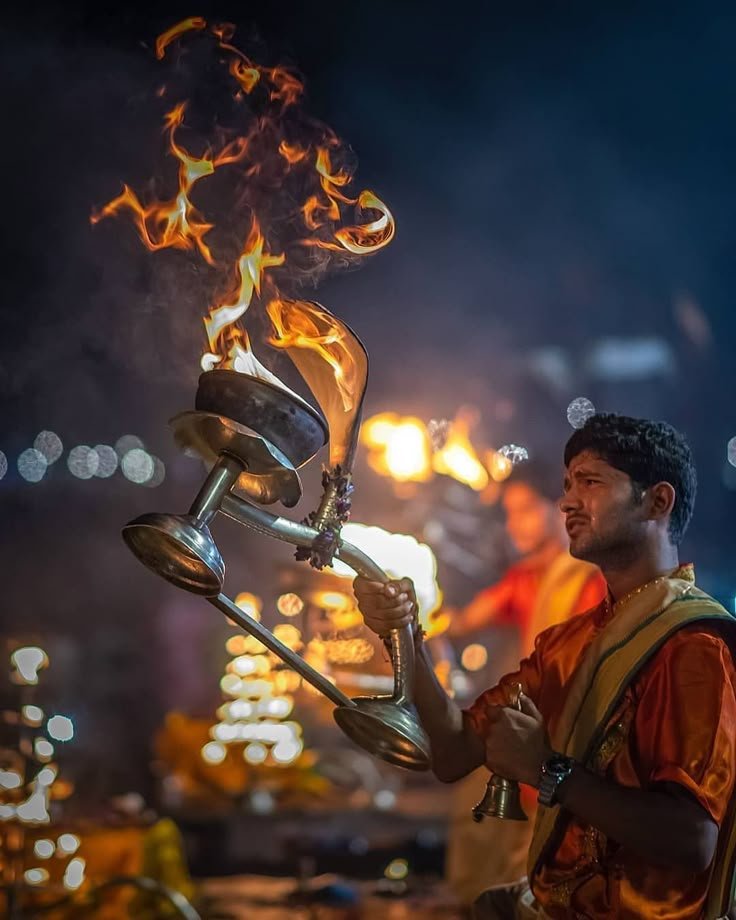
Evening spectacle: Ganga Aarti (5:30 PM winter, 7:00 PM summer)
If on extended tour ending at aarti: Boat arrives just as ceremony starts
Boat stop duration: 10–15 min (stop longer if aarti is happening)
Central Section: North of Dashashwamedh (The Sacred Mile)
Rajendra Prasad Ghat (#43)
Significance: Named after India's first President; logistics hub for boat operations
Why important: All boats dock here for group tours; largest boat parking area
What you'll do: Likely your actual boarding/disembarking point
Boat stop duration: 2 min (unless you're starting/ending tour here)
Man Mandir Ghat (#44)
Significance: Astronomical observation site built by Maharaja Jai Singh II (18th century)
Historical note: Jai Singh was an astronomer-king; he built similar observatories in Delhi and Jaipur
Boat stop duration: 5 min
Manikarnika Ghat (#53 – Cremation Site)
Significance: Primary cremation ghat; where Hindu funeral pyres burn 24/7
Spiritual meaning: Cremation in Ganges believed to grant moksha (soul liberation)
Tourist protocol: View respectfully from boat (no photos, silence, modest conduct)
What you'll observe: Funeral rites, family members, wood vendors, priests chanting
Reality check: It's solemn, not morbid. Cremation is seen as sacred, not dark
Boat stop duration: 10–15 min (guides usually explain cremation process from boat)
Scindia Ghat (#55)
Significance: Named after Scindia royal family; architectural marvel
Notable: Temple partially submerged (illustrates Ganges erosion over centuries)
Photography: Popular spot (temple towers reflected in water)
Boat stop duration: 5 min
South Section: Downstream to Ramnagar Fort
Panchaganga Ghat (#67)
Significance: Believed to be the "five rivers" confluence point (Ganga + 4 others merging spiritually)
What to observe: Cluster of temples, intricate architecture
Boat stop duration: 5 min
Durga Ghat (#68)
Significance: Dedicated to Goddess Durga (warrior form of Shakti); multiple temples
Cultural note: Durga Puja festivals here attract thousands
Boat stop duration: 5 min
Ramnagar Fort Ghat (Extended tour endpoint)
Significance: 18th-century royal palace of Kashi Naresh (Maharaja of Benares)
Architecture: Red sandstone, Mughal-Hindu fusion style
Museum: Veda Vyasa temple, antique collections (open for tours)
Access: The Ramnagar Fort boat ride Varanasi takes 60–90 minutes from Dashashwamedh
Optional: Disembark, tour fort (2 hours), return by taxi
Boat stop duration: 15–30 min (if you choose to disembark)
Namo Ghat (Furthest Endpoint — Assi to Namo Ghat Sweep)
Namo Ghat
Significance: The newest ghat in Varanasi, built under the Namami Gange river-cleaning project; sits near Rajghat, at the far northern end of the ghat chain — the opposite endpoint from Assi Ghat
Why boaters ask about it: An Assi Ghat to Namo Ghat boat ride is the longest possible one-way stretch on the Varanasi riverfront, covering the entire span of ghats end to end
What you'll see: Wide, open ghat with amphitheatre-style seating, far fewer crowds than the central ghats, good river views back toward the old city skyline
Boat stop duration: 10–15 min if you disembark; most boats simply turn around here or arrange a taxi pickup
Access: Because Namo Ghat is a one-way point-to-point trip rather than a loop, plan your return by road — WhatsApp us and we'll arrange a taxi to meet your boat at Namo Ghat
Boat Tour Types & Logistics
These are route-planning ideas, not confirmed products, durations, vessels or inclusions. Ask the operator what is available for your date. Kashi Taxi offers private boats only; every extended route requires a scoped quote.
Tour Option 1: Quick Ghat Loop (indicative route)
Route: Dashashwamedh → Manikarnika → Scindia → back to Dashashwamedh
Best for: Tight schedules, afternoon visitors, those focused on cremation ghat understanding
Boat type: Private boat arranged for your party
Price: Operator quote for this route and date; shared seats are not offered.
Departure: Confirm an available time for your date.
Language: Guide narration in English/Hindi (basic)
Tour Option 2: Standard Extended Tour (indicative route)
Route: Assi Ghat → Dashashwamedh → Manikarnika → Scindia → Ramnagar Fort → back to Dashashwamedh
Best for: Half-day experience, cultural explorers, photographers
Boat type: Private boat; confirm the available vessel and passenger limit
Price: Standard fare tiers apply only if the operator confirms this is a standard ride; extended route, guide and extras require a scoped quote.
Departure: Confirm session and timing; aarti arrival is not guaranteed.
Language: Detailed guide commentary (30–40 min of narration)
Inclusions: Confirm any guide, water or snacks with the operator; these are not automatic.
Tour Option 3: Full Pilgrimage Tour (indicative route)
Route: Assi → all 15 major ghats → Ramnagar Fort → return via evening aarti (if timed right)
Best for: Spiritual pilgrims, multi-day visitors, those wanting comprehensive understanding
Boat type: Private motorboat (best for comfort)
Price: This extended route requires an operator quote; do not assume the standard ride tiers or divide an unconfirmed total per person.
Departure and inclusions: Confirm the session, guide and any refreshments with the operator. Aarti timing and full ghat coverage are not guaranteed.
Tour Option 4: Photography-Focused Tour (indicative route)
Route: Sunset boat loop hitting 8 major ghats with photo stops
Best for: Photographers, Instagram-focused travelers, visual storytellers
Boat type: Private motorboat (flexibility to stop longer)
Price: Request a quote for the date, route, duration and requested photography arrangements.
Timing and inclusions: Confirm the available session and any photography arrangements with the operator.
Tour Option 5: Assi Ghat to Namo Ghat Full Sweep (One-Way, 2.5–4 Hours)
Route: Assi Ghat → all major ghats → Namo Ghat (Rajghat area, northern endpoint) — no return loop
Best for: Travelers who want to cover the entire riverfront in one continuous ride rather than a there-and-back loop
Boat type: Private boat; confirm the available vessel and passenger limit. Shared departures are not offered by Kashi Taxi.
Assi Ghat to Namo Ghat boat ride price: Operator quote for this extended one-way route; standard party-size tiers do not set this fare.
Assi Ghat to Namo Ghat boat ride timings: Best at sunrise (5:00–6:30 AM) for calm water and light traffic, or sunset (4:30–5:30 PM winter) for golden-hour views; avoid mid-day heat and monsoon afternoons
Fare note: The route and return arrangements affect the quote. Confirm the boat, duration, boarding point, return transport and total with the operator.
Return: Plan your road return from Namo Ghat; request taxi pricing separately with your date and pickup details.
Group Booking & Discount Structure
Pricing By Group Size
| Group Size | Fare basis | Boat Type | Best for |
|---|---|---|---|---|
| 1–6 people | ₹3,500 per standard private ride; confirm vessel and route | Private boat | Couples and small parties |
| 7–15 people | ₹4,500 per standard private ride; confirm vessel and route | Private boat | Families and groups |
| 16–30 people | ₹6,500 per standard private ride; confirm vessel and route | Private boat | Larger parties |
| Extended route or more than 30 | Operator quote; standard tiers do not apply | Confirm available arrangement | Special route or large group |
Group requests: Send the full headcount and requested guide, food or other extras. Availability and price are confirmed in the operator quote; no group discount or extras are automatic.
Booking Timeline & Strategy
Advance enquiries: More lead time helps check vessel availability, route and requested arrangements.
Close to travel: Availability may be limited; confirm the boat and fare before making other plans.
Festival dates: Send the exact date for a separate operator quote. Ordinary ride tiers do not apply automatically.
Group Booking Process (Kashi Taxi)
Step 1: Calculate headcount (include children; ask if special needs require accommodations)
Example: "84-ghat extended route, [date], 10 people, preferred session, one elderly traveller with mobility needs. Please quote the boat, route, duration and return options."
Step 3: Receive confirmation with:
Exact boat assigned
Boatman name & contact
Hotel pickup time (if requested)
Group-specific guide details
Itinerary with ghat stop sequence
Payment method (advance deposit vs. day-of)
Step 4: Day-of checklist
Confirm headcount 24 hours prior
Sun protection (hat, sunscreen)
Bring small donation (₹100–200 for cremation ghat guides, if inspired)
Camera with fully charged batteries
Water bottle (bring your own or buy ₹20 at ghat)
Boat Ride Experience (Practical Details)
What to Expect During the Tour
Boarding (5 min): Life jacket fitting (insist on it), safety briefing, seating arrangement
Positioning (10 min): Boat moves to first ghat, engine off, guide begins narration
Ghat-by-ghat stops (15–20 min per major stop):
Guide points out temple details, explains mythology
You photograph, ask questions, absorb atmosphere
Boat slowly moves downstream to next ghat
At cremation ghats, respectful observation (no photos, silence)
Ramnagar Fort (if included): 15–30 min optional disembarkation (many tours skip this to avoid time crunch)
Dashashwamedh aarti finale (if timed right): Arrive exactly at 5:30 PM ceremony start; witness from water vantage point
Return (5–10 min): Boat returns to Rajendra Prasad Ghat (official dock); you disembark
Total time on water: 120–180 minutes depending on tour type
Safety Protocols
Life jackets: Mandatory (request in advance if you have size concerns)
Boat capacity: Never overloaded (weight limits strictly enforced)
Boatman experience: All operators minimum 5+ years experience
Weather cancellation: Monsoon boats may be cancelled morning-of if water too rough
Insurance: Kashi Taxi boats carry liability insurance (standard in tourism industry)
Weather Impact on Tours
Winter (Oct–Mar): Ideal boating (calm water, clear skies, 70–75°F)
Summer (Apr–Jun): Manageable (hot, 95–105°F, but water still calm)
Monsoon (Jul–Sep): Risky (rough water, daily thunderstorms, 50% chance of rescheduling)
Recommendation: Book tours Oct–Mar for maximum reliability and comfort.
Photographic Opportunities
Best Light Windows for Photography
Golden Hour (Sunset): 5:00–6:30 PM winter
Temple architecture glows warm
Water reflections intensify
Crowd activity peaks (good for people photography)
Best ghats: Dashashwamedh, Scindia, Panchaganga
Blue Hour (Dusk): 6:30–7:00 PM winter
Sky transitions from orange to indigo
Lights on temples begin flickering on
Atmospheric, moody feeling
Best for: Artistic, dramatic compositions
Early Morning (Sunrise): 6:00–7:00 AM
Mist rises from river
Temples silhouetted
Pilgrims bathing (human interest photography)
Best ghats: Assi, Dashashwamedh, Manikarnika
Photography Restrictions (Respect Protocol)
Allowed:
Temples, ghat architecture, landscapes
Pilgrims (if they don't object)
Sunrise/sunset scenes
River reflections
Boat-based distant shots
Prohibited:
Close-up photography of cremations
Photos of grieving families
Disrespectful angles or mocking
Flash photography in temples
Enforcement: Temple police may request deletion if you violate. Respect local culture; you're a guest.
Itinerary Combinations
Full-Day Varanasi Ghat Experience
4:45 AM: Sunrise boat tour (Assi morning aarti + extended ghat loop) = 2.5 hours
8:00 AM: Return to hotel, breakfast
10:00 AM: Kashi Vishwanath Temple darshan (1–1.5 hours)
12:00 PM: Lunch
2:00 PM: Sarnath Buddhist site visit (30 km away, taxi = 1 hour) OR rest at hotel
5:00 PM: Sunset extended ghat tour (ending at Dashashwamedh aarti) = 2 hours
7:30 PM: Temple evening darshan or ghat-side dinner
9:00 PM: Return to hotel
Budget: Costs depend on the separate boat quote, temple choices, meals and transport. Confirm each service before travel.
Group Pilgrimage Package (2 Days)
Day 1 Evening:
Sunset extended ghat route: request an operator quote; confirm the route and duration
Dashashwamedh aarti from ghat = free after boat returns
Dinner at Varanasi's best restaurants
Day 2 Morning:
Pre-dawn sacred dip at Assi Ghat = free
Sunrise boat outing: request an operator quote; confirm the route and duration
Kashi Vishwanath general darshan is free; official Sugam ticket component is ₹300 (verify current rate and availability with the Temple Trust)
Pind Daan ceremony coordination (contact priest) = ₹1,000–2,000
Budget: Request separate current quotes for boat, transport and any booked services; temple offerings and meals are separate.
Frequently Asked Questions
"Are there really 84 ghats or is it just a saying?"
Real answer: There are 88 named ghats, but 84 are considered "main" in traditional pilgrim routes. The concept of "84" is deeply rooted in Hindu cosmology (12 zodiacs × 7 chakras), so tour operators & pilgrims use "84" as the spiritual/cultural designation.
"Can I bathe at all 84 ghats?"
Technically yes, but impractical:
Full bathing at each ghat = 2–3 minutes per ghat = 168–252 minutes = 3–4 hours minimum
Water temperature cold (especially monsoon & winter)
Most tourists bathe at 2–3 ghats max (usually Assi, Dashashwamedh, Manikarnika)
Pilgrimage approach: Some pilgrims visit over 3–5 days, bathing at 10–15 ghats per day (achievable via taxi hopping).
"Is Manikarnika Ghat scary?"
Honest answer: It's solemn, not scary. You're witnessing death rituals performed with deep respect. Cremation in Varanasi is seen as sacred, not morbid.
Best approach: Observe quietly from boat, listen to guide's explanation, reflect on the philosophy (life-death-rebirth cycle central to Hinduism).
Not recommended for: Very young children, those extremely squeamish about death, people with PTSD/trauma sensitivities.
"What are the timings for an Assi Ghat to Namo Ghat boat ride?"
Range: 2.5–4 hours one-way, covering the full riverfront from Assi Ghat (south) to Namo Ghat near Rajghat (north).
Best windows:
Sunrise: 5:00–6:30 AM — calm water, cooler light, least crowded
Sunset: 4:30–5:30 PM winter — golden-hour views along the whole ghat line
Since it's a one-way trip, not a loop, plan your return transport (taxi pickup at Namo Ghat) before you book.
"How do I book an Assi Ghat to Namo Ghat boat ride?"
Request an operator quote for this extended one-way route. Kashi Taxi books private boats and does not offer shared departures or per-seat tickets. Confirm the route, available vessel, passenger limit, duration, boarding point and return transport for your date.
"How long is a typical ghat tour?"
Duration: Confirm the estimate for the selected route and river conditions. Any timing examples are indicative, not a service promise.
"When should I enquire?"
Seasonal:
Oct–Mar: Peak season; enquire early to check availability and scope
Apr–Jun: Hot but manageable; book 2 days ahead
Jul–Sep: Monsoon risk; book same-week (flexibility required)
Day-of-week:
Weekday: Often less crowded; ask for availability and a current quote
Weekend: More crowded; ask for availability and a current quote
Booking & Next Steps
Ready for a Ghat Tour?
Quick booking: WhatsApp +91 70545 49988
Message with: Date, headcount, preferred session, route and special requests
Example: "84-ghat extended route, Dec 20, 6 people, preferred sunset session, one person with mobility needs. Please quote the route, duration and available arrangements."
The operator will confirm availability, fare, vessel and any included arrangements for your request before booking.
Conclusion
The "84 ghats" isn't just a tourist catchphrase—it represents a complete spiritual cosmos in miniature. Each ghat tells a story: of sacrifice, devotion, death, rebirth, and liberation.
A 2–3 hour varanasi boat trip won't make you spiritually enlightened, but boat riding in varanasi gives you a profound perspective on one of humanity's oldest continuous civilizations still vibrantly alive on the banks of the sacred Ganges.
Updated: October 13, 2026
Maintained by: Kashi Taxi Boat Operations