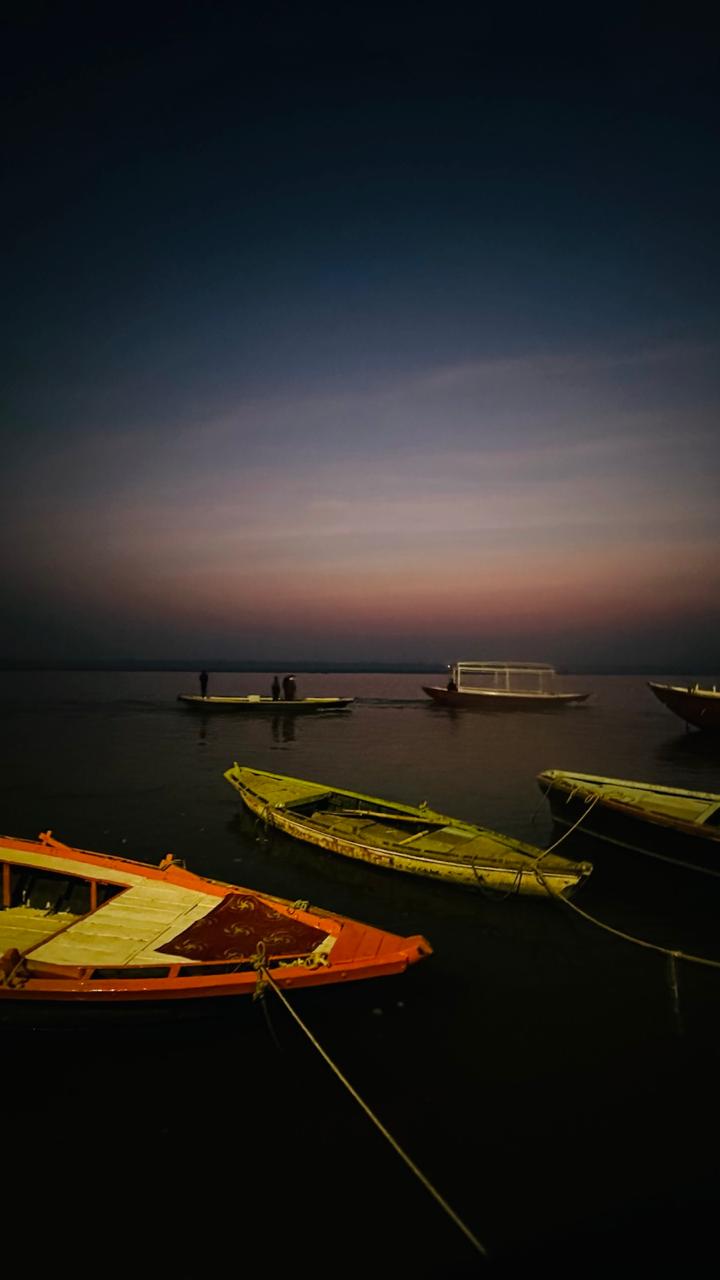
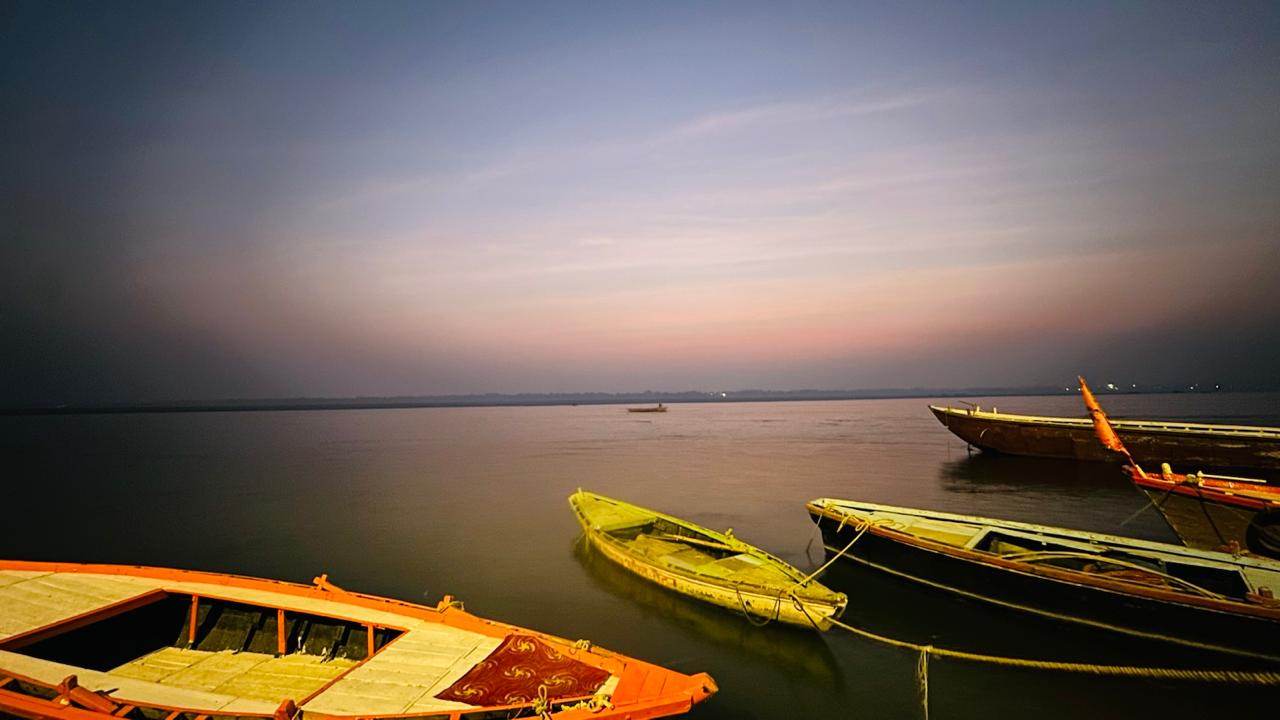
The inaugural CII Banaras Biennale 2026 runs from Friday, 27 November to Thursday, 31 December 2026. Organised by the Confederation of Indian Industry (CII) in partnership with Banaras Hindu University (BHU), the Ministry of Culture, and the Government of Uttar Pradesh, this 35-day event transforms Varanasi into an expansive public cultural platform.
Rather than confining art inside a single exhibition hall, the Biennale approaches the entire urban fabric—from the university museum archives at Bharat Kala Bhavan to the riverfront stones of Chet Singh Ghat and the handloom alleys of Sarai Mohana—as an active creative landscape under the curatorial theme "KASHI / LIGHT – City as Sensorium."
For travelers planning a visit, understanding how the venues are spread across the city is critical. BHU sits 10 km south of the main railway station, while traditional weaver settlements lie 15 km to the north. This guide covers confirmed dates, key venues, accommodation trade-offs, transport options, and realistic winter travel advice.
At a Glance: Event Summary & Fact Sheet
Detail
Current Confirmation Status
Official Dates
27 November – 31 December 2026 (35 continuous days)
Opening Weekend
27–29 November 2026 (Inaugural ceremonies, keynote panels, vernissage walks)
Curatorial Theme
"KASHI / LIGHT – City as Sensorium"
Lead Curator
Gayatri Sinha (Art critic, curator, and Critical Collective founder)
Textile & Crafts Curator
Pramod Kumar KG (Managing Director, Eka Archiving)
Bharat Kala Bhavan (BHU Campus) & Jnana Pravaha (Samne Ghat)
Public & Open-Air Venues
Assi Ghat, Chet Singh Ghat, Man Mahal Virtual Museum, Sarai Mohana
General Entry Policy
Free public access for outdoor installations; nominal museum ticket at Bharat Kala Bhavan
Disposal Cab Base (8 Hr / 80 Km)
Fixed ₹2,499 (Sedan) / ₹3,800 (Innova Crysta) for multi-venue city disposal
Why the Banaras Biennale Matters
Varanasi has drawn pilgrims, scholars, and musicians for millennia. What sets this Biennale apart is its structured bridge between ancient collections and modern creative enquiry.
Lead Curator Gayatri Sinha has framed the Biennale around Kashi's relationship with light—how sunlight filters through river mist, how fire animates evening aarti rituals, and how reflective metallic threads (zari) catch the eye on handwoven silks. Bharat Kala Bhavan, one of India's richest university museums, opens its permanent reserves of miniature paintings, ancient terracottas, and Mughal textiles to contemporary artists, creating direct dialogues between historical objects and new commissions.
Parallel strands curated by Pramod Kumar KG focus on living cloth, centering the knowledge of traditional master weavers who have sustained Varanasi's handloom culture across generations.
Biennale Venue Network & How to Reach Each Zone
The event is organized across four distinct city zones. Knowing their locations saves hours in congested traffic.
                    [Babatpur Airport (VNS)]
                               │ 26 km
                               ▼
     [Sarai Mohana Weavers] ◄─── [Cantonment / Station] ───► [Old City / Ghats]
         (North-East)                    │ 10 km                  (Central Pedestrian)
                                         ▼
                                  [BHU / Lanka]
                             (Bharat Kala Bhavan)
                                         │ 2 km
                                         ▼
                                  [Jnana Pravaha]
                                   (Samne Ghat)
1. Zone 1: Banaras Hindu University (BHU) & Bharat Kala Bhavan
What happens here: Core indoor visual exhibitions, student showcases, academic roundtables, and public lectures.
The Venue: Bharat Kala Bhavan sits along the semi-circular avenue inside BHU, roughly 1.2 km from Lanka Gate. The museum holds over 100,000 artifacts.
Vehicle Access: Cars and taxis drive directly onto the BHU campus through Lanka Gate or Hyderabad Gate. Paved parking sits right outside the museum steps.
Accessibility: Completely flat terrain with ground-floor wheelchair ramps, making this the easiest Biennale venue for seniors and families with strollers.
2. Zone 2: Jnana Pravaha (Samne Ghat / Nagwa)
What happens here: Cultural seminars, manuscript discussions, and intimate visual art presentations.
The Venue: Jnana Pravaha is a research centre on the river bypass road near Samne Ghat, roughly 2 km south of Lanka.
Vehicle Access: Accessible by car via the Samne Ghat main road. Dedicated parking is available outside the centre gates.
3. Zone 3: Historic Riverfront (Assi Ghat to Chet Singh Fort & Man Mahal)
What happens here: Site-specific public sculptures, sound installations, and evening musical recitals.
The Venues:
Assi Ghat: Southern open river plaza; hosts early morning classical recitals and large public gatherings.
Chet Singh Ghat: Sandstone palace fortress dating to the 18th century, hosting evening architectural projections and stage performances.
Man Mahal Observatory: 17th-century palace built by Raja Man Singh with rooftop masonry instruments and an ASI Virtual Museum.
Vehicle Access: Strictly pedestrian. Vehicles cannot enter the riverfront alleys. Taxis drop passengers at outer lots (Assi Crossing, Girjaghar, or Benia Bagh), requiring a 500m to 900m walk through stone alleys.
Senior Tip: Boarding a pre-arranged motorboat or wooden Bajra at Assi Ghat provides water-level access directly to Chet Singh and Man Mahal, bypassing steep staircases.
4. Zone 4: Sarai Mohana Craft Cluster (Northern Handloom Villages)
What happens here: Curated textile trails, open pit-loom demonstrations, and conversations with master weavers.
The Venue: Sarai Mohana sits 14 km north-east of the city centre on the banks of the Ganga.
Vehicle Access: Motorable roads connect via the Ring Road or Rajghat bridge. Dedicated cabs can wait while visitors tour local weaving units.
🎨 CII Banaras Biennale 2026: Multi-Venue Cabs, BHU Drops & Curated City Transport
Attending the 35-day Banaras Biennale (27 Nov – 31 Dec 2026)? Spread across Bharat Kala Bhavan (BHU), Jnana Pravaha, craft clusters, and riverfront heritage sites, navigating the festival requires dependable mobility. We provide fixed-fare airport/railway transfers, 8hr/80km multi-venue disposal cabs, designated Lanka/BHU campus drops, and luxury vehicles (Innova Crysta, Force Urbania, Tempo Travellers) for visiting artists, curators, and delegations.
₹899 flat AC Sedan / ₹1,299 Ertiga airport transfer with 45-min delay tracking
Right in the middle of historic temples and evening aartis
Zero vehicle access; hauling luggage through narrow alleys; tough daily transit
Pilgrims and traditional sightseers
How to Get Around: The Multi-Venue Transport Reality
Many first-time visitors expect to catch app-cabs or autos on demand between venues. On the ground, this creates headaches:
Auto negotiations: Drivers outside Lanka Gate or Godowlia frequently demand inflated fares or refuse to drive out to northern weaving settlements like Sarai Mohana.
App-cab unreliability: App cabs frequently cancel around Lanka and Godowlia due to gridlock and narrow access lanes.
Dispersed schedule: An ordinary Biennale day might start at Bharat Kala Bhavan at 11:00 AM, move to Jnana Pravaha at 02:30 PM, and finish at Chet Singh Ghat for sunset.
The Practical Solution: Pre-book an 8-hour / 80-km dedicated disposal cab. Your driver remains on standby in parking areas while you attend sessions, eliminating repeat negotiations and keeping your day on schedule.
Fixed Vehicle Fares for Biennale Attendees
All rates are fixed and verified against the local pricing engine, with zero peak surge charges:
Trip Type
AC Sedan (Dzire)
AC SUV (Ertiga)
Innova Crysta
17-Seater Tempo
Airport ⇄ Hotel Transfer
₹899
₹1,299
₹1,800
₹2,500
Railway Station ⇄ Hotel
₹790
₹1,050
₹1,650
₹2,150
Half-Day Disposal (4 Hr / 40 Km)
₹1,600
₹2,000
₹2,800
₹3,200
Full-Day Disposal (8 Hr / 80 Km)
₹2,499
₹2,800
₹3,800
₹4,250
Extended Day (12 Hr / 120 Km)
₹3,200
₹3,900
₹5,200
₹5,500
Sarai Mohana Weavers Excursion
₹2,000
₹2,600
₹3,400
₹4,000
Inclusions: Air-conditioned vehicle, verified driver, fuel, parking at BHU/hotel, and 45-minute flight delay tracking on airport pickups. Outstation extensions (Sarnath, Chunar Fort, Mirzapur) available on request.
Suggested 3-Day Itinerary for the Banaras Biennale
Day 1: The Academic & Museum Core
10:30 AM – 01:30 PM: Arrive at Bharat Kala Bhavan inside BHU. Tour the permanent collection of miniature paintings and Mughal textiles alongside curated modern installations.
01:30 PM – 02:45 PM: Lunch at a cafe near Lanka Gate or on campus.
03:00 PM – 05:00 PM: Head to Jnana Pravaha near Samne Ghat for curated manuscript seminars and afternoon art discussions.
05:30 PM – 07:00 PM: Walk down to Assi Ghat for Subah-e-Banaras evening cultural activities and a cup of lemon tea.
Day 2: Living Textiles & Historic Fortresses
09:30 AM – 01:00 PM: Board your chartered cab for a half-day excursion to Sarai Mohana. Visit traditional pit-loom workshops and speak directly with master artisans weaving Kadwa silk sarees.
01:30 PM – 03:00 PM: Break for lunch in the city centre.
03:30 PM – 05:30 PM: Visit Man Mahal Observatory and the ASI Virtual Experimental Museum at Man Mandir Ghat.
05:45 PM – 07:30 PM: Move south to Chet Singh Ghat to view architectural projections and riverfront musical recitals.
Day 3: Heritage Temples & Sarnath Extension
06:30 AM – 08:30 AM: Early morning boat ride along the 84 ghats from Assi to Panchganga.
09:00 AM – 11:00 AM: Traditional Banarasi breakfast in the old city (kachori-jalebi and winter seasonal Malaiyo).
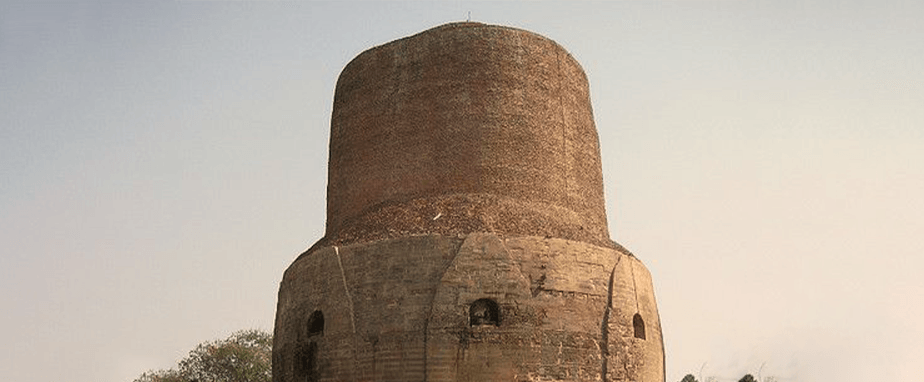
12:00 PM – 04:30 PM: Take an afternoon excursion to Sarnath (12 km north). Visit the Dhamek Stupa, Mulagandha Kuti Vihara, and Sarnath Archaeological Museum.
06:30 PM: Evening farewell dinner at a Cantonment heritage property.
🎨 CII Banaras Biennale 2026: Multi-Venue Cabs, BHU Drops & Curated City Transport
Attending the 35-day Banaras Biennale (27 Nov – 31 Dec 2026)? Spread across Bharat Kala Bhavan (BHU), Jnana Pravaha, craft clusters, and riverfront heritage sites, navigating the festival requires dependable mobility. We provide fixed-fare airport/railway transfers, 8hr/80km multi-venue disposal cabs, designated Lanka/BHU campus drops, and luxury vehicles (Innova Crysta, Force Urbania, Tempo Travellers) for visiting artists, curators, and delegations.
₹899 flat AC Sedan / ₹1,299 Ertiga airport transfer with 45-min delay tracking
🎨 Multi-Venue Disposal Cabs·🏛️ BHU & Bharat Kala Bhavan Drops·🚐 Delegation & Group Vehicles·🛡️ Fixed Rates in Writing
Winter Fog & Weather Precautions (Late December)
If your trip falls between 15 December and 31 December 2026, account for North India's winter conditions:
Temperature swings: Daytime highs reach a comfortable 22°C to 24°C, but nighttime temperatures drop sharply to 8°C–11°C. Carry warm sweaters, a windproof jacket, and a woolen scarf for evening boat rides.
Airport fog delays: Lal Bahadur Shastri International Airport (Babatpur) frequently experiences morning fog with visibility below 100 metres. Flights scheduled before 10:30 AM often face 1- to 3-hour delays. Book flights scheduled between 11:30 AM and 03:30 PM when the sun has cleared the runway.
Train schedules: Long-distance express trains passing through northern corridors (such as the Vande Bharat or Shiv Ganga) can run 2–4 hours late during severe fog spells. Check live railway tracking before leaving your hotel.
Senior Citizen & Group Travel Considerations
BHU Intra-Campus Walking: BHU spans 1,300 acres. Walking between faculty buildings or from Lanka Gate to Bharat Kala Bhavan is tiring for older travelers. Ensure your cab enters campus and parks near the museum doors.
Ghat Footwear: Stone steps along Chet Singh Ghat and Man Mandir Ghat can be uneven and slick from morning moisture. Wear rubber-soled walking shoes with good grip.
Delegations & University Groups: For groups of 8 to 17 passengers, splitting into multiple small cars causes coordination headaches in traffic. A 17-seater Tempo Traveller or Force Urbania keeps your group together on a single schedule.
Frequently Asked Questions
When is the CII Banaras Biennale 2026?
The inaugural CII Banaras Biennale runs for 35 consecutive days from Friday, 27 November to Thursday, 31 December 2026. The opening weekend features academic panels and inaugural walks, while daily exhibitions and site installations remain open through December.
Where does the Banaras Biennale take place?
The Biennale operates as a city-wide cultural platform. Primary anchor venues include Bharat Kala Bhavan at Banaras Hindu University (BHU), Jnana Pravaha Centre for Cultural Studies in Samne Ghat, public riverfront pavilions along Assi and Chet Singh Ghats, and artisan weaving settlements in Sarai Mohana.
Do I need tickets or registration for the Banaras Biennale?
General public access across city installations and riverfront sites has no entry fee. Indoor museum venues such as Bharat Kala Bhavan follow regular institutional ticketing rules (nominal entry). Curatorial symposia and masterclasses recommend prior registration on official CII and tourism portals.
Which accommodation area is best for attending the Biennale?
Lanka, Assi, and Ravindrapuri offer the best location for attending the Biennale, putting you within 10 minutes of BHU and walking distance to southern ghat venues. Delegates seeking five-star chain hotels should stay in Cantonment, planning a 35-minute commute south to campus.
How do I travel between the different Biennale venues?
Venues sit up to 15 km apart across crowded city roads. An 8-hour / 80-km dedicated disposal cab is the practical choice for covering BHU, southern research centres, and northern weaving settlements in a single day without negotiating multiple auto-rickshaws.
How does December winter fog affect travel to Varanasi?
Dense morning fog frequently impacts Lal Bahadur Shastri International Airport and Varanasi railway stations after 15 December, causing 1- to 3-hour flight delays before 10:30 AM. Book flights arriving or departing between 11:30 AM and 03:30 PM to avoid delays.
Plan Your Biennale Transport
Need dependable airport pickups, an 8-hour disposal car for venue hopping, or group vehicles for a cultural delegation? Contact Kashi Taxi with your dates, pickup spot, and passenger count for a confirmed, fixed-rate booking with zero holiday surge charges.