Is January the Best Time to Visit Varanasi?
YES. January is the #1 best month to visit Varanasi.
January offers the perfect combination of three factors that make it superior to any other month:
1. Ideal Weather ✓
- Cool, crisp mornings (8–12°C) with mystical fog rolling over the Ganges
- Pleasantly warm afternoons (18–24°C) without sweat or humidity
- Clear skies perfect for photography and outdoor activities
- Zero monsoon concerns (dry season)
Why this matters: Unlike December (can be slightly chilly at night), January has warmer afternoons while maintaining that refreshing coolness. Unlike February (slightly warmer), January's fog creates magical morning aarti experiences.
2. Major Festivals & Events ✓
Makar Sankranti (January 14, 2026) – The Harvest & Kite Festival
- Holy Ganga baths at sunrise (5:30–6:30 AM) with 100,000+ devotees
- Kite flying competitions from noon onwards on ghats and rooftops
- Temple celebrations across the city
- Colorful skies filled with traditional kites
- Traditional Tilkut sweets and seasonal delicacies
What to expect:
- Crowds are manageable early morning, peak at midday
- Photography opportunities: unmatched spiritual energy
- Evening calm after celebrations for peaceful aarti viewing
- Locals are celebratory and welcoming
3. Perfect Timing for Activities ✓
- Morning boat rides: Crisp air, clear visibility, fewer tourists (6–7 AM)
- Temple visits: Comfortable walking in narrow lanes
- Ghat exploration: No heat exhaustion, full day of sightseeing possible
- Evening Ganga Aarti: Comfortable standing room, perfect lighting for photos
- Sarnath day trip: Easy 30-minute taxi ride, comfortable exploration
What to Wear in Varanasi in January: Complete Packing Guide
For Women
Daytime (9 AM–4 PM) — Layering is Key:
- Base layer: Cotton t-shirt or light kurta
- Middle layer: Lightweight cardigan, shrug, or thin sweater
- Outer layer: Light jacket or fleece (optional if sunny)
- Bottoms: Loose cotton pants, cotton skirt, or leggings
- Footwear: Closed-toe walking shoes, socks
- Accessories: Scarf/dupatta (cultural respect + warmth)
Evenings (5 PM onwards) — Add Warmth:
- Warm shawl or stole (essential for Ganga Aarti)
- Full-length pants or maxi skirt
- Light sweater or thin jacket
- Closed shoes with socks
Sacred Site Dress Code (Temples & Ghats):
- Cover shoulders and knees (always)
- Wear scarf to cover head if required
- Loose, modest clothing
- NO shorts, tank tops, or sleeveless tops
- Avoid bright/neon colors (temples prefer muted tones)
Recommendations:
- Kurta + leggings (most practical & culturally appropriate)
- Maxi dress or long skirt + cardigan
- Layers > thick clothes (flexibility for temperature changes)
For Men
Daytime:
- Cotton shirt or t-shirt
- Long pants or cotton jeans
- Light jacket (optional)
- Closed-toe shoes, socks
Evenings:
- Add a sweater or warm jacket
- Long pants
Sacred Sites:
- Long pants (no shorts)
- Shirt with sleeves
- NO leather (some temples prohibit)
Essential Items to Pack
Must-Have:
- ✓ Warm jacket or fleece
- ✓ Long scarf/shawl (doubles as head cover & warmth)
- ✓ Socks (for cold mornings)
- ✓ Closed-toe walking shoes
- ✓ Light sweater or cardigan
- ✓ Lip balm & moisturizer (dry air)
Highly Recommended:
- ✓ Sunscreen (winter sun is deceptive)
- ✓ Sunglasses
- ✓ Umbrella (rare but possible light rain)
- ✓ Medications (dry cough, throat lozenges)
- ✓ Water bottle (1.5L per person)
- ✓ N95 mask (air quality can dip on non-windy days)
- ✓ Power bank (cold batteries drain faster)
- ✓ Ear muffs/cap (river wind cuts through you on boat rides)
Optional:
- Hat/beanie for early mornings
- Hand gloves if you're very cold-sensitive
- Thermal innerwear
- Thick woolen socks (for barefoot temple visits)

January Weather in Varanasi: Day-by-Day Breakdown
Early January (1–10)
- Temperature: 9–20°C
- Pattern: Cool mornings, pleasant afternoons
- Humidity: Low (15–20%)
- Best for: Comfortable sightseeing, boating, temple visits
- Crowds: Moderate (approaching peak)
Makar Sankranti Festival Period (11–15)
- Temperature: 12–22°C
- Pattern: Clear skies, morning fog, crisp air
- Crowds: PEAK (festival celebration)
- Events: Kite flying, holy baths, temple processions
- Best Activities: Festival participation, cultural photography
- Travel Tips: Book hotels in advance; arrive by Jan 11 for best experience
Mid-January (16–24)
- Temperature: 10–23°C
- Pattern: Gradually warming
- Humidity: Still low
- Crowds: Still high but manageable
- Best for: Post-festival calm, peaceful aarti viewing
- Weather: Consistently pleasant
Late January (25–31)
- Temperature: 12–24°C
- Pattern: Warmest period of January
- Humidity: Begins rising slightly
- Crowds: Starting to decrease (pre-February lull)
- Best for: Last-minute travelers, better hotel deals
- Weather: Still excellent
Fog Survival Guide: Avoid Travel Disruptions
January brings dense fog across the Indo-Gangetic plain, peaking between January 1–15. This can seriously disrupt your travel plans.
Flight Delays Are Real
If your flight is scheduled to land before 11:00 AM, there's a 60% chance it will be delayed or diverted to Lucknow/Delhi.
Pro Tips:
- Book flights landing after 12:00 PM – fog usually burns off by noon
- Keep taxi backup ready for fog-diverted arrivals
- Our drivers track flight statuses in real-time
Train Delays
Trains from Delhi (Vande Bharat, Shiv Ganga Express) are often delayed 6–10 hours in January due to fog.
Backup Plan: If your train gets cancelled, intercity cab services can pick you up from Prayagraj, Ayodhya, or Lucknow.
Here's what most guides won't tell you: temple stone floors are freezing in January. You must remove shoes at Kashi Vishwanath and other temples, and your feet will go numb within minutes.
Insider Tip: Pack thick woolen socks – you're allowed to wear socks inside temples, and they're a lifesaver.
Safety Tips for Seniors & Families
Slippery Ghats
Morning dew + fog makes stone steps dangerously slippery.
Recommendations:
- Avoid steep stairs at smaller ghats
- Stick to Dashashwamedh or Assi Ghat – wider, cleaner steps
- Hold handrails where available
- Wear shoes with good grip
For Elderly Travelers
The Old City lanes are long and confusing. For seniors:
- Hire a Tempo Traveller for comfortable waiting between temple visits
- Plan shorter walking distances
- Schedule rest breaks between activities
- Carry a small folding stool if needed
January Events & Festivals
Makar Sankranti (January 14, 2026) — The Highlight
Planning for 2027? Read our dedicated Makar Sankranti 2027 Varanasi Guide for 14–15 January 2027 Punya Kaal bathing hours, Baba Vishwanath Khichdi Bhog, eastern sandbed kite crossings, and fixed-fare cabs.
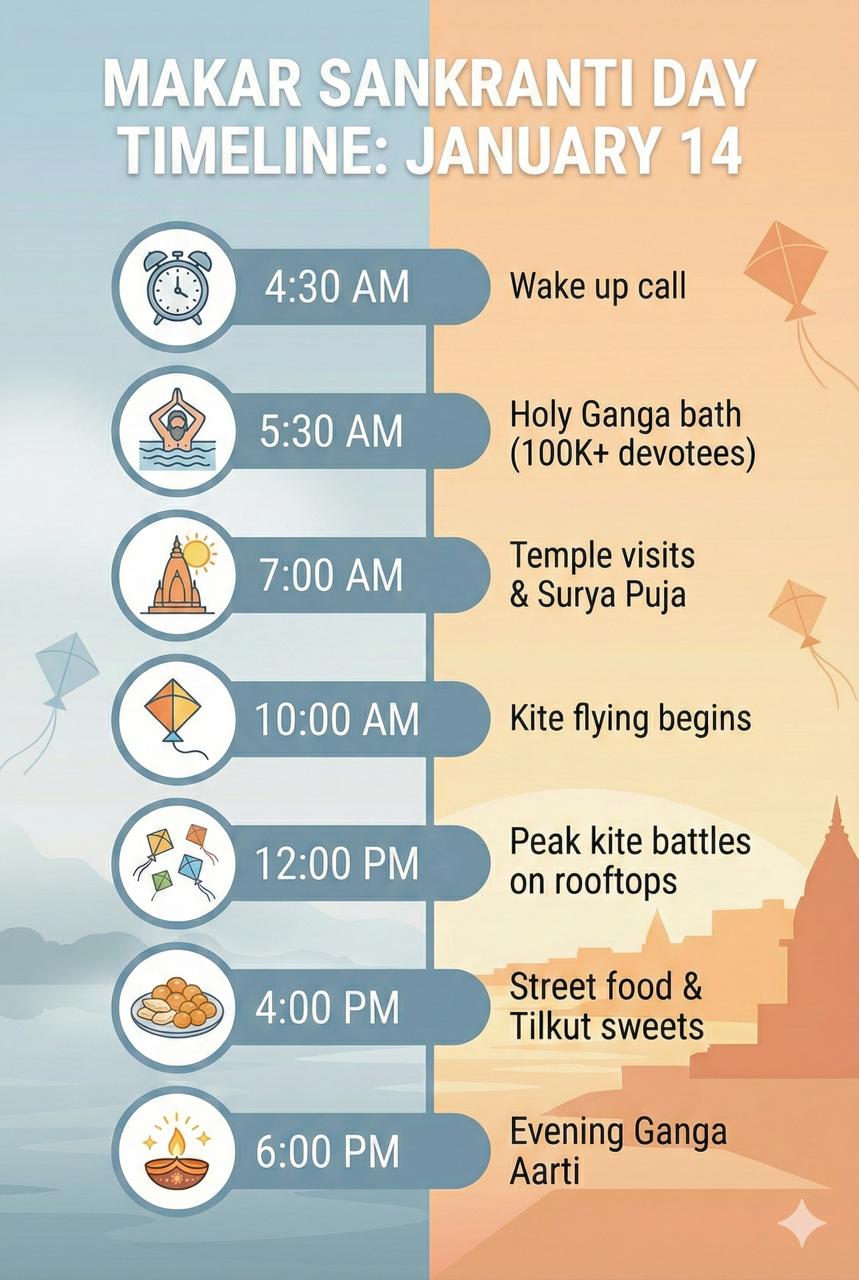
What is Makar Sankranti?
Ancient Hindu festival marking the Sun's transition from Sagittarius to Capricorn, symbolizing the end of winter and start of longer days. Celebrated as harvest festival across India.
In Varanasi Specifically:
Early Morning (4:30–7:00 AM) — Spiritual Dimension:
Late Morning–Afternoon (10:00 AM–4:00 PM) — Recreational:
Evening (5:30–7:00 PM):
- Ganga Aarti (normal ceremony, more festive atmosphere)
- Bonfire gatherings (rare, but sometimes organized)
- Celebrations on ghats
Best Things to Do in Varanasi in January
Morning Activities (6:00–9:00 AM)
1. Sunrise Boat Ride on Ganges ✓✓✓
- Start: 6:00 AM sharp
- Duration: 1–1.5 hours
- Cost: ₹300–500 per person
- Taxi from hotel: ₹400–600 each way
- Why: Crystal-clear visibility, few tourists, crisp air, spiritual atmosphere, priests perform aarti
- Pro tip: Bring warm jacket; river breeze is chilly
2. Ganga Aarti at Dashashwamedh Ghat (Evening 6:30 PM, but morning option too)
- Early morning ceremony: 5:30 AM (less crowded)
- Evening ceremony: 6:30 PM (more spectacular)
- Duration: 45 minutes–1 hour
- Best January experience: Arrive by 5:15 AM for reserved seating (costs ₹100–200)
3. Temple Visits
- Kashi Vishwanath Temple: 6:00–9:00 AM (empty)
- Durga Temple: 7:00 AM (peaceful)
- Sankat Mochan Temple: 7:30 AM
- Pro tip: Avoid 9 AM–5 PM (crowds), bring covered shoes
Daytime Activities (9:00 AM–5:00 PM)
4. Ghats Walking Tour
- Explore Dashashwamedh, Assi, Manikarnika, Scindia Ghats
- Time: 2–3 hours
- Weather: Perfect in January
- Local guide: ₹500–800
- Taxi: ₹150–200 one-way
5. Sarnath Buddhist Site Day Trip ✓✓
- Distance: 12 km (20 minutes by taxi)
- Taxi cost: ₹400–500 round-trip
- Time needed: 4–5 hours
- Must-see: Dhamek Stupa, Sarnath Museum
- January advantage: Cool, easy walking, no heat
6. Street Food Walking Tour
- Best time: 10:00 AM (after morning activities)
- Must-try January specialties:
- Malaiyo (creamy winter dessert)
- Tilkut (sesame-jaggery)
- Puris with aloo (potato)
- Warm lassi
- Duration: 1–2 hours
7. Shopping in Old City
- Silk scarves, shawls
- Traditional jewelry
- Brassware & handicrafts
- Best streets: Thatheri Bazaar, Vishwanath Lane
- Timing: 10 AM–4 PM (avoid rush)
Evening Activities (4:00 PM–8:00 PM)
8. Ganga Aarti at Sunset
- Time: 6:30 PM
- Duration: 45 minutes–1 hour
- Seats: Book in advance (₹100–200)
- Standing: Free, arrive by 5:30 PM
- January benefit: Comfortable standing, clear evening, perfect photography
9. Evening Stroll Along Ghats
- 5:00–6:00 PM (before aarti)
- Photography: Golden hour light
- Street musicians & performers
- Peaceful atmosphere (pre-aarti)
10. Rooftop Yoga & Meditation
- Available at most hotels
- Time: 5:30–6:30 AM or 6:00–7:00 PM
- Cost: ₹300–500
- Book in advance
3-Day January Itinerary (Perfect for First-Time Visitors)
Day 1: Arrival & Evening Exploration
- Arrive at airport/railway station
- Book taxi to hotel (₹600–800)
- Afternoon: Rest, explore nearby market
- Evening (5:00 PM): Ganga Aarti at Dashashwamedh Ghat
- Dinner: Traditional thali at riverside restaurant
Day 2: Spiritual Immersion (Makar Sankranti if Jan 14)
- 4:30 AM: Wake up
- 5:30–6:30 AM: Holy Ganga bath or sunrise boat ride (₹400)
- 7:00 AM: Temple visit (Kashi Vishwanath)
- 9:00 AM: Breakfast, rest
- 10:00 AM–2:00 PM: Kite flying on rooftops (if Makar Sankranti)
- 2:00–5:00 PM: Street food tour & shopping
- 6:30 PM: Ganga Aarti (evening ceremony)
Day 3: Extended Exploration
- 6:00–7:30 AM: Sunrise boat ride
- 8:00 AM: Breakfast
- 10:00 AM–3:00 PM: Sarnath day trip by taxi (₹500 round-trip)
- Dhamek Stupa
- Sarnath Museum
- Chaukhandi Stupa
- Buddhist temples
- 4:00 PM: Return to Varanasi
- 5:00–6:00 PM: Ghats walking tour
- 6:30 PM: Final Ganga Aarti
- Evening: Packing, departure prep
Total estimated cost: ₹2,000–3,500 per person (excluding hotel & flights)
Advantages of January vs. Other Months
| Factor | January | December | February | November |
|---|
| Temperature | 14–22°C (BEST) | 12–20°C | 16–25°C | 18–28°C |
| Crowds | Peak but manageable | Heavy (holiday season) | HEAVIEST | Heavy |
| Festivals | Makar Sankranti 🎉 | None | Maha Shivratri | Dev Deepawali |
| Morning Fog | Excellent | Less | Rare | Rare |
| Prices | High but worth it | HIGHEST | Very high | Moderate |
| Best Activities | All | All | All | Festival-heavy |
| Comfort Level | 10/10 | 9/10 | 8/10 | 9/10 |
Verdict: January is superior to December because:
- Warmer afternoons (less chilly than Dec)
- Makar Sankranti festival adds cultural depth
- Manageable crowds (peak but not chaos)
- Better for all activities (temples, shopping, boating)
- Prices are reasonable (not as inflated as Dec 20-Jan 1)
Getting Around Varanasi in January
Airport/Railway Station to Hotel
- Taxi (RECOMMENDED): ₹600–800, 30 minutes
- Why taxi: Fixed fare, safe, no negotiation
Boat Rides (Ganga)
- Cost: ₹300–500 per person
- Duration: 45 min–2 hours
- Best time: 6:00 AM (sunrise)
- Book at: Ghats directly or hotel
Day Trips
- Sarnath (12 km): Taxi ₹400–500 round-trip
- Vindhyachal (40 km): Taxi ₹600–800 round-trip
- Prayagraj (120 km): Full day, ₹1,200–1,500
Within City
- Auto-rickshaw: ₹50–100 per trip
- Taxi: ₹200–300 per trip
- Walking: Best in old city (narrow lanes)
Book everything in advance: Hotels fill up quickly in January.
Hotels & Accommodation in January
Budget (₹1,000–2,000/night)
- Ashray Hostel, Shree Hari Apartments
- Small family-run guesthouses on ghats
- Trade-off: Noise from ghats, basic amenities
Mid-Range (₹2,500–5,000/night)
- Recommended: Ramesha Ghat Guest House, Yatri Guest House
- Good location, rooftop aarti viewing, decent comfort
Premium (₹5,000+/night)
- The Taj Gateway, India Gate Varanasi
- Luxury, excellent service, expensive
Book 2–3 weeks in advance for January.
Frequently Asked Questions
Q: How cold is January in Varanasi?
A: Not very cold. Daytime 18–24°C is pleasant. Nights 8–12°C require a jacket but not heavy winter gear. Much milder than northern Indian cities like Delhi.
Q: Is Makar Sankranti worth experiencing?
A: Absolutely. It's a once-in-a-lifetime cultural event. The spiritual energy of 100,000+ devotees + colorful kites create an unforgettable experience.
Q: Can I skip the early morning activities?
A: You can, but you'll miss the best part. Early mornings (5:30–7:00 AM) are when Varanasi's spiritual soul shines. Late sleepers often regret it.
Q: What should I eat in January?
A: Seasonal specialties: Malaiyo (winter dessert), Tilkut (sesame brittle), Puris, warm lassi, sugarcane juice. Street food is safe if cooked in front of you.
Q: Is it safe to visit alone in January?
A: Yes. January's crowds mean more tourists and security. Stick to main ghats, avoid deserted lanes at night, keep valuables secure.
Q: Can I do Ganga Aarti twice (morning & evening)?
A: Yes! Morning ceremony is less crowded (5:30 AM), evening is more spectacular (6:30 PM). Many tourists do both.
Q: Can I take a holy dip in the Ganga in January?
A: Yes, but the water is around 15°C. Take the dip around 12:00 PM when the sun is out, rather than at sunrise.
Q: Is the Ganga Aarti time different in winter?
A: Yes! Because it gets dark early, the evening Aarti starts around 6:00 PM (instead of 7 PM in summer). Reach by 5:00 PM to get a good seat.
Q: Will fog affect my flight?
A: Likely, if flying before 11 AM. Book afternoon flights when possible, and keep a taxi backup plan for diversions.
Packing Checklist
Safety Tips
- Carry copies of important documents
- Use registered taxis, avoid unmarked ones
- Avoid walking alone late evening
- Keep valuables in hotel safe
- Drink bottled water only
Final Recommendation
January is THE BEST month to visit Varanasi.
Combine the spiritual depth of Makar Sankranti festival, perfect weather for exploration, manageable crowds, and iconic activities like sunrise boat rides and Ganga Aarti. Pack layers, book early, and prepare for a transformative experience.
