Every winter, thousands of families across India travel to Varanasi for a specific spiritual purpose: resolving ancestral obstacles and making peace with departed souls. While autumn's Pitru Paksha is widely observed, North Indian tradition reserves a second critical date for intense ancestral remediation: Paush Amavasya, known locally as Chhoti Pitru Paksha (Mini Pitru Paksha).
On this day, the spiritual heart of Kashi shifts away from the commercial tourist riverfront toward a tranquil stone tank tucked behind Chetganj: Pishach Mochan Kund.
Here, overlooking the ancient waters, sits Vimukteshwar Mahadev—the Shiva manifestation revered in the Skanda Purana for breaking the karmic chains of Pret Yoni (restless ghost states). If your family is planning to perform Tripindi Shradh, Narayan Bali, or Pitru Tarpan in Varanasi on Paush Amavasya 2027, this guide covers exact muhurat timings, how vehicles drop passengers right near the kund steps, priest dakshina benchmarks, and winter fog travel planning.
1. Quick Facts & Paush Amavasya 2027 Timings
Astronomical timings for Varanasi (25.3176° N, 82.9739° E) on Thursday, 7 January 2027:
Conclusion of daytime rites; evening oil lamps lit.
Amavasya Tithi Ends
Friday, 8 January 2027 at 01:54 AM
Rites span the entire daylight hours of Thursday.
Kutup Muhurat
Thursday, 7 January 2027, 11:51 AM – 12:36 PM
First auspicious 45-minute window for Shradh rites.
Rohina Muhurat
Thursday, 7 January 2027, 12:36 PM – 01:21 PM
Second auspicious window; ideal for Pind Daan offerings.
Aparahna Kaal (Peak Window)
Thursday, 7 January 2027, 12:36 PM – 03:07 PM
The scriptural afternoon window when ancestors receive offerings.
Timing Rule: General Ganga bathing and personal Tarpan take place at dawn (05:30 AM – 08:00 AM). Formal Tripindi Shradh at Pishach Mochan Kund takes place between 08:30 AM and 02:30 PM, ideally concluding within Aparahna Kaal.
2. Why Paush Amavasya Matters: The Mini Pitru Paksha
In Vedic astrology, the solar month of Pausha belongs to Bhaga Aditya, the solar deity associated with ancestral grace, duty, and spiritual settlement. Because the Sun moves through Sagittarius (Dhanu Rashi) during this month, traditional householder celebrations like weddings are paused, turning the focus inward.
For families across India, Paush Amavasya serves three distinct purposes:
Remedying Missed Pitru Paksha: If illness, long-distance travel, or ritual birth/death pollution (sutak/patak) prevented you from performing annual Shradh during autumn, Paush Amavasya acts as the astrological equivalent.
Neutralizing Pitru Dosha: Astrological charts showing Saturn-Rahu-Sun afflictions, recurring financial blockages, unexplainable domestic discord, or delays in childbirth are traditionally brought to Pishach Mochan for purification.
Resolving Untimely Departures: Souls who departed through accidents, suicides, sudden infant mortality, or violent incidents are believed to experience lingering distress. Paush Amavasya provides an established liturgical window to release those bonds.
3. Gaya vs. Pishach Mochan: The Critical Difference
A frequent doubt among travelers is whether to perform rites at Gaya (in Bihar) or Pishach Mochan Kund (in Kashi).
Vedic Karmakand scholars explain the clear operational difference:
Feature
Gaya (Vishnupada)
Pishach Mochan Kund (Varanasi)
Primary Spiritual Function
Ultimate liberation (Moksha) into Vaikuntha Dham.
Shattering ghost entrapment (Pret Yoni Nivaran).
Type of Death Addressed
Natural, peaceful, full-term deaths.
Unnatural, violent, sudden, or untimely deaths.
Core Ritual Performed
Pind Daan with rice and dried milk (khoya).
Tripindi Shradh with three flour pinds.
Presiding Deity
Lord Vishnu (Vishnupada footprints).
Lord Shiva (Vimukteshwar Mahadev).
Sequence of Pilgrimage
Final destination for ancestral rites.
Mandatory first step if a soul is stuck in distress.
The Golden Rule of Ancestral Rites: If an ancestor departed through an untimely or traumatic event, offerings made at Gaya remain suspended. The soul must first be liberated from the Pret Yoni through Tripindi Shradh at Pishach Mochan Kund in Kashi. Once released by Vimukteshwar Mahadev, the family can proceed to Gaya for final Pind Daan.
4. The Anatomy of Tripindi Shradh at Pishach Mochan
The hallmark ritual of Paush Amavasya at Pishach Mochan is the Tripindi Shradh—literally "Shradh for Three Departed Lineages." Conducted along the stone ghats of the kund, it uses three distinct pinds to balance the three gunas (qualities) of nature:
┌────────────────────────────────────────────────────────────────────────┐
│                   The Three Pinds of Tripindi Shradh                   │
├─────────────────────┬────────────────────┬─────────────────────────────┤
│ 1. Satvik Pind      │ White Barley Flour │ Consecrated to Lord Brahma. │
│                     │ (Jau ka Atta)      │ Liberates quiet, spiritual  │
│                     │ with Milk & Sugar  │ unfulfilled attachments.    │
├─────────────────────┼────────────────────┼─────────────────────────────┤
│ 2. Rajasik Pind     │ Rice Flour         │ Consecrated to Lord Vishnu. │
│                     │ (Chawal ka Atta)   │ Settles worldly desires,    │
│                     │ with Ghee & Honey  │ family & business worries.  │
├─────────────────────┼────────────────────┼─────────────────────────────┤
│ 3. Tamasik Pind     │ Black Sesame Flour │ Consecrated to Lord Rudra.  │
│                     │ (Kala Til ka Atta) │ Breaks traumatic deaths,    │
│                     │ with Water         │ suicide, violence & curses. │
└─────────────────────┴────────────────────┴─────────────────────────────┘
The Sacred Pipal Tree & Nailing Ritual (Keel Thokna)
On the eastern bank of the kund stands an ancient, sacred Pipal tree (Akshaya Vata). At the conclusion of the Tripindi Shradh, the priest hands the family an iron nail (keel) or copper coin.
With deep prayer, the nail is gently hammered into the trunk, or a sacred red-and-yellow thread (moli) is bound around its roots. This physical gesture symbolically hands over custody of the departed soul to Lord Shiva, ensuring the spirit can no longer disturb the living family.
Following this, the family enters the adjacent Vimukteshwar Mahadev Mandir to offer Gangajal, raw milk, honey, and bilva leaves, sealing the liberation.
5. Practical 1-Day Itinerary for Outstation Families
Here is a tested, realistic timeline for an outstation family arriving in Varanasi to perform Paush Amavasya rites without exhaustion:
05:30 AM – 07:00 AM : Phase 1 — Dawn Ganga Snan & Tarpan (Dashashwamedh or Assi Ghat)
07:15 AM – 08:15 AM : Dry clothes, hot ginger tea & light satvik breakfast at hotel
08:30 AM – 11:30 AM : Phase 2 — Pishach Mochan Kund Tripindi Shradh (Chetganj)
11:30 AM – 12:15 PM : Phase 3 — Vimukteshwar Mahadev Jalabhishek & Pipal Tree Rites
12:30 PM – 02:00 PM : Satvik lunch / Phalahari meal (Lahurabir / Sigra area)
02:30 PM – 04:30 PM : Phase 4 — Shri Kashi Vishwanath Dham Sulabh Darshan (Gate 4)
05:00 PM – 06:00 PM : Phase 5 — Winter Charity (Brahmin Bhojan, woolens & Tilkut Daan)
06:15 PM – 07:30 PM : Evening Dashashwamedh Ganga Aarti (from ghat steps or calm boat)
What to Wear & Bring
For the Main Karta (Person performing rites): Clean, unstitched white or cream cotton dhoti and upper cloth (angavastram). Synthetic clothes and leather items (belts, wallets, leather shoes) are strictly prohibited during the puja.
For Family Members: Traditional Indian attire (sari, salwar suit, kurta-pyjama).
Puja Materials: Most authorized Teerth Purohits provide the complete samagri kit as part of their dakshina. You do not need to buy raw flour or pots from street hawkers.
Footwear: Slip-on shoes that are easy to remove and slip back on. Carry a clean pair of woolen grip socks—stone temple floors in early January drop to 8°C–10°C, and walking barefoot on freezing marble can be very uncomfortable for seniors.
6. Ground Logistics: Reaching Pishach Mochan by Car
The biggest logistical advantage of Pishach Mochan Kund—especially for families traveling with elderly parents who have knee pain or difficulty walking—is its accessible road location.
┌────────────────────────────────────────────────────────────────────────┐
│              Access Comparison: Old City Ghats vs. Pishach Mochan      │
├──────────────────────────┬─────────────────────────────────────────────┤
│ Old City Ghats           │ • Police vehicle barricades stop cars 1 km  │
│ (Dashashwamedh /         │   away at Godowlia or Maidagin.             │
│ Manikarnika)             │ • Requires walking 900m through galis.      │
│                          │ • 50 to 100 steep, slick stone stairs down. │
├──────────────────────────┼─────────────────────────────────────────────┤
│ Pishach Mochan Kund      │ • Located on wide vehicular roads.          │
│ (Chetganj / Lahurabir)   │ • Cabs drop passengers at the lane mouth.   │
│                          │ • Only 80–120 meters flat, paved walk.      │
│                          │ • Broad, shallow stone steps at the water.  │
└──────────────────────────┴─────────────────────────────────────────────┘
Verified Vehicle Drop Points
Primary Drop Gate — Pishach Mochan Lane Entrance (Chetganj Road):
Driver Arrangement: The lane is too narrow for parking. A dedicated private cab drops the family at the lane mouth, helps seniors out, and parks nearby.
Secondary Drop Gate — Lahurabir Chauraha:
Distance to Kund: Approx 350 meters (wide sidewalk via Queens College Road). Suitable for larger group vehicles like 17-seater Tempo Travellers.
Where the Cab Waits:
Private cabs park at Queens College grounds or Lahurabir multi-level parking (400m away). When your puja concludes after 1.5–2 hours, a quick WhatsApp message or call brings your driver right back to the lane entrance for pickup.
Transit Times from Major Hubs (Winter Fog Considered)
Varanasi Cantt Railway Station (BSB) ⇄ Pishach Mochan: 2.5 km (10–15 min drive).
Banaras Station (BSBS) ⇄ Pishach Mochan: 5.5 km (18–25 min drive).
Pt. Deen Dayal Upadhyaya Junction (DDU) ⇄ Pishach Mochan: 18 km (45–60 min drive).
Babatpur Airport (VNS) ⇄ Pishach Mochan: 24 km (35–45 min drive via Airport Highway).
Pishach Mochan ⇄ Shri Kashi Vishwanath Gate 4 (Gyanvapi): 3.2 km (15 min drive to Benia Bagh Multi-Level Parking, then 650m flat walk).
Visiting Varanasi for Paush Amavasya & Tripindi Shradh (Thursday, 7 January 2027)? Book doorstep cabs to Pishach Mochan Kund, private dawn Ganga snan boats, and Kashi Vishwanath Sulabh Darshan passes with transparent zero-surge pricing.
₹2,499 full-day (8h/80km) dedicated cab / ₹2,800 Ertiga / ₹4,250 Tempo — driver drops near kund lane & waits during your 2-hour shradh
Doorstep drop at Pishach Mochan (only 100m flat walk to steps, avoiding exhausting old city alley walks for elderly parents)
ERP-reviewed private boat charters (₹3,500 up to 6 pax / ₹4,500 up to 15 pax) for dawn Ganga snan and riverfront Tarpan
₹899 Airport (VNS) / ₹600 Cantt (BSB) ⇄ Hotel transfer with winter fog flight tracking and placard pickup
Because ancestral remediation is often sought by families during times of emotional vulnerability, unauthorized street agents (dalals) frequently operate around the Chetganj and Lahurabir intersections.
Common Street Middleman Tactics
The "Special License" Claim: Touts may approach your car claiming that the kund is closed or that only their specific priest is permitted to conduct rituals today.
The Escalating Price Trap: An agent quotes a low entry fee (e.g., ₹500), but once the puja begins and sacred water is in your hands, the priest halts the chanting and demands ₹5,000 to ₹15,000 for "unlocked secret mantras" or "special silver items."
Fear-Mongering: Claiming that your family is cursed with an extreme ghost affliction that requires a ₹25,000 yajna.
How to Protect Your Family
Never engage with touts who approach your car window or follow you on foot.
Walk directly down the stone steps to the established Teerth Purohit wooden platforms (chowkis) located on the kund embankment.
Agree on the total inclusive fee before sitting down: Clearly ask, "Does this dakshina cover all three pinds, metal pots, samagri, and your final fee with zero extras?"
3 flour pinds (barley, rice, sesame), 3 pots (copper, brass/silver, clay), complete samagri kit, Gotra Sankalp, and tree nailing ritual.
Comprehensive Narayan Bali
3 – 4 hours
₹5,100 – ₹7,500
Multi-priest Vedic yajna for unnatural deaths, full havan wood, and Shanti path.
Brahmin Bhojan (Per Priest)
Meal & Dakshina
₹250 – ₹500 per Brahmin
Fresh satvik meal (puri, seasonal sabzi, kheer, sweets) plus cash dakshina.
Note: Kashi Taxi is a licensed transport and travel logistics service. We do not sell religious rituals or take commissions from priests. We share these benchmarks so you can negotiate directly and respectfully with authentic local purohits.
8. Winter Weather & Radiation Fog Protocol (Early January 2027)
Early January represents the height of Varanasi’s winter cold wave. Preparing properly ensures your family stays comfortable:
1. Temperature & Layering
Daytime temperatures reach a comfortable 18°C–22°C under bright sun.
Early mornings and nights drop sharply to 7°C–10°C.
Dawn river dips require immediate drying. Pack dry thermal innerwear, heavy shawls or woolen jackets, and warm caps for older family members.
2. Babatpur Airport (VNS) Fog Buffers
Dense radiation fog frequently reduces runway visibility below 50 meters between 05:00 AM and 09:30 AM.
Morning flights regularly face 1- to 3-hour air-traffic holds under CAT-III rules.
Flight Booking Recommendation: If traveling by air for Paush Amavasya, book flights scheduled to land between 11:30 AM and 03:30 PM. This allows the morning fog to clear and ensures smooth airport transfers.
3. Railway Buffers
Long-distance trains from Delhi, Bihar, and West Bengal frequently run 2 to 5 hours late during peak January fog.
Plan to arrive in Varanasi on the afternoon of Wednesday, 6 January, resting overnight at your hotel before beginning rites at dawn on Thursday, 7 January.
9. Fixed-Fare Vehicle & Boat Charters
For transparent pilgrimage planning, Kashi Taxi provides verified fixed fleet rates with zero festival surcharges:
Ideal for the full circuit: Hotel pickup ➔ Dawn Ganga Snan ➔ Pishach Mochan Kund (driver waits during 2-hour shradh) ➔ Kashi Vishwanath Dham ➔ Evening Aarti ➔ Hotel drop.
Fleet Category
Model
Full-Day Tariff (8h/80km)
Extra Hour
Extra Km
Best For
AC Sedan
Swift Dzire / Etios
₹2,499
₹150/hr
₹12/km
Couples & elderly parents (up to 4 pax)
AC Family SUV
Maruti Ertiga
₹2,800
₹200/hr
₹15/km
Families of 4–6 with bags & samagri
Executive MPV
Toyota Innova Crysta
₹3,800
₹300/hr
₹20/km
Senior citizens seeking maximum comfort
Tempo Traveller
12-Seater Force TT
₹3,600
₹350/hr
₹22/km
Extended family groups (8–12 pax)
Tempo Traveller
17-Seater Force TT
₹4,250
₹400/hr
₹25/km
Large group pilgrimages (12–17 pax)
Private Sunrise Boat Charters for Dawn Ganga Tarpan
Authorized under TravelAgentERP pricing (data/erpServicePricing.json):
Charter Category
Capacity
ERP Tariff
Inclusions & Route
Private Wooden Boat (Standard)
1–6 passengers
₹3,500
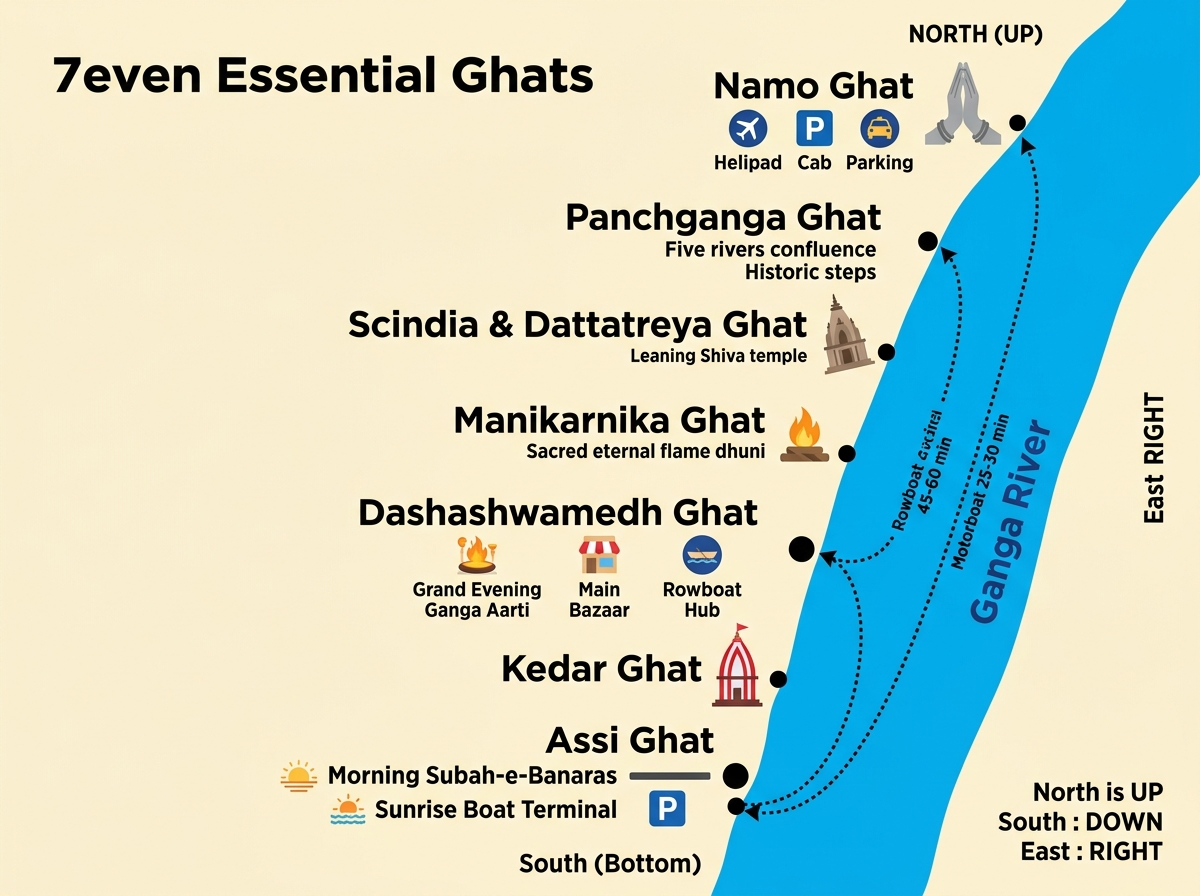
Assi/Dashashwamedh ⇄ Manikarnika round-trip; stops offshore for sacred dawn snan and riverfront Tarpan; life vests included.
Private Wooden Boat (Medium Group)
Up to 15 passengers
₹4,500
Cushioned group seating with stable platform for family tarpana rituals.
Traditional Large Bajra
Up to 30 passengers
₹6,500
Spacious upper/lower decks, full shade canopy, and complete riverfront circuit.
Temple Darshan Assistance
Shri Kashi Vishwanath Sulabh Darshan:₹500 per person (Comprises ₹300 official temple trust ticket + ₹200 dedicated queue escort service via Gate 4 Gyanvapi or Gate 1 Dhurajraj).
Sparsh Darshan / Mangala Aarti: Arranged upon request and verified availability through staff (quoted at current trust rates).
Visiting Varanasi for Paush Amavasya & Tripindi Shradh (Thursday, 7 January 2027)? Book doorstep cabs to Pishach Mochan Kund, private dawn Ganga snan boats, and Kashi Vishwanath Sulabh Darshan passes with transparent zero-surge pricing.
₹2,499 full-day (8h/80km) dedicated cab / ₹2,800 Ertiga / ₹4,250 Tempo — driver drops near kund lane & waits during your 2-hour shradh
Doorstep drop at Pishach Mochan (only 100m flat walk to steps, avoiding exhausting old city alley walks for elderly parents)
ERP-reviewed private boat charters (₹3,500 up to 6 pax / ₹4,500 up to 15 pax) for dawn Ganga snan and riverfront Tarpan
₹899 Airport (VNS) / ₹600 Cantt (BSB) ⇄ Hotel transfer with winter fog flight tracking and placard pickup