Tilbhandeshwar Mahadev Me Jal Chadhane Ka Time Guide & Details
Devotees seeking divine grace and spiritual solace regularly inquire about tilbhandeshwar mahadev me jal chadhane ka time when visiting the revered Shaktipeeths and sacred temples across Varanasi. Chanting sacred stotras and offering prayers here grants fulfillment of wishes, strength, and auspicious peace. This guide outlines traditional sankalp vidhi, official trust timings, priest dakshina, and recommended morning and evening darshan slots.
Spiritual Significance & Scriptural Context of Tilbhandeshwar Mahadev Swayambhu Lingam
Puranic Lore & Kashi Mahatmya of Tilbhandeshwar Mahadev Swayambhu Lingam
The sacred tradition of Tilbhandeshwar Mahadev Swayambhu Lingam is deeply rooted in the eternal spiritual geography of Varanasi—revered across Vedic antiquity as Kashi, the luminous City of Light, and Avimukta Kshetra. According to the Kashi Khanda of the Skanda Purana, every sacred shrine, kund, and ghat in this holy abode is consecrated by Lord Shiva Himself to bestow effortless liberation (Moksha) upon sincere seekers. Pilgrims engaging in tilbhandeshwar mahadev me jal chadhane ka time participate in an ancient lineage of devotion, where even a momentary contemplation or reverent darshan at the sanctum breaks the cycle of worldly affliction and dissolves accumulated karmic burdens.
Spiritual Merits & Divine Blessings (Phalaprada)
Scriptural traditions extol the incomparable spiritual fruits (Phalaprada) earned through sincere devotion at Tilbhandeshwar Mahadev Swayambhu Lingam. Devotees participating in these holy observances are blessed with inner peace, mental clarity, freedom from fear, and harmonious family well-being. For outstation pilgrims and families seeking divine grace, Tilbhandeshwar Mahadev Swayambhu Lingam offers a potent spiritual anchor that revitalizes faith and creates lasting spiritual merits for generations.
Key Pilgrim Inquiries & Practical Guidance
Devotees and families planning for tilbhandeshwar mahadev me jal chadhane ka time frequently seek practical clarification on the following key arrangements:
Tilbhandeshwar mahadev sesame seeds offering makar sankranti: Verified temple timings, traditional observance rules, and scheduled daily rituals outlined above.
Swayambhu shivling growing every year tilbhandeshwar kashi: Verified temple timings, traditional observance rules, and scheduled daily rituals outlined above.
Mahashivratri celebration at tilbhandeshwar temple varanasi: Verified temple timings, traditional observance rules, and scheduled daily rituals outlined above.
Tilbhandeshwar mandir madanpura khulne ka samay: Verified temple timings, traditional observance rules, and scheduled daily rituals outlined above.
Makar sankranti par tilbhandeshwar me til chadhana: Verified temple timings, traditional observance rules, and scheduled daily rituals outlined above.
Madanpura banaras me tilbhandeshwar mandir kahan hai: Designated corridor gate access, pedestrian walking routes, and nearby transit recommendations.
Step-by-Step Ritual Procedure & Vidhi for Tilbhandeshwar Mahadev Swayambhu Lingam
Purification Rites & Prathama Sankalp
The ritual vidhi commences with external and internal purification rites (Shaucha and Achamana). Devotees ideally bathe in the holy waters of the sacred Ganges or sprinkle holy Ganga jal over their head while reciting the sacred snan mantra. Facing East or North, the assisting Vedic Shastri leads the Prathama Sankalp, placing Kusha grass, unbroken sacred rice (Akshat), Gangajal, betel nut (Supari), and a copper coin into the devotee's right palm while chanting ancestral gotra, name, tithi, and spiritual intentions.
Core Vedic Mantra Chanting & Offerings (Samagri)
The central liturgical ceremony unfolds through classical Shodashopachara (sixteen-step) or Panchopachara offerings. Fresh fragrant Bilva leaves (bel patra), raw cow milk, pure honey, Gangajal, holy Bhasma (vibhuti), and Chandan paste are solemnly offered to the deity amidst the resonating chants of Vedic hymns, including Sri Rudram, Purusha Suktam, and sacred stotras tailored to Tilbhandeshwar Mahadev Swayambhu Lingam. Devotees participate with focused concentration, channeling their prayers for peace and spiritual illumination.
Concluding Aarti, Parikrama & Holy Prasad
The ritual reaches its divine crescendo with the deepa aarti performed using multi-tiered brass oil lamps and camphor (Karpoor Gauram). Devotees join hands amidst conch-blowing (shankhadhwani) and the rhythmic chiming of temple bells. Following the aarti, pilgrims perform clockwise circumambulation (Pradakshina) around the consecrated sanctum, receive the holy Charanamrit and sacred ash/chandan tilak on their foreheads, and partake in the blessed Mahaprasad distributed by temple priests.
Key Pilgrim Inquiries & Practical Guidance
Devotees and families planning for tilbhandeshwar mahadev me jal chadhane ka time frequently seek practical clarification on the following key arrangements:
Til and gur offering procedure at tilbhandeshwar: Verified temple timings, traditional observance rules, and scheduled daily rituals outlined above.
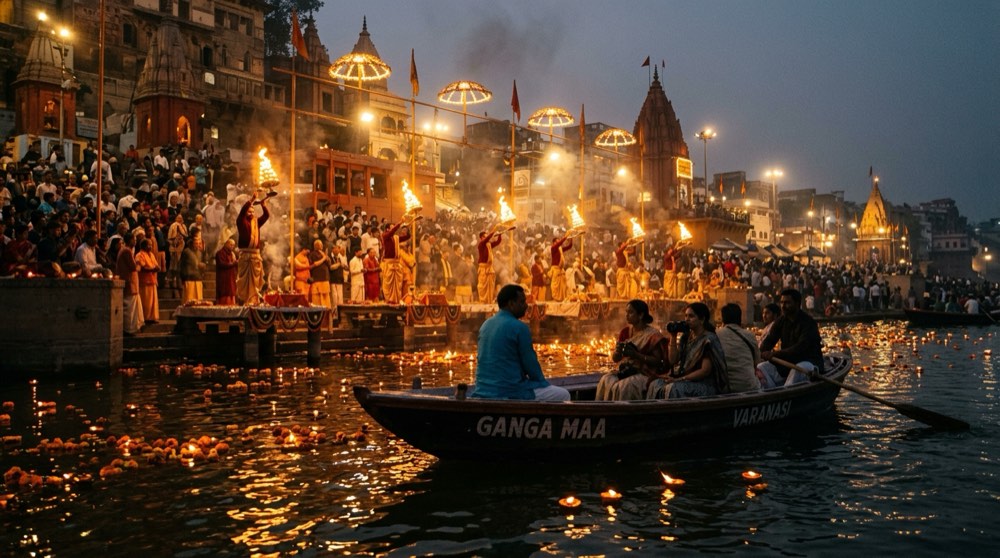
The sacred ghats and timeless atmosphere of Kashi Vishwanath Dham along Mother Ganga.Varanasi Divine Yatra
Priest Dakshina, Official Booking & Pricing for Tilbhandeshwar Mahadev Swayambhu Lingam
Transparent Dakshina & Official Tariff Structure
Maintaining financial clarity and transparent dakshina practices is essential for a peaceful pilgrimage experience. Official tariffs for priority facilitation, darshan passes, and temple ceremonies are regulated by temple administration and authorized trusts. Standard offerings typically start from ₹300 for basic facilitation passes up to structured packages for elaborate pujas that include high-grade samagri, priest dakshina, and official sanctum access tokens.
Devotees can pre-book darshan slots and specialized seva tokens through official temple trust web portals or on-ground facilitation counters located at strategic pilgrimage nodes in Varanasi, including Bansphatak, Gate 4 Helpdesk, Maidagin Reception, and the Vishwanath Corridor facilitation office. Advanced online reservations generate an official digital receipt with QR verification, ensuring hassle-free sanctum access upon arrival.
Devotees are strongly advised to remain vigilant against unauthorized touts, unlicensed guides, and informal middlemen operating in the narrow alleys (galis) and ghats surrounding the temple complex. Always ensure your dakshina and service fees are paid against official printed receipts featuring official trust watermarks and valid transaction numbers, and coordinate exclusively with registered temple Shastris carrying authorized credentials.
Timings, Slots & Auspicious Muhurats for Tilbhandeshwar Mahadev Swayambhu Lingam
Daily Darshan Shifts & Temple Open Hours
The temple follows a structured daily liturgical schedule designed to accommodate both sacred pujas and mass pilgrim darshan. Sanctum doors typically open in the early dawn hours (between 3:00 AM and 4:00 AM) for morning mangala rituals, followed by continuous general darshan shifts throughout the morning and afternoon, before closing with late evening shayan aarti around 11:00 PM. Pilgrims should select their preferred time slot keeping daily aarti schedules in mind.
Peak Rush Hours on Mondays and Auspicious Festivals
Varanasi experiences substantial influx on sacred days, notably Somvar (Mondays), Pradosham, Shravan Maas, Mahashivratri, and Dev Deepawali. During these peak periods, unreserved queues can experience significant waiting times. Pilgrims holding scheduled tokens for Tilbhandeshwar Mahadev Swayambhu Lingam are urged to arrive at least 45 to 60 minutes before their designated slot to navigate security checkpoints smoothly.
Special Tithis, Nakshatras & Sacred Muhurats
Certain astrological tithis and celestial alignments amplify the spiritual efficacy of observances at Tilbhandeshwar Mahadev Swayambhu Lingam. Dates such as Shukla Paksha Ekadashi, Purnima, Amavasya (vital for ancestral tarpana rites), and planetary transits (Sankranti) are considered exceptionally meritorious for performing dedicated sankalps, offering charity, and receiving divine grace in Kashi Dham.
Key Pilgrim Inquiries & Practical Guidance
Devotees and families planning for tilbhandeshwar mahadev me jal chadhane ka time frequently seek practical clarification on the following key arrangements:
Tilbhandeshwar temple varanasi growing shivling timings: Verified temple timings, traditional observance rules, and scheduled daily rituals outlined above.
Tilbhandeshwar mahadev jalabhishek morning timings: Verified temple timings, traditional observance rules, and scheduled daily rituals outlined above.
Tilbhandeshwar mahadev me jal chadhane ka time: Verified temple timings, traditional observance rules, and scheduled daily rituals outlined above.
Tilbhandeshwar mahadev kashi mandir timings marathi: Verified temple timings, traditional observance rules, and scheduled daily rituals outlined above.
Prescribed Traditional Attire (Dhoti/Kurta & Saree)
Preserving sanctity inside the Garbhagriha requires strict adherence to traditional Vedic dress codes. Male devotees participating in inner sanctum darshan or abhishek rituals must wear traditional dhotis with an angavastram or a modest kurta-pyjama. Female devotees are requested to wear sarees or traditional salwar-kameez with a dupatta. Western casuals, shorts, and sleeveless apparel are strictly restricted inside the inner temple premises.
Security Checkpoints & Prohibited Electronics
High-level security protocols are enforced across all temple gates. Mobile phones, electronic cameras, smart watches, bluetooth devices, power banks, leather belts, wallets, and tobacco products are strictly prohibited inside the sanctum. Pilgrims should safely deposit their electronic devices and leather accessories at official biometric locker facilities available near the main corridor entrances before joining the darshan queue.
Sanctum Sparsh Etiquette & Vow Observance
Devotees entering the holy sanctum are expected to maintain solemn reverence, silence, and queue discipline. Follow the instructions of on-duty marshals and Shastris, avoid touching ancient temple carvings without permission, and complete your prayer offerings with mindfulness so that all devotees enjoy equal access to the divine darshan.
Key Pilgrim Inquiries & Practical Guidance
Devotees and families planning for tilbhandeshwar mahadev me jal chadhane ka time frequently seek practical clarification on the following key arrangements:
The temple complex is directly accessible through multiple dedicated entrances connected to key arterial roads. Gate 4 (Bansphatak) and Gate 1 (Dhundhiraj / Godowlia) serve as primary gateways from the city center, while Gate 2 (Saraswati Phatak) and Gate 3 (Neelkanth / Lalita Ghat) offer scenic riverfront access directly from the Ganges. From Varanasi Junction (BSB) or Cantt Railway Station, e-rickshaws and auto-rickshaws operate frequently to Godowlia Crossing, from where pilgrims enjoy a short, pedestrian-friendly walk to the corridor.
The temple administration has instituted comprehensive pilgrim welfare amenities, including computerized biometric lockers, complimentary shoe deposit counters, RO drinking water kiosks, clean public restrooms, and medical first-aid booths. For senior citizens, expectant mothers, and differently-abled devotees, ramp pathways, free wheelchairs, and battery-operated golf carts operate along the corridor for effortless mobility.
Nearby Dharamshalas, Rest Areas & Ghat Connectivity
A wide selection of pilgrim dharamshalas, mutts, and budget guest houses catering to North Indian, South Indian (Tamil, Telugu, Kannada), and Bengali pilgrims are situated within short walking distance of the temple. The adjacent riverfront corridor connects effortlessly to holy ghats including Dashashwamedh, Manikarnika, and Assi, enabling devotees to easily combine sanctum darshan with holy Ganga snan and evening Ganga Aarti.
National Spiritual Circuits & Outstation Travel
Devotees planning broader sacred yatras across northern India can connect their Kashi stay with verified national circuits and dedicated private transfers:
What is the official booking process and dakshina for Tilbhandeshwar Mahadev Swayambhu Lingam?
Booking for Tilbhandeshwar Mahadev Swayambhu Lingam can be confirmed online via official temple portals or directly at designated helpdesk counters in Varanasi. Priest dakshina and official tariff typically start at ₹0, which covers the sacred samagri, priest assistance, and sanctum facilitation.
What are the daily timings and best hours to visit for Tilbhandeshwar Mahadev Swayambhu Lingam?
General darshan and ritual slots for Tilbhandeshwar Mahadev Swayambhu Lingam operate daily from early morning through late evening. Devotees are strongly advised to attend morning slots between 6:00 AM and 9:00 AM for a serene spiritual experience and to bypass heavy crowds on peak days.
Is there a mandatory dress code and security policy for Tilbhandeshwar Mahadev Swayambhu Lingam?
Yes, pilgrims must adhere to modest traditional Indian attire—such as dhoti-kurta for men and saree or salwar kameez for women. Mobile phones, electronic cameras, leather belts, and footwear must be deposited at official biometric locker counters before entering.
How can outstation pilgrims reach Tilbhandeshwar Mahadev Swayambhu Lingam and locate designated gates?
Located in the historic pilgrimage zone of Varanasi, Tilbhandeshwar Mahadev Swayambhu Lingam is easily reachable via auto-rickshaw or e-rickshaw from Varanasi Junction Railway Station (BSB) or Godowlia Crossing. Pilgrims should follow authorized route signage directly to the designated entry gate.