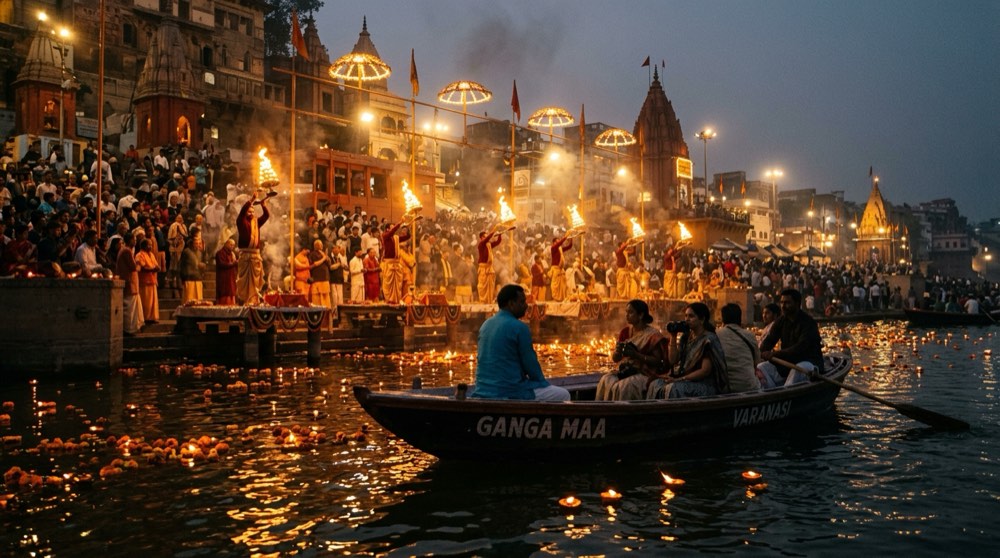
Maharani Ahilyabai Holkar shaped 18th-century Varanasi through monumental Maratha patronage, most notably rebuilding the Shri Kashi Vishwanath Temple in 1780. Her heritage spans Ahilyabai Ghat, Manikarnika renovations, and public feeding houses. Visitors can experience this legacy through a scenic riverfront heritage walk connecting Ahilyabai Ghat past Dashashwamedh and Manmandir to the Vishwanath Corridor.
The 18th-Century Maratha Renaissance in Varanasi
During the late eighteenth century, Varanasi experienced an extraordinary cultural and architectural revival under Maratha patronage. At the heart of this movement was Maharani Ahilyabai Holkar, the queen of Malwa who ruled from Maheshwar and Indore.
Following the destruction of the historic Kashi Vishwanath shrine in 1669, the sacred jyotirlinga had remained without a permanent temple structure for more than a century. In 1780, Ahilyabai financed and directed the construction of the present-day Kashi Vishwanath Temple adjacent to the Gyanvapi site. Her patronage also financed extensive stone masonry repairs along the riverfront, established permanent charity kitchens (annakshetras), and constructed Ahilyabai Ghat between 1778 and 1785.
The Heritage Corridor Walk: Ahilyabai to Manmandir
Travelers can easily experience this historic landscape on foot along the paved riverfront steps. The walking route covers roughly 600 meters in 15 to 20 minutes:
- Ahilyabai Ghat: Begin at the red-sandstone steps fronting Ahilyabai Baadi, taking in the quiet morning light and traditional riverfront architecture.
- Darbhanga & Munshi Ghats: Walk north past the towering stone turrets of Darbhanga Palace, admiring one of the river's most dramatic palatial facades.
- Dashashwamedh Ghat: Cross Kashi's central ceremonial hub, vibrant with morning bathers, floral vendors, and boatmen preparing for the day.
- Manmandir Ghat: Continue north to the sixteenth-century palace of Raja Man Singh of Amber, topped by the famous eighteenth-century stone astronomical observatory (Jantar Mantar) established by Sawai Jai Singh II.
- Entry to Kashi Vishwanath Dham: From Manmandir and adjoining Lalita Ghat, step directly into the newly built riverfront gates of the Kashi Vishwanath Dham corridor.
Best Time and Practical Walking Advice
- Timing: The early morning between 6:00 AM and 8:30 AM is ideal. The sunrise casts warm golden light across the stone facades, and the steps remain cool and easy to walk.
- Footwear: Wear sturdy, slip-resistant footwear that is easy to remove when stepping into small riverfront shrines.
- Photography: The section between Ahilyabai Ghat and Manmandir provides wide, unobstructed sightlines across the sweeping river bend. For a river-level view of the ghat line, visitors can rent a morning wooden boat from the steps.
Frequently Asked Questions
What was Ahilyabai Holkar's greatest contribution to Varanasi?
Her greatest contribution was rebuilding the sacred Shri Kashi Vishwanath Temple in 1780 adjacent to the Gyanvapi compound after the site had remained without a formal temple for over a century.
Which ghats did Queen Ahilyabai Holkar build or renovate in Kashi?
She built Ahilyabai Ghat (1778–1785), extensively repaired the stone embankments at Manikarnika Ghat, and established multiple riverfront dharamshalas and feeding houses.
How long is the heritage walk from Ahilyabai Ghat to Manmandir Ghat?
The walking route along the stone river steps takes roughly 15 to 20 minutes, covering about 600 meters past Darbhanga Ghat, Dashashwamedh Ghat, and Manmandir Ghat.
What historical monument stands at Manmandir Ghat along this corridor?
Manmandir Ghat features the 16th-century palace of Raja Man Singh of Amber and the rooftop stone astronomical observatory (Jantar Mantar) built by Sawai Jai Singh II.
Can visitors access the Kashi Vishwanath Corridor directly from this walk?
Yes. From Manmandir and Lalita Ghat, pilgrims can walk directly into the modern Shri Kashi Vishwanath Dham Corridor via the riverfront entrance gates.