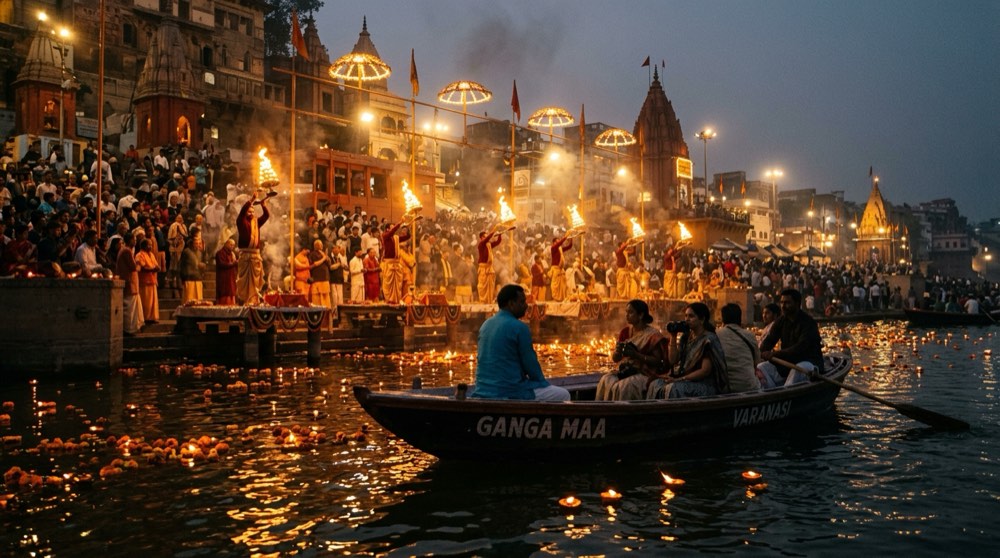
The Antargrihi Yatra is a walking pilgrimage through the inner, oldest part of Kashi. It is described in the Kashi Khanda. Guides count about 72 to 77 shrines, and the list changes with the text used. A morning start, a local guide and a sankalp near the river make planning easier. The cost needs an itemised quote.
What Is Antargrihi Yatra in Varanasi
The best-known Kashi pilgrimage is the Panchkroshi Yatra, a larger circle around the city. The Antargrihi circuit is a smaller one, centred on the area around Vishwanath. Texts describe its edges in terms of old shrines: the Ganga on the east, and other named Shiva shrines on the west, north and south. The path goes through lanes, courtyards and small temples.
Shrines Covered in Antargrihi Yatra
- Small Ganesha shrines (Vinayakas) at turns of the circuit.
- Shiva lingas of different names.
- Devi temples, including Annapurna and Vishalakshi.
- Sakshi Vinayak, where the pilgrim is said to "register" the completion of the yatra.
For the shrine list and order, read Antargrihi Yatra route and 77 temples list. This page is about planning.
Antargrihi Yatra Starting Point Manikarnika
Many priests begin with a bath and sankalp near the Ganga at Manikarnika, as described in tradition. Read Manikarnika Ghat and Kund before you go, since that area is also a cremation ground. Not every guide begins here, so ask which start they follow.
Antargrihi Yatra Walking Plan Tips
- Go in the early morning, before the lanes fill up.
- Choose a guide who can name each shrine. Ask how many shrines they include, and how long they expect it to take.
- Wear footwear you can remove easily. Temple rules on shoes and bags differ at each shrine.
- Keep cash small and bags light, as the lanes are tight.
- Eat lightly. Walking is slow, with many stops.
Antargrihi Yatra Walking Route Ground Reality
Attempting the Antargrihi Yatra with just a phone map catches almost every first-timer off guard within fifteen minutes. When I walk this inner loop starting from Manikarnika Kund around sunrise, half the checkpoints sit behind plain wooden doorways inside two-person-wide galis near Vishwanath Gali, Thatheri Bazar, and Chowk where GPS signals jump two blocks over. Around 7:00 AM, the lanes smell of fresh cardamom chai, wet stone rinsed clean before shops open, and jasmine buds strung along brass trays, while two-wheelers squeeze past chanting pilgrim groups carrying small steel water pots.
Because traffic barricades block cars inside this inner circle, steady pacing matters much more than rushing. I always suggest families with elderly parents or children avoid forcing every shrine into one tiring afternoon. Splitting the Antargrihi Yatra across two calm mornings—doing the ghat and southern lanes first while wall shadows keep the lanes cool, then visiting the northern Chowk and Omkareshwar stops the next day—makes the walk far easier. Keep your bag light, wear easy slip-on sandals because you take them off outside dozens of small temples, and note main road crossings before stepping deep into the lanes.
Antargrihi Yatra Guide and Priest Cost
I could not verify a standard rate. Ask for an itemised quote that lists the guide or priest, any puja items, and any car or boat. The price changes with group size, number of shrines, and whether a priest leads each stop.
For help with a bath and vow beforehand, see Ganga snan vidhi and sankalp.