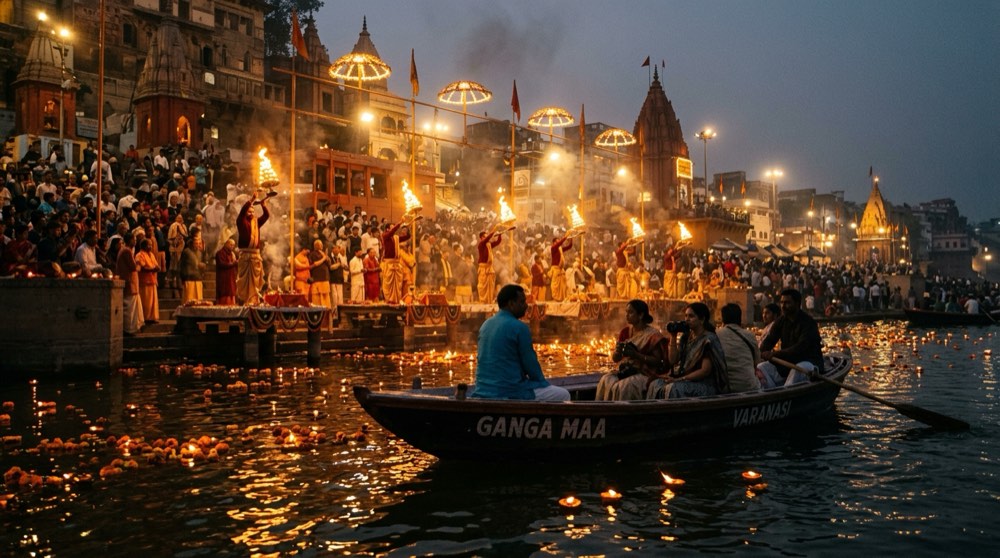
The Antargrihi Yatra is the sacred inner parikrama of Kashi, circumambulating the core territory surrounding Lord Vishwanath. Described in Chapter 100 of the Kashi Khanda, the traditional route encompasses 72 scriptural stations (often expanded to 77 temples in modern guidebooks). Key stops include Kashi Vishwanath, Dhandapani, Kaal Bhairav, and ancient Gauri shrines, typically completed on foot in one to two days.
Scriptural Origin: The 72 vs 77 Shrines
In the Kashi Khanda of the Skanda Purana, the inner boundary of the city (Antargriha) represents the heart of Lord Shiva's eternal abode, the Avimukta Kshetra.
While the wider Panchkroshi Parikrama covers an outer 75-kilometer circumference across rural borders, the Antargrihi Yatra is strictly an urban walking pilgrimage winding through the dense ancient alleys of old Banaras:
- Puranic Count (72 Shrines): The Skanda Purana precisely enumerates 72 sacred sites. This includes 56 primary Shiva lingams, alongside 12 guardian deities, holy wells (kups), and sacred river points.
- Modern Route Count (77 Temples): Over centuries of rebuilding, traditional Teerth Purohit guides incorporated 5 closely linked neighborhood sub-shrines into the physical walking route, bringing the total count to 77 stops in contemporary pilgrim manuals.
Key Temple Groupings on the Route
The circuit is organized in a clockwise spiral (pradakshina) around the golden sanctum:
- The Core Lingams: Begins at Manikarnika Ghat with Manikarnikeshwar, leading to Avimukteshwar, Tarakeshwar, and Mokshadheshwar inside Kashi Vishwanath Dham.
- Guardian Shrines: Devotees worship Dhandapani (the staff-bearing punisher who tests pilgrim sincerity) and Kaal Bhairav (the divine kotwal or police chief of Kashi).
- Mother Goddesses: Prayers are offered at Maa Annapurna and Lalita Gauri near the riverfront.
- Vinayak and Wells: Stopping before Sakshi Vinayak to validate the journey, followed by holy water prayers at the ancient Jnana Vapi well.
Practical Advice for Completing the Yatra
- Walking Logistics: Because the shrines sit along pedestrian stone passageways inaccessible to cars, comfortable walking shoes or traditional slip-on footwear are essential.
- Priest Guidance: Families often engage a local Teerth Purohit to lead the sankalp, chants, and route navigation through hidden alleyways.
- Extended Circuits: Pilgrims wishing to explore the outer halts can learn about the third stopping station at Rameshwar Mahadev on the Varuna River and the fourth halt at Shivpur Panch Pandav Temple.
More Planning Detail for This Route
Even when a route page is short, the booking decision should not be. Confirm the real pickup point, vehicle fit, luggage, senior-traveller needs, and the actual route plan before you lock the trip.
What To Confirm Before Booking
- Confirm whether the quote is one-way, round-trip, or tied to a package minimum.
- Ask about tolls, parking, driver allowance and extra waiting before paying advance.
- Choose the vehicle based on luggage and elderly passengers, not headcount alone.
- Send the real landmark, not just the area name, when the pickup is inside lanes or near campuses.
Which Vehicle Usually Fits Best
| Vehicle | Best Use |
|---|
| Sedan | Small groups, moderate luggage, straightforward transfer |
| SUV / MUV | Families, elders, more luggage, easier entry-exit |
| Tempo Traveller | Group travel, multi-stop darshan, one-vehicle coordination |