TL;DR
- 4N/5D Ram Mandir + Kashi Vishwanath + Triveni Sangam group pilgrimage circuit.
- Built for families, temple committees, satsang groups, and mixed-age pilgrims wanting hotel + transport + darshan pacing + meal planning in one quote.
- Organizers still deciding the route from NCR? Start with Varanasi Tour Package from Delhi first.
- Micro-tip: this trip should feel like one coordinated yatra, not three separate cab bookings wearing one disguise.
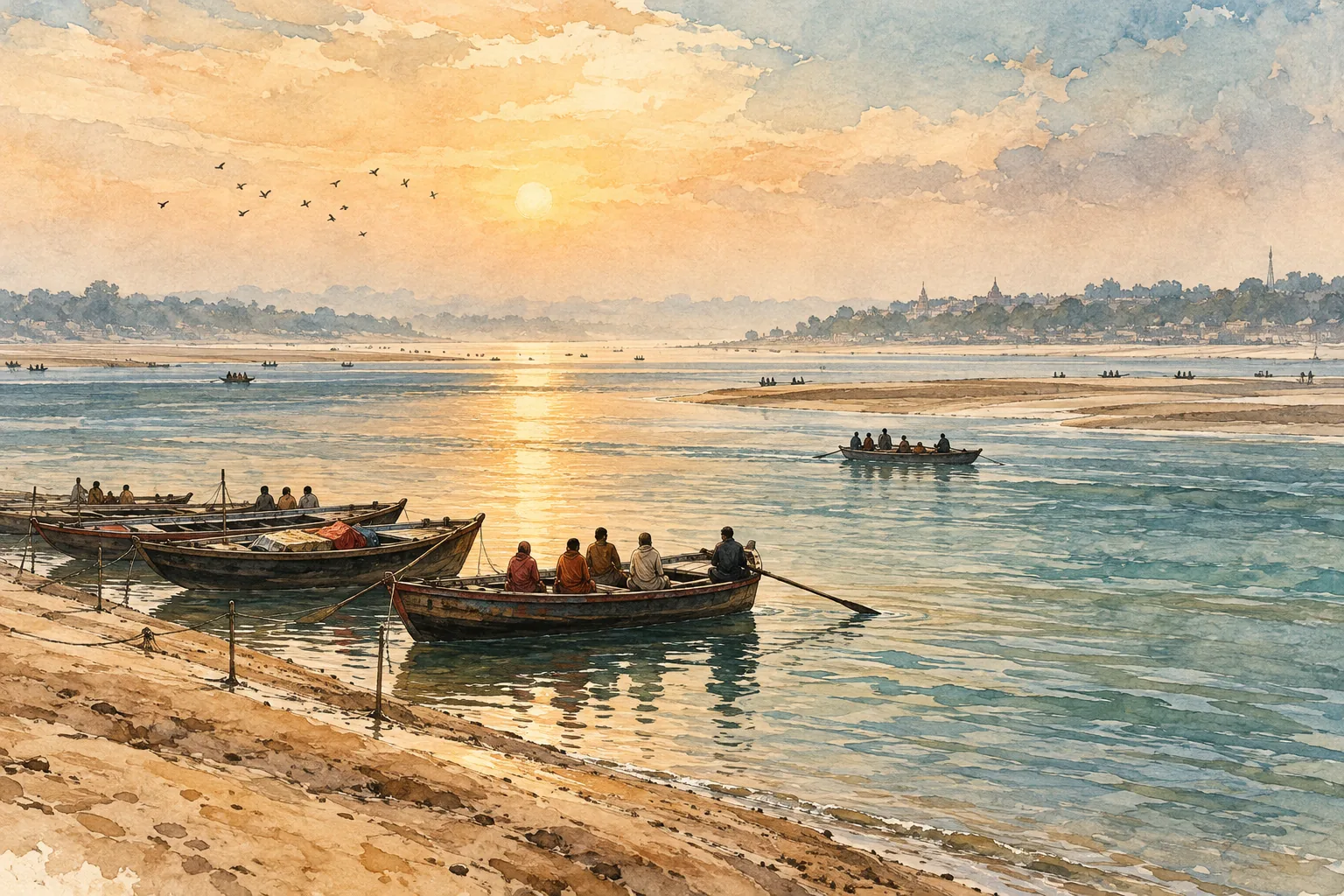
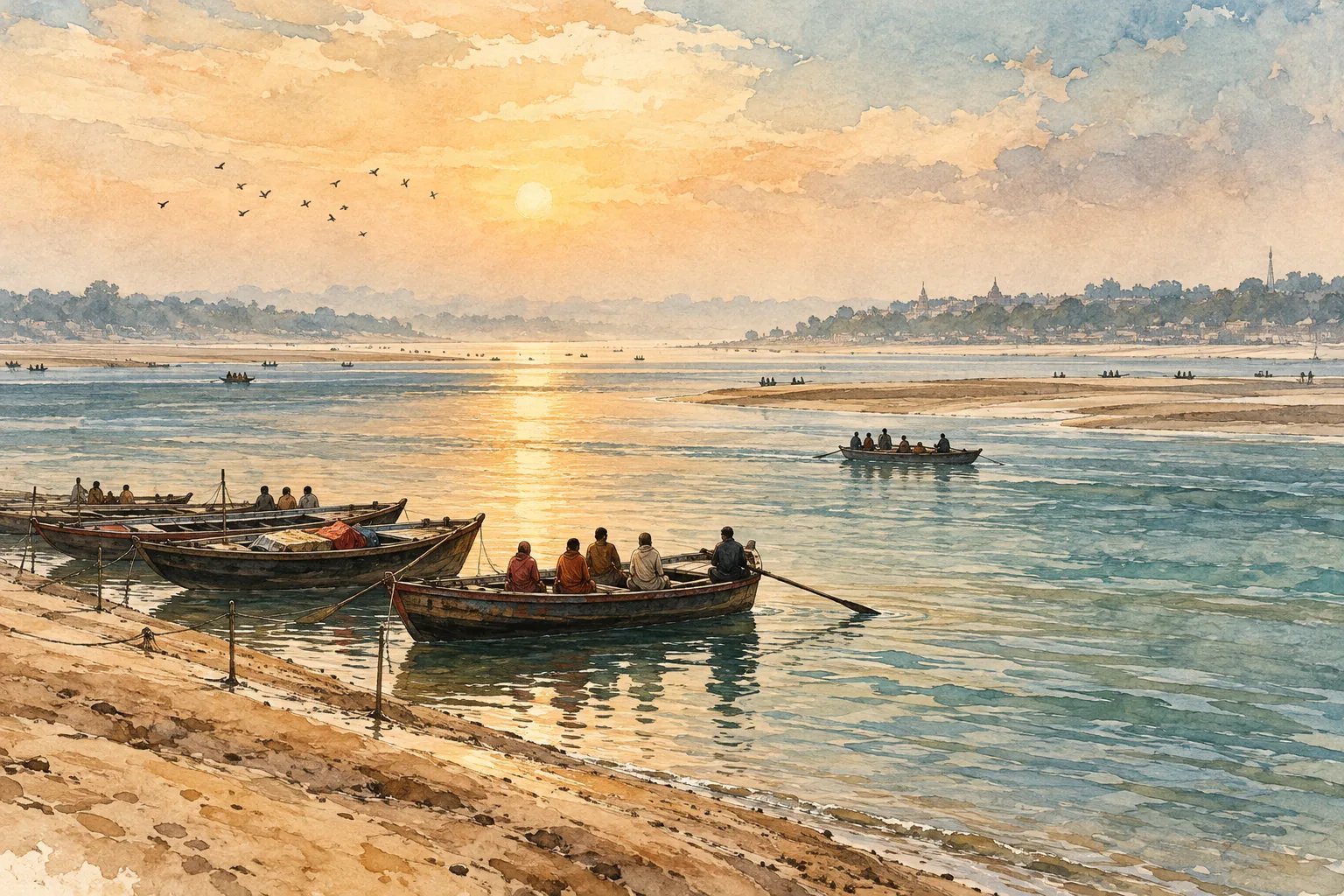
 Where the Ganga, Yamuna, and mythical Saraswati converge — Sangam snan is the ritual centrepiece of the Prayagraj leg.
Group buyers searching for this circuit are not looking for a taxi only. They need a full pilgrimage package with the right sequence, the right city-to-city flow, and the right support for elders, families, and trip leaders.
Operating this 505-kilometer sacred triangle circuit for temple committees, community satsangs, and extended family clans requires strict logistical discipline. The proven operational sequence—Varanasi first, Prayagraj second, Ayodhya last—delivers a smooth devotional progression: beginning with the cosmic energy of Mahadev at Kashi Vishwanath, moving to the cleansing confluence of Triveni Sangam, and culminating in the magnificent darshan of Shri Ram Lalla at Ayodhya.
The 3-City Route at a Glance
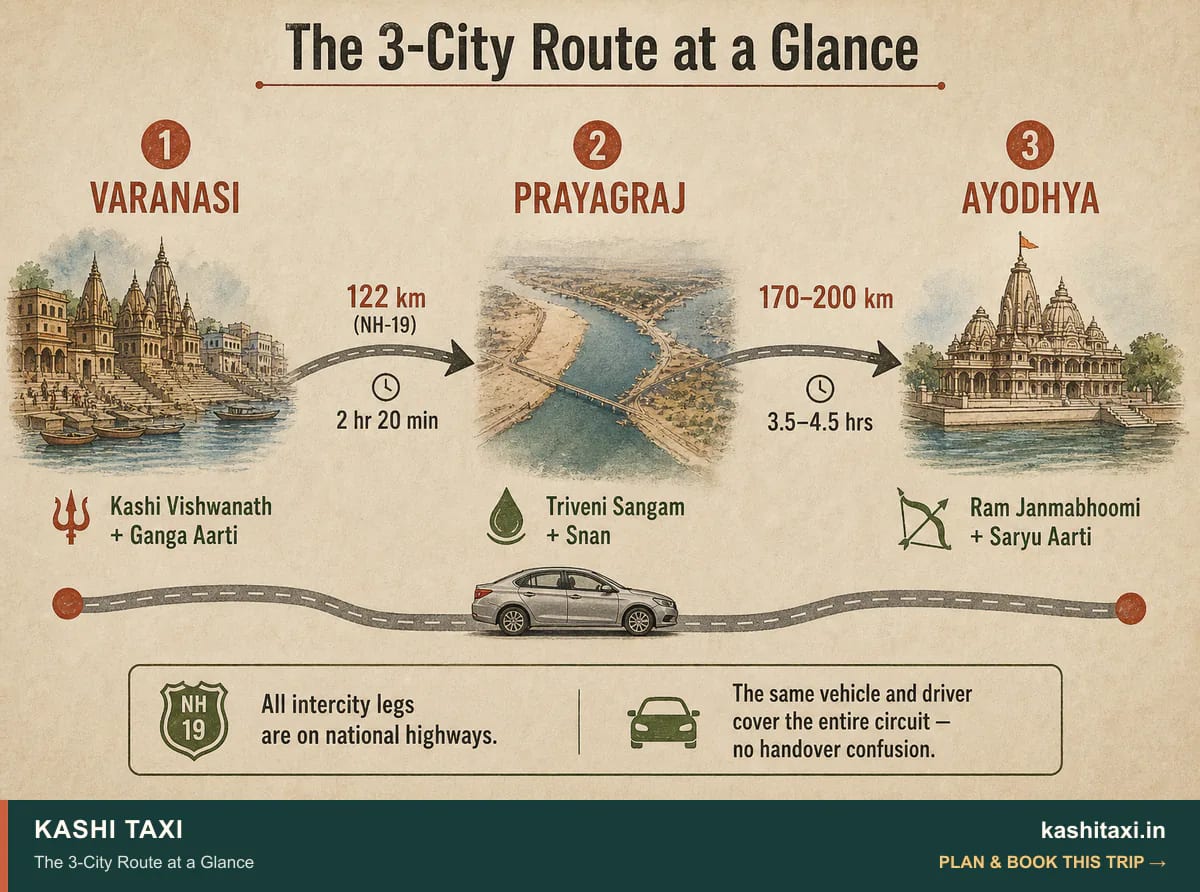
| Highway Leg | Distance | Normal Drive Time | Road Quality & Corridor Notes | Primary Devotional Focus |
|---|---|---|---|---|
| Varanasi → Prayagraj | 125 km | 2 hr 30 min | NH-19 (6-lane tollway, excellent tarmac) | Triveni Sangam Snan & Bade Hanuman Ji |
| Prayagraj → Ayodhya | 165 km | 3 hr 45 min | NH-330 (4-lane divided highway, Pratapgarh bypass) | Saryu Aarti & Kanak Bhawan |
| Ayodhya → Varanasi Return | 215 km | 4 hr 30 min | NH-27 & NH-56 (Sultanpur & Jaunpur corridor) | Kashi Vishwanath & Ganga Aarti |
All intercity legs are operated on high-grade national highways. Your assigned vehicle and driver crew remain with your party throughout the entire 5-day journey—ensuring seamless luggage custody, predictable boarding routines, and zero inter-operator handover confusion.

3-City Group Tour Package Rates
We publish clear, fixed total-party quotes across small, medium, and large pilgrimage parties. Unlike unverified aggregators who quote low per-person teasers with unmentioned driver surcharges or toll fees, our rates include all intercity permits, parking, tolls, accommodation, and riverboat charters.
The matrix leads with groups of 6 or more. Smaller 2- and 4-adult organizer or reconnaissance options remain at the bottom for optional planning stays.
| Travel Party Size & Composition | Dedicated Vehicle Allocation | Hotel Room Block Allocation (Twin Share) | 5D/4N Flagship Total Party Cost | 4D/3N Total Party Cost | Per Person Indicative (5D/4N) |
|---|---|---|---|---|---|
| 6 Adults (Family Core) | Dedicated AC Innova Crysta | 3 Double Rooms (3-Star Hotel) | ₹63,900 | ₹54,900 | ₹10,650 / pax |
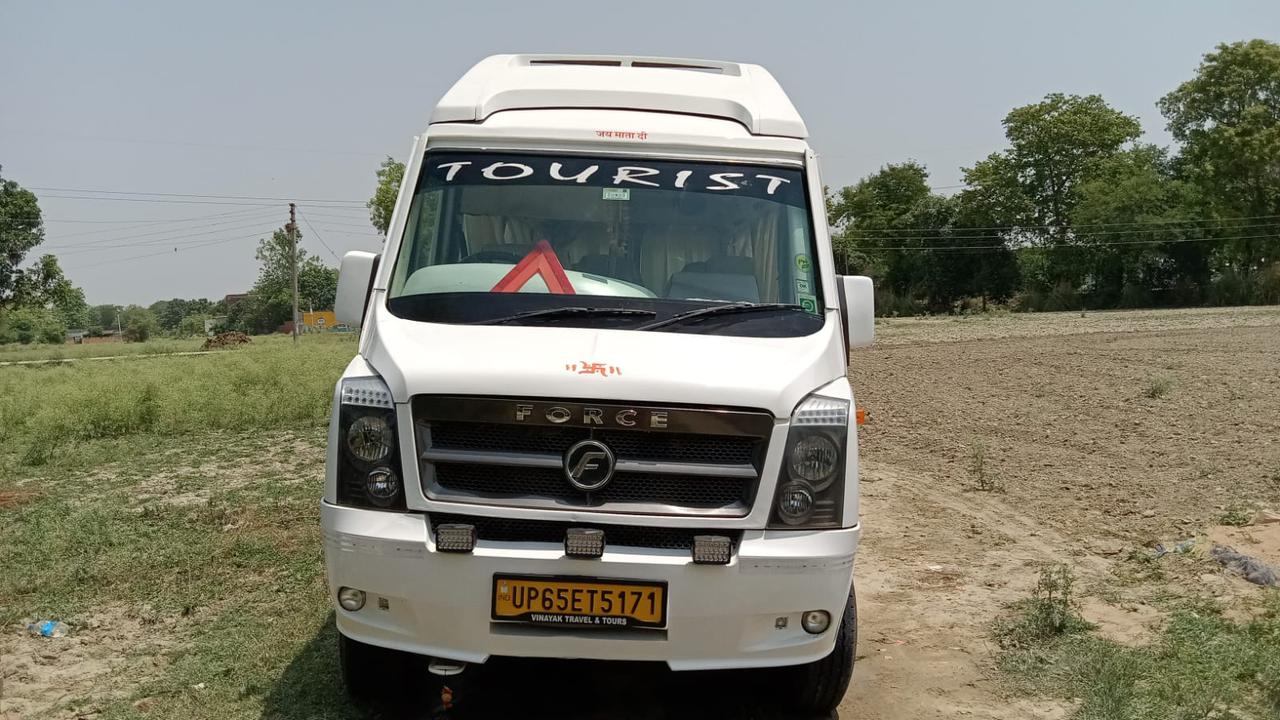
| 12 Guests (Small Satsang Batch) | Luxury 12-Seater AC Tempo Traveller | 6 Double Rooms (3-Star Hotel) + Escort | ₹1,24,900 | ₹1,08,900 | ₹10,408 / pax |
| 17 Guests (Mid-Sized Pilgrim Group) | Luxury 17-Seater AC Tempo Traveller | 9 Double Rooms (3-Star Hotel) + Escort | ₹1,69,900 | ₹1,48,900 | ₹9,994 / pax |
| 26 Guests (Large Temple Yatra) | 26-Seater AC Mini Coach | 13 Double Rooms (3-Star Hotel) + Escort | ₹2,54,900 | ₹2,22,900 | ₹9,803 / pax |
| 35–40 Guests (Full Samaj Coach) | 40-Seater AC Deluxe Coach | 18–20 Double Rooms + Free Leader Room | Custom Quote | Custom Quote | ~₹9,200 / pax |
| 4 Adults (Core Committee · Small-Party Option) | Dedicated AC Ertiga | 2 Double Rooms (3-Star Hotel) | ₹46,900 | ₹39,900 | ₹11,725 / pax |
| 2 Adults (Organizers / Reconnaissance · Optional) | Dedicated AC Sedan (Dzire) | 1 Double Room (3-Star Hotel) | ₹32,900 | ₹27,900 | ₹16,450 / pax |
Pricing Transparency & Terms: All quotes provide twin-sharing accommodation as standard. Single occupancy rooms are available at a fixed supplement of ₹1,500 per room per night. Triple-sharing configurations (extra floor mattress) provide a deduction of ₹600 per room per night. For groups of 25 or more paying guests, one complimentary room is provided for the primary tour leader. All intercity highway toll taxes, commercial driver night allowances, fuel, state border tourist permits, daily hotel buffet breakfast, private large Bajra boat charters in Varanasi, and private Sangam motorboat charters in Prayagraj are included. Official temple darshan passes (Sugam Darshan ₹350/person) are billed separately at actual trust rates.
What Your Group Pilgrimage Package Covers
Strictly Included in the Quote
- Dedicated air-conditioned vehicle (Innova, Tempo Traveller, or Mini Coach) with commercial tourist permit for all 5 days
- Hotel accommodation with daily breakfast at verified properties with coach parking and elevator access
- Private chartered double-decker wooden Bajra boat in Varanasi for evening Ganga Aarti viewing
- Private motorized boat charter to Triveni Sangam in Prayagraj with 30-minute holy dip mooring
- Dedicated full-time tour escort accompanying groups of 12+ guests to manage manifests and logistics
- All expressway toll taxes, municipal vehicle entry fees, interstate taxes, and driver boarding allowances
- Coordinated luggage custody during hotel transition days and morning temple visits
- 24/7 dedicated dispatch coordination desk for the group leader via direct WhatsApp thread
Billed Separately or Managed by Organizer
- Official Kashi Vishwanath Sugam Darshan tickets (temple trust fee of ₹350 per pilgrim)
- Personal puja offerings, sankalp fees, and dakshina to local priests at Sangam or Kashi
- Lunches and dinners outside of included hotel breakfast spreads (pure satvik meal plans available as add-on)
- Personal porterage fees at railway stations or airports
- Sarnath Archaeological Museum entry tickets (₹5 per Indian adult; closed Fridays)
- GST at 5% on passenger transport services
Coach Parking Regulations and City Transit Logistics
Managing a 12-to-40-person group across Eastern Uttar Pradesh requires intimate knowledge of regional police traffic boundaries. Large commercial vehicles cannot enter the historical cores of Varanasi, Prayagraj, or Ayodhya:
1. Varanasi Coach Access & Shuttle Coordination
In Varanasi, municipal traffic rules ban Tempo Travellers and commercial buses from Godowlia Crossing, Chowk, and Maidagin throughout daytime hours (09:00 AM to 09:00 PM).
- Parking Bays: Large coaches park at Sampurnanand Sanskrit University grounds, the Maidagin Town Hall multi-level depot, Sigra Stadium parking, or Cantonment Railway Station outer commercial lot.
- Last-Mile Shuttles: Our operations desk pre-contracts a coordinated fleet of battery-operated e-rickshaws. When the coach arrives at the staging bay, guests transfer in organized cohorts of 4 passengers directly to Kashi Vishwanath Gate 4 or Assi Ghat, with our full-time escort managing the group manifest and headcounts.
2. Prayagraj Sangam Confluence Logistics
At Triveni Sangam, private tourist buses and large vehicles must halt at the Parade Ground / Kumbh Mela police barrier.
- River Approach: Pilgrims walk 400 to 600 meters across the sandy floodplain or board government-regulated electric shuttle vans to Kila Ghat.
- Boarding Protocol: We pre-charter authorized motorboats fitted with life jackets for every member, avoiding aggressive ghat pandas (touts) and ensuring a safe, organized holy dip (snan) directly over the sacred confluence.
3. Ayodhya Tedhi Bazaar Depot & Ram Path
In Ayodhya, all outstation tourist vehicles park at the Tedhi Bazaar Multi-Level Parking facility. Ram Path is entirely pedestrianized.
- Corridor Transfer: Battery e-shuttles transfer our group from Tedhi Bazaar directly to the Sugriva Kila security gate.
- Gate 3 Protocol: Pilgrims enter through Gate 3, utilizing free digital locker counters at the Pilgrim Facilitation Centre before entering the 850-meter covered corridor leading to the sanctum.
4. Group Luggage Logistics & Coach Hold Organization
Handling 30 to 50 heavy suitcases across multiple hotel check-ins can easily delay highway departures by two hours if not systematically organized:
- Compartmentalized Coach Holds: Suitcases are separated into two distinct categories inside the luggage belly of the coach: heavy transit luggage (accessed only during evening hotel check-in) and daytime necessity packs (containing medications, puja cloths, hand towels, and light shawls).
- Color-Coded Identification Tags: Every traveler receives color-coded, numbered luggage tags matching their assigned rooming manifest. Upon hotel arrival, our ground escort supervises the bell desk team to deliver bags directly to guest rooms while pilgrims enjoy welcome tea in the lobby.
- FASTag & Highway Toll Clearance: Intercity travel on NH-19 and NH-330 involves multiple commercial toll barriers. Our vehicles are equipped with dedicated commercial FASTag accounts, ensuring zero cash toll delay at expressway interchanges.
Accommodation Strategy: Dharamshala vs. 3-Star Group Hotels
Pilgrimage organizers frequently struggle to choose between traditional community dharamshalas and commercial 3-star hotels when balancing budget against pilgrim physical stamina:
- Traditional Religious Dharamshalas (Birla, Gujarati Samaj, Kanak Bhawan Trusts): Highly economical (₹800 to ₹1,500 per room), deeply spiritual atmosphere, and located near temple precincts. However, they enforce strict check-in curfews, rarely provide working elevators, often lack western-style commodes, and have zero coach parking on narrow approach roads. Coaches must drop guests half a kilometer away, requiring manual luggage hauling.
- Verified 3-Star Group Hotels (Cantonment & Sigra Belts): Slightly higher tariff (₹2,200 to ₹3,500 per room), but offer essential group infrastructure: dedicated 45-seater bus bays, multiple luggage elevators, contiguous room blocks on the same floor, and large dining halls capable of serving 40 guests simultaneously. For groups with elderly members, 3-star elevator hotels prevent physical exhaustion.
- Room Block Allocation Discipline: We block rooms exclusively on contiguous floors or wings, ensuring group organizers can conduct swift morning roll calls. Every room block is cross-checked 48 hours prior to arrival for functioning air conditioning, continuous hot water geysers, and clean western bathroom facilities.
Verified Day-by-Day Itinerary: 5-Day Sacred Triangle Circuit
- 1Day 1
Arrival in Varanasi, Check-in & Evening Ganga Aarti by Private Bajra
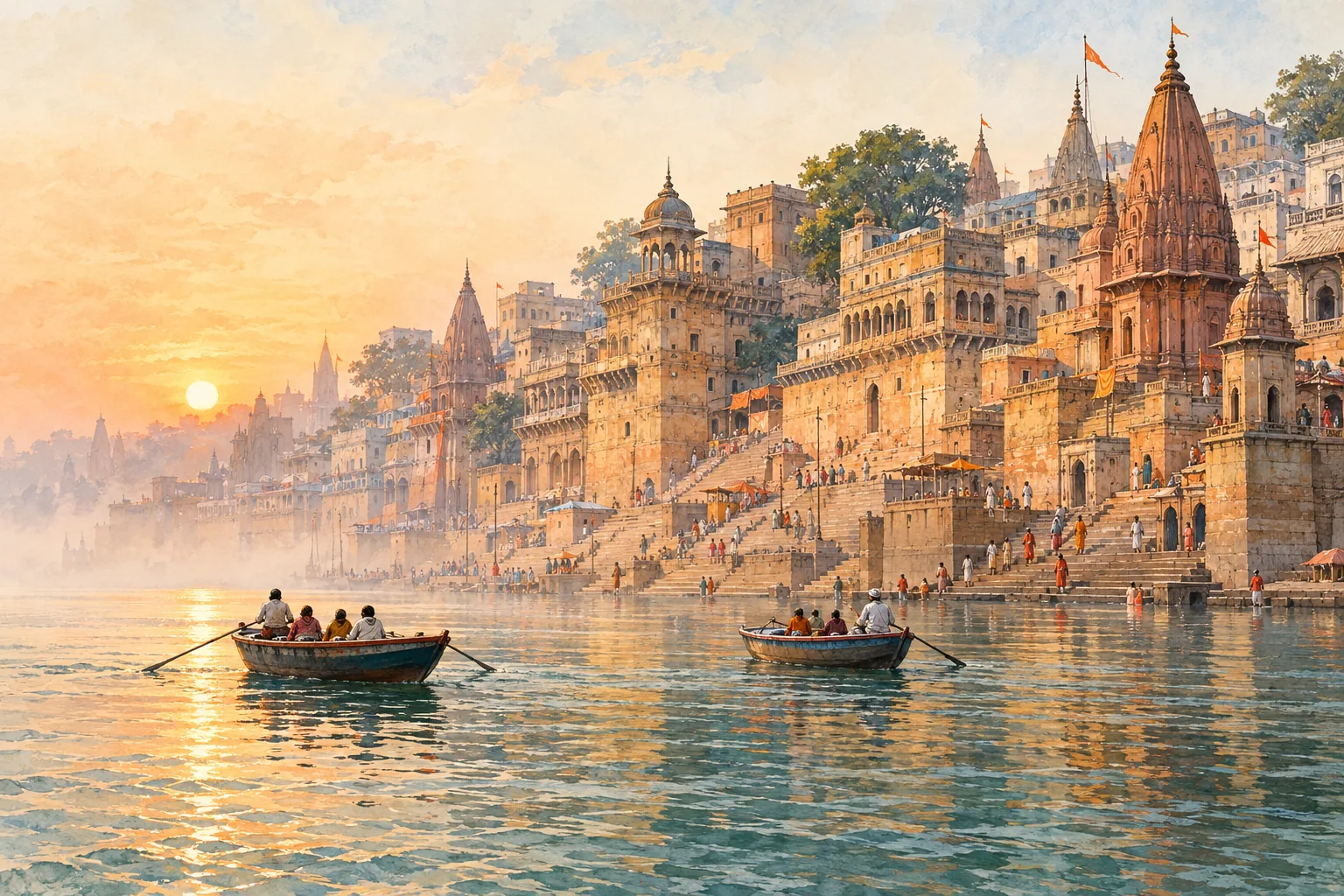
Your dedicated chauffeur and tour escort meet the group at Varanasi Airport (VNS) or Cantt Railway Station (BSB). Board your air-conditioned Tempo Traveller or coach and transfer to your Sigra/Cantonment hotel. Following group check-in and an orientation briefing, rest for 2 hours. At 16:30 PM, the coach transfers guests to Assi Ghat or Rajghat. Board your private double-decker wooden Bajra boat. Cruise past the 84 illuminated riverfront ghats, anchoring 25 feet off Dashashwamedh Ghat by 17:45 PM for an elevated, seated view of the grand 19:00 PM Ganga Aarti ceremony away from crowd pressure. Return to hotel for group dinner.
- 2Day 2
Kashi Vishwanath Darshan, Kal Bhairav & Sarnath Circuit
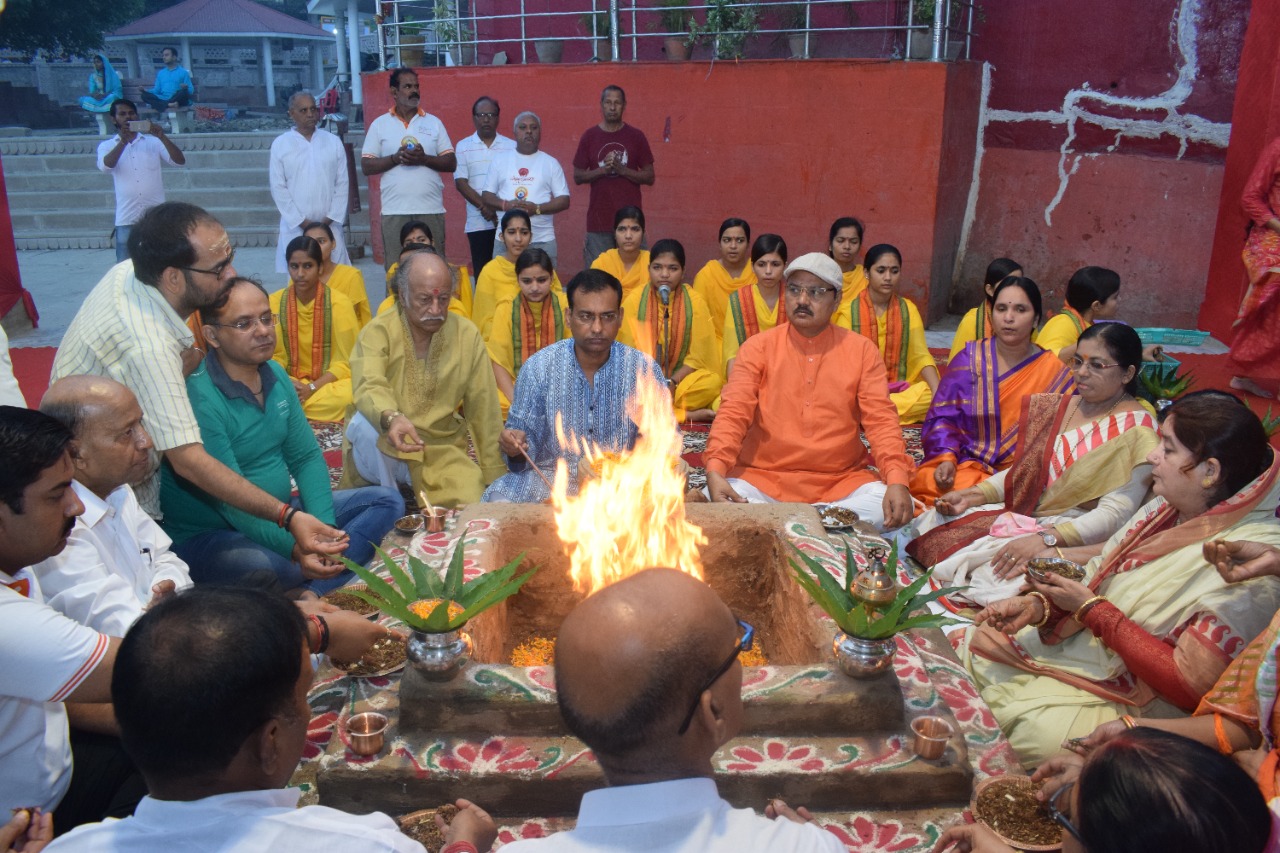 Seven priests, synchronized brass lamps, 800+ onlookers — the Varanasi evening your group will remember.
Depart at 08:00 AM after breakfast. Shuttle from parking to Gate 4 (Gyanvapi Dwar). Large groups utilize pre-booked Sugam Darshan passes (₹350) to complete sanctum viewing in batches of 10 without separation. Visit adjoining Maa Annapurna Temple and Kaal Bhairav (Kotwal of Kashi). Return to hotel for a 2-hour rest break. At 15:00 PM, drive 12 km to peaceful Sarnath. Explore Dhamek Stupa, the ancient deer park, and the Thai Temple. (Note: On Fridays when the museum is closed, we substitute Mulagandha Kuti Vihara). - 3Day 3
Varanasi to Prayagraj — Triveni Sangam Snan & Bade Hanuman Ji
 The Triveni Sangam — where Ganga (lighter water) and Yamuna (greenish tint) visibly diverge. The mythical Saraswati joins underground.
Depart Varanasi at 07:00 AM along the 6-lane NH-19 expressway (125 km, 2.5 hours). Arrive at Prayagraj Parade Ground. Board pre-chartered motorboats to the exact sacred confluence where the Ganga and Yamuna meet. Pilgrims perform holy dip (snan) and kalash puja with boat crew assistance. Visit the subterranean Bade Hanuman Ji Temple (unique 20-foot reclining idol) and the sacred Akshaya Vat tree inside the fort perimeter. Check in to Prayagraj hotel or continue along NH-330 for comfort overnight. - 4Day 4
Prayagraj to Ayodhya — Ram Janmabhoomi & Saryu Aarti
 Ram Janmabhoomi darshan is the emotional peak of the circuit — schedule it first, the rest follows.
Depart at 07:00 AM via NH-330 (165 km, 3.5 hours). Arrive at Ayodhya Tedhi Bazaar depot; e-shuttle transfer to Ram Janmabhoomi Gate 3. Complete darshan of Shri Ram Lalla inside the majestic Nagara-style temple. In the afternoon, visit Hanuman Garhi (advising elderly pilgrims regarding the 76 steep stone stairs) and the gilded Kanak Bhawan. At 18:30 PM, gather at Ram Ki Paidi for the serene Saryu Aarti with floating earthen lamps. Overnight in Ayodhya. - 5Day 5
Morning Puja & Buffered Return Departure
Following morning prayers and a leisurely breakfast, the group prepares for departure. Flexible flight/train departure patterns can be executed: return drive to Varanasi Airport (215 km, 4.5 hours), direct departure from Ayodhya Maharishi Valmiki Airport (AYJ, 15 km), or transfer to Lucknow Chaudhary Charan Singh Airport (LKO, 140 km, 2.5 hours). All luggage remains secure in the vehicle boot throughout the day.
Frequently Asked Questions
Who is this Ayodhya Varanasi Prayagraj group tour package for?
This package is best for 6 to 40+ pilgrims who want one coordinated circuit across Ram Mandir, Kashi Vishwanath, and Triveni Sangam with hotel planning, vehicle allocation, darshan timing, and meal support.
What is the ideal duration for this 3-city pilgrimage circuit?
A 4-night and 5-day itinerary (2 nights Varanasi + 1 night Prayagraj + 1 night Ayodhya) is the cleanest format for most groups because it gives Varanasi enough time, keeps Prayagraj workable, and allows unhurried Ram Mandir darshan without exhausting elders.
How much does the group tour package cost per person and for the full party?
For a 12-guest group traveling in a luxury 12-Seater Tempo Traveller with 6 double rooms in 3-star hotels, the total party fare is ₹1,24,900 (₹10,408 per person). A 17-guest group in a 17-Seater Tempo with 9 rooms costs ₹1,69,900 total (₹9,994 per person). A 26-guest group in a 26-Seater Mini Coach with 13 rooms costs ₹2,54,900 total (₹9,803 per person).
How are large tourist buses and Tempo Travellers handled in old city zones?
Commercial coaches cannot enter old Varanasi, central Ayodhya, or inner Prayagraj. In Varanasi, buses park at Sampurnanand Sanskrit University or Maidagin Town Hall bus bay, and groups transfer in waves of pre-booked e-rickshaws. At Prayagraj Sangam, coaches park at the Parade Ground barrier. In Ayodhya, buses park at Tedhi Bazaar Multi-Level Parking.
Can you provide pure vegetarian satvik meals and unified dining for the entire group?
Yes. We arrange unified meal timings at certified pure-vegetarian dining halls and trust bhojanalayas (such as Marwari Bhojanalaya or Annapurna Annakshetra) offering complete satvik food without onion or garlic at ₹250 to ₹350 per thali, ensuring timely dining for diabetic and elderly pilgrims.
Do you offer Dharamshala bookings or hotel room blocks for large groups?
Both. For community groups seeking religious trust stays, we arrange clean rooms at Birla Dharamshala or Gujarati Samaj. For groups preferring contemporary amenities, we block contiguous room blocks on the same floor with elevator access and luggage porterage in verified 3-star hotels in Cantonment or Sigra.
How do you manage darshan queues and security for 20+ pilgrims together?
To prevent group fragmentation, every guest receives color-coded luggage tags and laminated ID badges. For Kashi Vishwanath, we pre-book official Sugam Darshan passes (₹350) and divide large groups into squads of 8 to 10 led by our ground coordinators through Gate 4 (Gyanvapi Dwar) security.
What is the best time for this 3-city circuit?
October to March offers ideal weather across all three cities (5–28°C). November is peak season with Dev Deepawali in Varanasi and Kartik Purnima at Sangam. March–April brings Ram Navami crowds in Ayodhya, requiring 3–4 weeks advance booking. May–August is hot but offers 30–40% off-season hotel discounts.
How many days does the Prayagraj stop need?
A half-day (4–5 hours) covers the spiritual core: Sangam boat ride with snan, Bade Hanuman Ji Temple, and Akshaya Vat. A full day adds Anand Bhawan museum, All Saints Cathedral, and a more relaxed pace. Most pilgrimage groups choose the half-day model.
Recommended Related Packages and Circuit Extensions
- Looking for local group stays confined strictly to Varanasi? Review our Varanasi Group Tour Package with local tempo tariffs.
- Interested in smaller private family party options for the 3-city circuit? Check out the Golden Triangle Varanasi Ayodhya Prayagraj Package.
- Traveling directly from Delhi via train or flight? Consult our Varanasi Tour Package from Delhi guide.
- Extending your pilgrimage to Gaya and Bodh Gaya? Explore our Varanasi to Gaya Bodh Gaya Tour Package.
- Need dedicated hotel booking concierge across Cantonment and Sigra? Visit our Hotel Booking in Varanasi concierge.
- Exploring one-way tempo transfers between cities? Review our Varanasi to Ayodhya Tempo Traveller pricing.