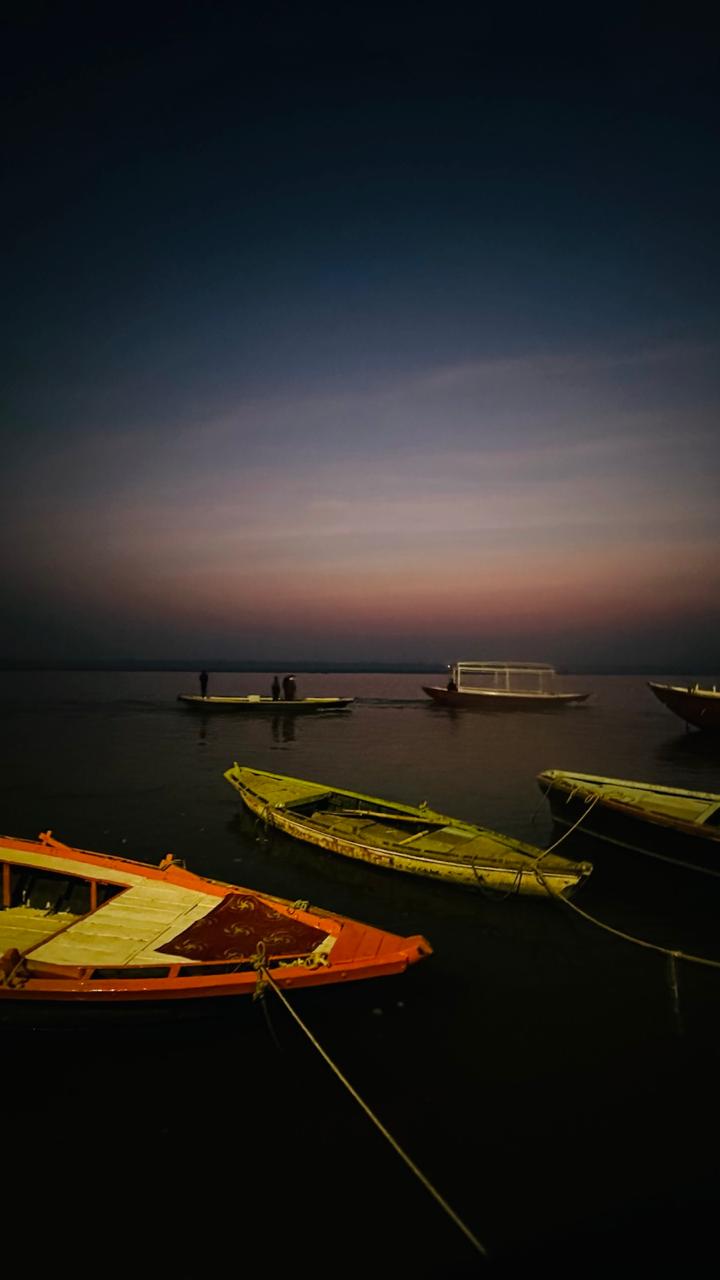
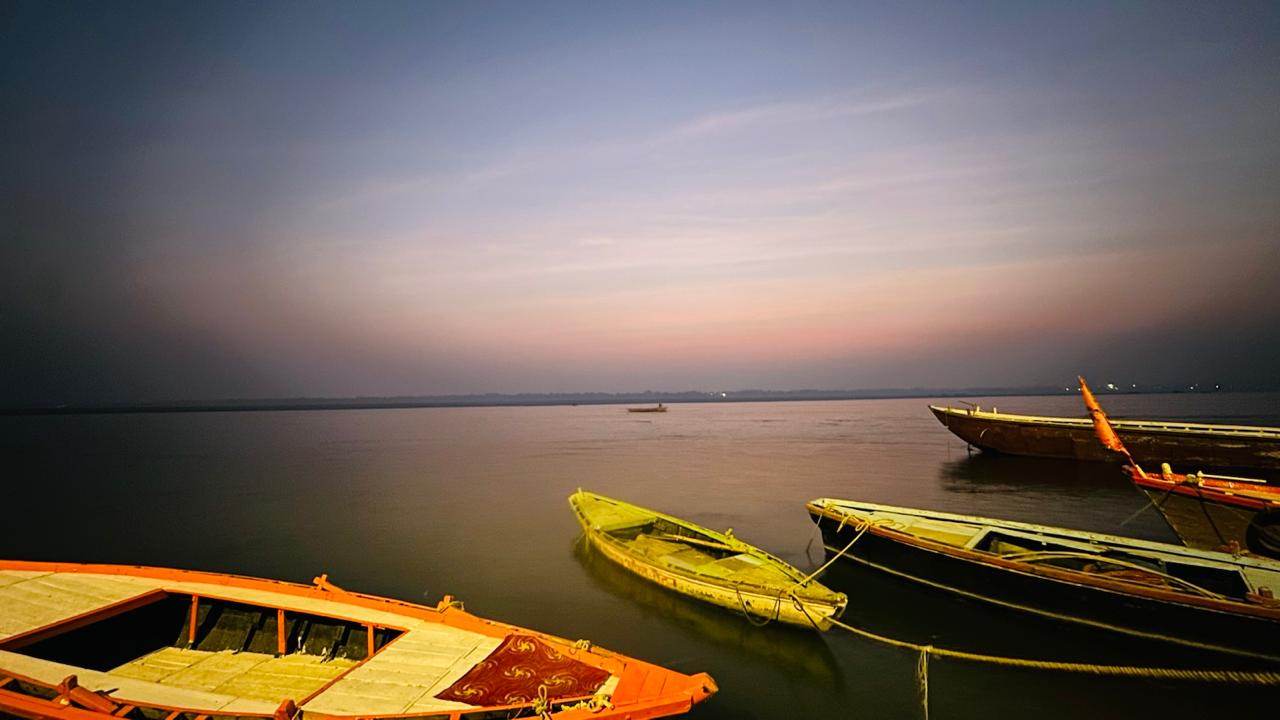
If you visit Varanasi four days before Dev Deepawali, you step into a city where two massive spiritual tides cross.
On one side, the sacred month of Kartik enters its final five-day climax, known as Bhishma Panchak. On the other side, the four-month celestial slumber of Lord Vishnu (Chaturmas) comes to an end on Dev Uthani Ekadashi (Friday, 20 November 2026), followed immediately by Tulsi Vivah (Saturday, 21 November 2026).
Along the riverfront, every courtyard, temple terrace, and ghat platform sprouts green pavilions built from four full-length sugarcane stalks tied at the top. Underneath these cane roofs (Ikhu Mandap), local families paint the footprints of Lord Vishnu, light earthen lamps, and sing the ancient awakening chant: "उठो देवा, बैठो देवा, आंगुरिया चटकाओ देवा..." ("Awaken, O Lord; sit up, O Lord; stretch your divine fingers...").
At the same time, this single religious milestone unlocks the entire winter wedding calendar across eastern Uttar Pradesh and Bihar. Every hotel banquet hall, private boat, and rental vehicle in Varanasi suddenly comes under immense demand from wedding parties and arriving Dev Deepawali pilgrims.
Here is a practical guide to experiencing Dev Uthani Ekadashi and Tulsi Vivah in Varanasi: verified 2026 tithi timings, sacred bathing locations, sugarcane rituals, food traditions, and transport strategies to navigate the wedding rush.
What Happens on Dev Uthani Ekadashi & Tulsi Vivah?
In the Banaras spiritual calendar, this 48-hour period bridges three distinct traditions:
1. Devotthan: Awakening Lord Vishnu
Scripture holds that Lord Vishnu sleeps in the cosmic ocean (Ksheerasagara) on the serpent Shesha from Devshayani Ekadashi (in July) through the four months of monsoon. During this time, all auspicious ceremonies like weddings, sacred thread ceremonies (Janeu), and housewarmings (Griha Pravesh) are placed on hold.
On Kartik Shukla Ekadashi, Vishnu opens his eyes. Devotees observe a strict fast, wash their courtyards, and prepare for his awakening at dusk. In traditional Banarasi homes, brass plates (thalis) and conch shells are sounded rhythmically to break the cosmic slumber.
2. The Sugarcane Canopy (Ikhu Mandap) & First Winter Harvest
The physical hallmark of Dev Uthani Ekadashi across Varanasi's galis and ghats is the Ikhu Mandap:
Four or five whole sugarcane stalks (ganna) with their green leaves intact are stood upright and tied together at the top with sacred red thread (moli).
Underneath this natural canopy, women paint sacred geometric diagrams and the footprints of Lord Vishnu (Charan Paduka) using geru (red ochre) and chuna or aipana (ground wet rice paste).
The First Harvest Offering: Under orthodox Banarasi custom, nobody in the household eats fresh winter produce—singhara (green water chestnuts), shakarkand (sweet potatoes), amla (Indian gooseberries), mooli (radishes), or new-crop sugarcane—until they have first been placed beneath the sugarcane mandap and offered to Lord Vishnu on this evening.
3. Tulsi Vivah: The Wedding of Tulsi & Shaligram
On the day following Ekadashi (Dwadashi, Saturday, 21 November 2026), households and temples celebrate the ceremonial wedding of Devi Tulsi (the holy basil plant, revered as an incarnation of Vrinda / Lakshmi) with Lord Shaligram (the sacred black ammonite stone representing Vishnu):
The earthen pot (Tulsi Chaura) is painted with turmeric, wrapped in a miniature red bridal saree (chunri), and adorned with vermilion (sindoor), bangles, and a gold nose-ring.
Lord Shaligram arrives in a ceremonial procession from the household altar or a neighboring shrine.
Priests chant Vedic wedding hymns (Mangalashtaka), tie a yellow wedding knot (Gathbandhan), shower turmeric rice (akshat), and guide the couple through four sacred rounds (pheras).
Performing Tulsi Kanyadaan (giving away Tulsi as a daughter) is considered one of the highest spiritual deeds in Hinduism, especially sought by parents who do not have a biological daughter.
4. Bhishma Panchak Dawn Snan (20–24 November)
Dev Uthani Ekadashi commences Bhishma Panchak (also called Vishnu Panchak). According to the Mahabharata, Pitamah Bhishma meditated on his bed of arrows during these final five days of Kartik. Devotees who could not keep the demanding month-long Kartik vow take holy dips in the Ganga on each of these five mornings to earn equivalent merit before the grand finale of Dev Deepawali on Kartik Purnima (24 November).
2026 Astronomical Schedule & Ritual Windows
Timing matters in Varanasi because Smarta householders and Vaishnava mathas follow different sunrise alignment rules:
Ritual / Phase
Date & Exact Timing
Where It Happens
What Devotees Do
Traveler Advice
Ekadashi Tithi Opens
Friday, 20 Nov 2026, 07:15 AM
City-wide
Fasting begins; no grains or lentils consumed
Eat light fruit (phalahar) or sabudana; keep bottled water handy.
Opening Bhishma Panchak Snan
Friday, 20 Nov 2026, 04:30 AM – 06:00 AM
Panchganga, Dashashwamedh, Assi Ghats
Sacred dawn dip in the Ganga under the glowing Akashdeep lanterns
Pre-book a 04:00 AM cab; city autos do not run at dawn.
Formal wedding ceremony of Tulsi and Shaligram with Kanyadaan
Arrive at the temple by 04:30 PM; evening queues can be long.
Dev Deepawali Climax
Tuesday, 24 Nov 2026, 05:00 PM onwards
All 84 Ghats
Grand conclusion of Bhishma Panchak with 1.5 million lamps
Extend your stay through 25 November to experience both festivals.
📌 Calendar Insight: Most household families in Varanasi observe the Devotthan fast and sugarcane puja on Friday, 20 November 2026. Vaishnava institutions (including ISKCON Varanasi and Ramanandi ashrams) observe the fast on Saturday, 21 November 2026, as the tithi touches sunrise on Saturday morning. Tulsi Vivah rituals are celebrated primarily on Saturday evening (Dwadashi) and continue through Sunday across different community temples.
Key Locations to Experience the Festival in Varanasi
┌─────────────────────────────────────────────────────────────┐
│                    PANCGANGA GHAT                           │
│  • Sacred subterranean 5-river sangam                       │
│  • Month-long Akashdeep lanterns glowing overhead           │
│  • Ancient Shri Bindu Madhav Temple (Pancha-Madhava)        │
│  • Access: 850m walk from Maidagin or private dawn boat      │
└─────────────────────────────────────────────────────────────┘
                              │
                              ▼
┌─────────────────────────────────────────────────────────────┐
│                 KASHI VISHWANATH DHAM                       │
│  • Special afternoon and evening Tulsi offerings             │
│  • Grand Tulsi Vivah in the corridor temple courtyard       │
│  • Access: Gate 4 (Gyanvapi/Chowk) or Gate 2 (Ganga Dwar)   │
└─────────────────────────────────────────────────────────────┘
                              │
                              ▼
┌─────────────────────────────────────────────────────────────┐
│                      ASSI GHAT                              │
│  • Wide, gentle sandstone steps (best for elderly pilgrims)  │
│  • Subah-e-Banaras morning Vedic chant & Ganga Aarti        │
│  • Direct road drop at Assi Crossing (only 250m flat walk)   │
└─────────────────────────────────────────────────────────────┘
                              │
                              ▼
┌─────────────────────────────────────────────────────────────┐
│                 TULSI MANAS MANDIR (Durgakund)              │
│  • Pure white marble walls inscribed with Ramcharitmanas    │
│  • Evening community Tulsi Vivah and Kanyadaan celebrations │
│  • Direct car parking outside temple compound                │
└─────────────────────────────────────────────────────────────┘
Panchganga Ghat (The Spiritual Heart of Kartik):
The confluence of the five sacred rivers (Ganga, Yamuna, Saraswati, Kirana, Dhutapapa) is considered the holiest bathing spot during Bhishma Panchak.
At dusk, hundreds of woven bamboo baskets (dolchis) containing earthen lamps sway overhead from tall bamboo poles (Akashdeep), casting a golden reflection across the water.
Just above the steps stands Shri Bindu Madhav Temple, the historic Vaishnava seat of Kashi where Lord Vishnu is offered special winter bhog.
Kashi Vishwanath Corridor:
The sprawling corridor connecting Chowk to the river hosts community Tulsi Vivah ceremonies in its marble mandaps.
Devotees gather at Gate 4 (Gyanvapi) or Gate 2 (Ganga Dwar) for evening darshan.
Assi Ghat (Senior & Family Friendly):
With its broad, flat terraces and no steep alleys, Assi Ghat is the most comfortable riverfront spot for elderly visitors taking the morning snan.
The 05:30 AM Subah-e-Banaras cultural programme pairs the bath with morning yajna and shehnai recitals.
Tulsi Manas Mandir (Durgakund):
Situated on Sankat Mochan Road, this modern marble temple hosts community wedding rituals where pilgrims without daughters perform symbolic Kanyadaan under the guidance of resident priests.
🪔 Dev Uthani Ekadashi & Tulsi Vivah: Dawn Snan & Wedding Season Cabs
Visiting Varanasi for Dev Uthani Ekadashi (20 Nov), the 04:30 AM Bhishma Panchak dawn snan, or evening Tulsi Vivah (21 Nov)? With wedding season kicking off and Dev Deepawali just four days away, private cabs and Tempo Travellers sell out fast. Reserve a fixed-fare cab or group vehicle with verified outer ghat drop points in advance.
🪔 04:30 AM Dawn Snan Pickups·🌿 Tulsi Vivah Evening Transfers·🚐 Group & Wedding Tempo Travellers·🛡️ Fixed Rates, No Festival Surge
Ground Realities: The Double Surge & Transport Crunch
Travelers planning a trip between 20 and 24 November face unique operational realities that rarely appear in travel brochures:
1. The Wedding Season Rush (Vivah Lagan)
The moment Lord Vishnu awakens, North India's winter wedding season opens. In Varanasi and surrounding districts (Mirzapur, Jaunpur, Chandauli, Ghazipur), hundreds of weddings take place every evening from 21 November onward.
Fleet Shortage: Seven-seater SUVs (Ertigas, Innovas) and 12/17-seater Tempo Travellers are heavily chartered by wedding parties for family transport and airport pickups.
Spot Price Gouging: Street auto-rickshaws and unverified taxi counters at Cantt Station charge arbitrary rates (often ₹1,500–₹2,000 for simple city drops).
Solution: Book your vehicles at fixed, authorized rates well ahead of time.
2. Dev Deepawali Crowd Overlap
Because Dev Deepawali falls on Tuesday, 24 November 2026, early-bird travelers from across India and abroad arrive in Varanasi starting Friday, 20 November, to explore the ghats peacefully before the 1.5-million-tourist crush.
Hotels in Godowlia, Luxa, and Sigra reach high occupancy.
Streets near Dashashwamedh face heavy evening pedestrian flow.
3. Pre-Dawn Bathing Realities (04:00 AM – 06:30 AM)
Temperatures at dawn hover between 14°C and 16°C. River water feels warmer than the brisk morning air, but stepping out of the water onto cold sandstone steps requires immediate drying.
Public e-rickshaws do not operate before 06:00 AM. If your hotel is located in Cantonment or Sigra, walking to the ghats in the dark is impractical.
You need a dedicated standby cab with a driver who drops your family at a verified perimeter gate at 04:30 AM and waits until your return at 07:30 AM.
🚐 AC Tempo Traveller Hire in Varanasi (12, 17 & 26 Seater)
Spacious AC Force Tempo Travellers with pushback recliner seats, generous boot space, and vetted highway chauffeurs. Ideal for joint family pilgrimages (Ayodhya, Prayagraj, Gaya), airport transfers, and wedding baraat shuttles with zero hidden surcharges.
Pre-cooled AC guaranteed throughout temple waiting periods
Live vehicle walkaround video & registration sent on WhatsApp
Zero-commission policy — 100% focused on your darshan schedule
Vehicles cannot enter the narrow medieval galis of Varanasi. Your taxi or tempo traveller must drop you at one of three outer perimeter points:
[Varanasi Airport / Cantt Railway Station]
                  │
                  ▼
┌─────────────────────────────────────────────────────────────┐
│ 1. Maidagin Multi-Level Parking (Town Hall)                 │
│    • Best drop for: Panchganga Ghat, Chowk, Bindu Madhav    │
│    • Walking distance: 850m via Chaukhamba (12-14 min walk) │
└─────────────────────────────────────────────────────────────┘
                  │
┌─────────────────────────────────────────────────────────────┐
│ 2. Girjaghar Crossing / Benia Bagh Parking                  │
│    • Best drop for: Dashashwamedh Ghat, Kashi Vishwanath    │
│    • Walking distance: 800m via Godowlia (10-12 min walk)   │
└─────────────────────────────────────────────────────────────┘
                  │
┌─────────────────────────────────────────────────────────────┐
│ 3. Assi Crossing / Ravindrapuri Road                        │
│    • Best drop for: Assi Ghat, Tulsi Ghat, South Temples    │
│    • Walking distance: 250m completely flat pavement        │
└─────────────────────────────────────────────────────────────┘
Maidagin Multi-Level Parking / Town Hall:
Best For: Visiting Panchganga Ghat for the morning Akashdeep bath, Bindu Madhav Temple, and Kashi Vishwanath Gate 4.
Walking Route: 850 meters through Chaukhamba and Thatheri Bazar. The path is paved with flagstones and lit by streetlights.
Girjaghar Crossing / Benia Bagh:
Best For: Dashashwamedh Ghat and Godowlia shopping.
Walking Route: 800 meters along Godowlia road into Dashashwamedh. Cabs park safely inside the Benia Bagh underground facility.
Assi Crossing (Southern Perimeter):
Best For: Families with older members, strollers, or heavy bags.
Walking Route: 250 meters along wide asphalt directly onto the Assi Ghat pavement. Zero stairs to reach the upper riverfront.
Practical Advice for Older Travellers & Families
Managing the Stone Steps: Panchganga Ghat has over 120 steep stone stairs. If an older relative has knee arthritis, do not force them down to the water. Instead, use Assi Ghat, where ramps and shallow steps make access gentle.
The Authentic Alternative (Achaman): In Banaras spiritual tradition, taking three spoonfuls of Ganga water from a clean brass lota and sprinkling it on your head (prokshana) carries the identical scriptural blessing of a full immersion bath, without risking a slip on wet morning moss.
Changing Facilities: Concrete government changing rooms and temporary cloth enclosures are set up on major ghats (Dashashwamedh, Assi, Rajendra Prasad). Carry a dry towel, slip-resistant rubber slippers, and a sealed plastic bag for damp clothing.
Warm Clothing: Dress in layers. A light woollen sweater or shawl is necessary between 04:30 AM and 07:00 AM. By midday, sunshine warms the city to 28°C.
Day 1: Dev Uthani Ekadashi (Friday, 20 November 2026)
04:15 AM: Standby cab picks you up from your hotel in Cantt or Sigra.
04:45 AM: Drop at Assi Crossing or Maidagin; walk to the ghat for the opening Bhishma Panchak dawn snan.
05:30 AM – 06:15 AM: Witness the sunrise over the eastern sandbanks as priests blow conch shells and pilgrims offer morning water (arghya).
06:45 AM: Morning tea at Pappu Chai (Assi) or saffron malaiyo in Chaukhamba. Return to hotel by cab for rest.
10:30 AM: Mid-morning visit to Shri Kashi Vishwanath Dham via Gate 4 (Gyanvapi).
04:30 PM: Evening walking trail along the old galis between Kedar Ghat and Dashashwamedh to view the Ikhu Mandap sugarcane canopies set up outside homes and riverside courtyards.
06:00 PM: Listen to local women singing the traditional Utho Deva awakening chants and watch thousands of earthen lamps illuminated beneath the cane pavilions.
07:00 PM: Attend the grand evening Ganga Aarti at Dashashwamedh or Assi Ghat.
08:30 PM: Enjoy a traditional fasting dinner (Phalahari thali with kuttu puris, aloo sabzi, and sabudana kheer) at a satvik restaurant in Godowlia.
Day 2: Tulsi Vivah & Parana (Saturday, 21 November 2026)
06:30 AM – 07:30 AM: Conclude the Ekadashi fast during the official Parana window. Devotees offer charity to priests and enjoy a hearty Banarasi breakfast of hot kachoris and crisp jalebis.
02:00 PM: Visit Tulsi Manas Mandir and Sankat Mochan Temple in southern Varanasi.
04:30 PM: Arrive at Shri Bindu Madhav Temple (Panchganga Ghat) or Kashi Vishwanath Dham for the evening Tulsi Vivah ceremonies.
05:07 PM – 07:44 PM (Pradosh Kaal): Witness the colorful wedding of Tulsi Devi and Lord Shaligram, complete with brass bands, vermilion rituals, and yellow flower showers.
08:30 PM: Standby cab returns your group safely to your hotel, avoiding the nighttime wedding traffic jams across the city.
🪔 Kartik Purnima & Dev Deepawali Snan Transfer
Pre-book your 04:00 AM pre-dawn Ganga snan cab & boat ride before festival roadblocks and crowd surges begin. Doorstep hotel pickup with designated ghat-side drop.
Pre-dawn 04:00 AM round-trip snan cab
Sunrise boat ride booking from ₹490 per seat
Vetted local drivers navigating crowd bypass routes
🪔 04:00 AM Dawn Pickups·🛶 Boat Seats from ₹490·🛡️ Local Driver Knowledge·🚫 Zero Surge Pricing
Fixed Fleet Rates & Festival Transport Packages
Kashi Taxi maintains authorized, fixed-fare vehicle rentals backed by our published rate card. During Dev Uthani Ekadashi and the opening wedding week, our pre-booked rates remain completely immune to street surge pricing.
Night driving allowance of ₹150 applies for operations between 10:00 PM and 05:00 AM.
Multi-level parking fees at Maidagin Town Hall or Benia Bagh are charged at actual municipal ticket rates (~₹30–₹50 per hour).
Vehicles drop passengers at legal police perimeter gates; cars cannot drive inside the pedestrian stone galis.
Transport bookings cover vehicle hire, fuel, driver, and tolls; they do not include temple priority passes or priest dakshina.
Frequently Asked Questions
What food is eaten during the Dev Uthani Ekadashi fast in Varanasi?
Devotees observe a strict grain-free (phalahari) fast. Common foods include boiled sweet potatoes (shakarkand), fresh green water chestnuts (singhara), sabudana khichdi, kuttu (buckwheat) flour puris with potato curry cooked in rock salt (sendha namak), and seasonal amla and ber. Grains, lentils, onions, and garlic are completely avoided.
Can tourists observe or participate in the Tulsi Vivah ceremony?
Yes. Temples like Shri Bindu Madhav Mandir at Panchganga Ghat and Tulsi Manas Mandir welcome respectful pilgrims to sit, listen to wedding mantras, and shower flower petals. Devotees wishing to perform Tulsi Kanyadaan can coordinate with local priests at temple courtyards in advance.
Is Dev Uthani Ekadashi better to visit than Dev Deepawali?
They offer entirely different experiences. Dev Uthani Ekadashi (20–21 Nov) offers an authentic, intimate community festival with sugarcane mandaps, folk songs, and manageable crowds. Dev Deepawali (24 Nov) is a monumental, world-famous visual spectacle with 1.5 million lamps and massive crowds. Visiting from 20 to 25 November allows you to experience both without rushing.
Why should I avoid hailing a street cab on 21 November?
November 21 marks the start of the winter wedding season (vivah lagan). Most private taxis, Ertigas, and Tempo Travellers are chartered months in advance by local families. Street autos charge exorbitant rates and app-based cabs suffer frequent cancellations during evening hours. Pre-booking a fixed-fare vehicle ensures your transfers are locked in.
How cold is the Ganga during early morning Bhishma Panchak snan?
In late November, the dawn air temperature drops to around 14°C–16°C, but the flowing river water feels surprisingly mild and soothing. The coldest moment is stepping out of the water onto the stone steps; wrap yourself in a dry towel immediately and put on warm footwear.