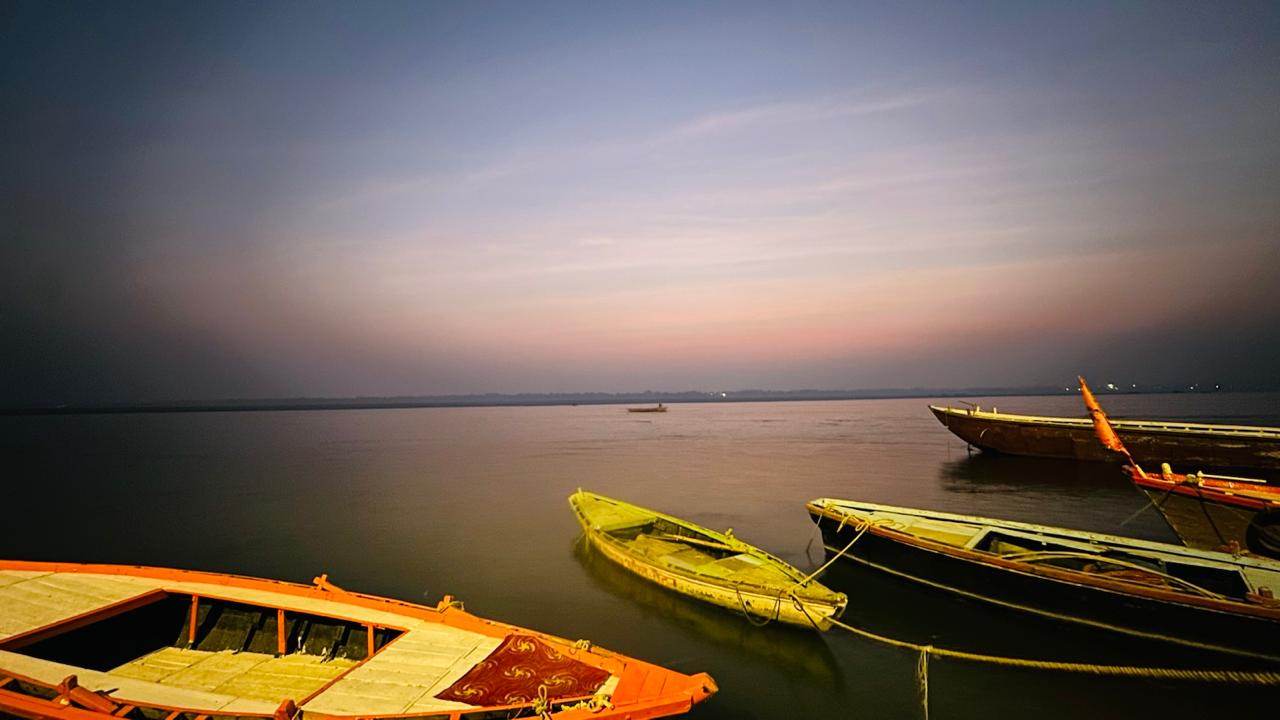
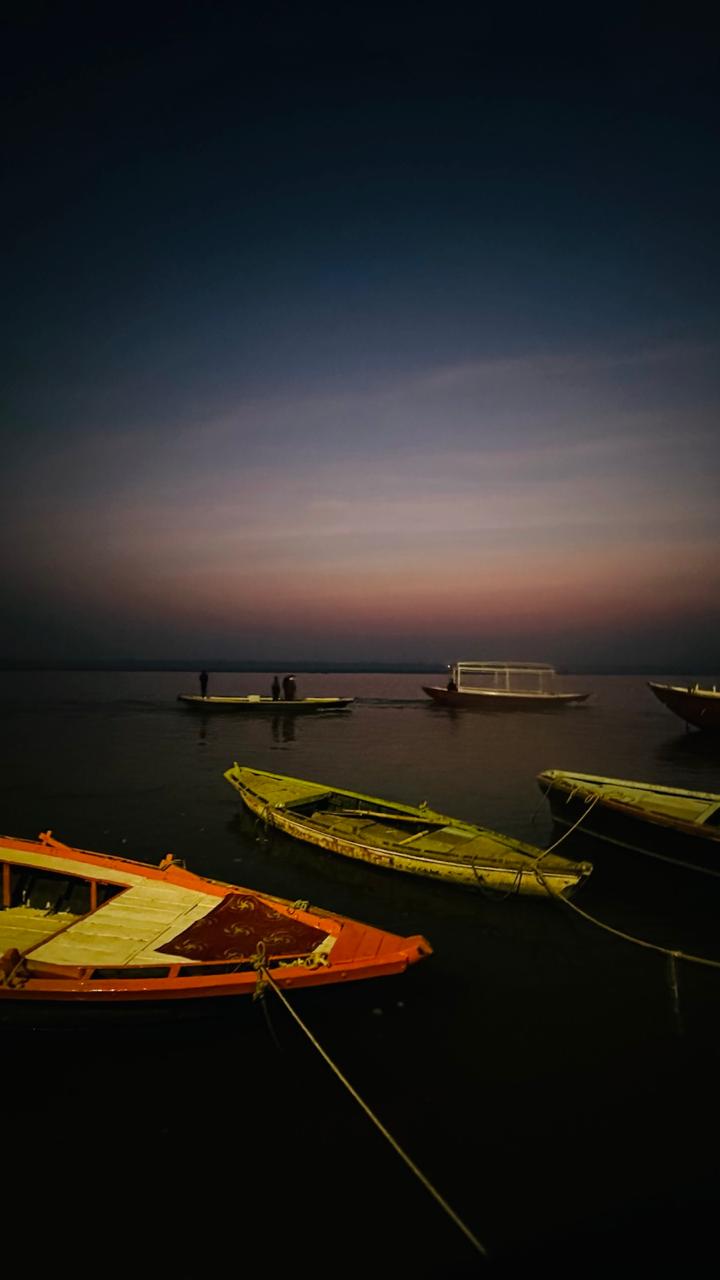
If you are in Varanasi anytime between late October and late November, you will notice something striking along the northern riverfront at sunset. Long, slender bamboo poles rise from the stone ramparts of Panchganga Ghat, holding woven cane baskets high in the air. Inside each basket burns an earthen oil lamp, flickering gently against the twilight.
Locals call this Akashdeep (Aakash Deep—literally "sky lamp").
Most tourists only hear about Dev Deepawali, when 84 ghats light up for a single, chaotic evening. What few realize is that Dev Deepawali actually started right here at Panchganga Ghat in 1985, revived from this ancient month-long ritual.
In 2026, the Akashdeep season opens on Sunday, 25 October (Sharad Purnima) and runs every single evening until Tuesday, 24 November (Kartik Purnima / Dev Deepawali).
For 29 of those 30 days, Panchganga Ghat is remarkably peaceful. There are no barricades, no surging crowds of a million people, and no ear-splitting loudspeakers. It is one of the most serene, genuinely spiritual sights anywhere along the Ganges.
Here is what you need to know to plan a visit: how the tradition works, why the steep steps matter if you are travelling with parents, how to arrange a boat or morning cab, and where your vehicle can realistically drop you.
How the Sky Lanterns Work
The ritual happens every evening right around sundown, between 05:15 PM and 05:45 PM.
Local priest families and temple volunteers gather on the upper stone terraces of Panchganga Ghat. They take round clay diyas, fill them with mustard or sesame oil, light thick cotton wicks, and place each diya inside a small, woven bamboo basket (dolchi or tori). The baskets have open lattice-work so air feeds the flame while the wind cannot easily blow it out.
Each basket is attached to a cotton rope-and-pulley system fixed to a 30-foot bamboo pole. As the priests pull the ropes, the glowing baskets climb high into the air, swaying gently over the river. They stay lit for three to four hours into the night.
The ritual carries two deep meanings in Banaras:
Guiding Departed Ancestors (Pitra Deep Daan): In Hindu tradition, ancestral souls visit earth during Pitru Paksha. Throughout the holy month of Kartik, families hoist these sky lanterns to light their ancestors' path back to the heavens across the mythical river Vaitarni, praying for peace and relief from Pitra Dosh.
Honoring Fallen Soldiers: Downriver at Dashashwamedh and Rajendra Prasad Ghats, the Ganga Seva Nidhi conducts a parallel ceremony. Ever since the 1999 Kargil War, they dedicate Akashdeeps every night of Kartik to the martyrs of the Indian Army, Navy, Air Force, and paramilitary units, starting on Sharad Purnima with military buglers and a ceremonial guard of honor.
On the final night of the month—Kartik Purnima (24 November 2026)—the celebration culminates when priests light all 1,001 oil lamps carved into Maharani Ahilyabai Holkar’s 1780 CE Hazara Deepstambh, the massive stone pillar standing right on the ghat.
2026 Dates & Daily Schedule
The lamps are hoisted every evening for all 30 days of Kartik. You do not need to wait for Dev Deepawali night to witness it.
Date / Phase
Daily Timing
What Happens
Practical Advice
Sunday, 25 October 2026 (Sharad Purnima)
05:15 PM – 06:00 PM
Inaugural Akashdeep ceremony; first lanterns hoisted at Panchganga and Dashashwamedh
Reach by 04:45 PM by boat or foot to see the first lamps go up.
Daily Evenings (26 Oct – 23 Nov 2026)
05:15 PM – 05:45 PM
Daily lighting and hoisting; lamps glow until around 09:30 PM
The best window to visit. Calm, authentic, and free of tourist rushes.
Daily Dawns (26 Oct – 24 Nov 2026)
04:30 AM – 06:00 AM
Pre-dawn Kartik Snan at the 5-river sangam; Bindu Madhav temple darshan
Mornings are chilly (12°C–16°C in Nov). Bring warm shawls and dry clothes.
Tuesday, 24 November 2026 (Dev Deepawali)
05:00 PM – 10:00 PM
Climax night: 1,001 lamps lit on the Hazara Deepstambh; all 84 ghats illuminated
Extreme crowd surge (1.5M people). Roads shut; boats must be booked weeks ahead.
Editor's Note: If you want peace, come between 25 October and 23 November. You will see the exact same bamboo lanterns and the authentic evening rituals without the chaos, barricades, or 5x hotel surges of Dev Deepawali night. On the night of 23 November, the dusk sky lanterns directly lead into Baikuntha Chaturdashi and Hari-Har Milan at Shri Kashi Vishwanath.
Why Panchganga Ghat is Sacred
Panchganga is considered one of Kashi’s five supreme pilgrimage ghats (Pancha-Tirtha), alongside Assi, Dashashwamedh, Manikarnika, and Adi Keshav.
Ancient texts like the Kashi Khanda record that five sacred streams meet underground at this spot: the Ganga, Yamuna, Saraswati, Kirana, and Dhutapapa. A bath here at dawn during Kartik is believed to carry the spiritual merit of bathing in all the holy rivers of India combined.
A few notable landmarks you will see on the ghat:
Shri Bindu Madhav Temple: Dedicated to Lord Vishnu. The original temple was a grand multi-tiered landmark destroyed in 1673; the deity was re-consecrated by the Marathas in a nearby shrine just above the ghat steps. It opens early around 05:00 AM during Kartik.
Hazara Deepstambh: A tall, free-standing sandstone tower built in 1780 by Maharani Ahilyabai Holkar of Indore, studded with 1,001 stone brackets for oil lamps.
Alamgir Mosque (Madho Rao ki Dharahara): Built on the high terrace above the ghat, its tall silhouette forms the dramatic backdrop behind the bamboo lanterns at dusk.
Historic Footsteps: Sant Kabir received his initiation mantra (Ram-Ram) on these very steps from Swami Ramanand; Goswami Tulsidas lived and wrote verses nearby; and Srimad Vallabhacharya established his Baithakji right here.
The 120-Step Staircase: An Honest Reality Check
Before you decide to walk to Panchganga Ghat, you need to understand the terrain.
Panchganga has one of the steepest, longest staircases along the entire Varanasi riverfront. Getting from the alleyways down to the water means walking down over 100 to 120 narrow, uneven sandstone steps.
What this means for your family:
Older Parents & Seniors: Walking down 120 stone steps is hard on the knees. Climbing back up after a bath or an evening walk is exhausting, especially for anyone with arthritis, asthma, or heart conditions. In the morning, wet steps can also be slick.
Wheelchairs and Strollers: Impossible. The lanes have zero ramps, no handrails, and the steps are steep.
The Practical Solution:Take a boat. If you hire a private wooden boat from Dashashwamedh Ghat or Namo Ghat, the boatman drops you directly onto the bottom step at the water's edge. You step out, take your bath or watch the lanterns, and step back onto the boat without ever having to hike up or down the cliff of stairs.
🪔 Akashdeep 2026: Book Dusk Boat Viewing & Dawn Kartik Snan Cabs
Visiting Varanasi during the holy month of Kartik (25 October – 24 November 2026)? Avoid the grueling 120-step staircase climb by booking a dusk riverfront boat to view the glowing Akashdeep lanterns, or arrange a 04:00 AM hotel pickup cab for pre-dawn Kartik snan with drop at Maidagin / Machhodari.
⛵ Dusk Boat View of Sky Lanterns·🪔 04:00 AM Pre-Dawn Snan Pickups·🚗 Outer Drops at Maidagin & Machhodari·💰 100% Fixed Rates, Zero Surge
Getting to Panchganga Ghat: Drop Points & Walking Routes
No car, auto-rickshaw, or e-rickshaw can drive directly to Panchganga Ghat. The old city lanes are completely pedestrianized. Taxis must drop you on the outer perimeter roads:
1. Maidagin Multi-Level Parking / Town Hall (Main Walking Approach)
Walking Distance: About 1.2 km (20 to 25 minutes)
The Route: From Maidagin Crossing, walk into Chaukhamba Gali, pass Thatheri Bazar and Mangala Gauri Gali, then follow the stone staircases down to Panchganga.
Best For: Young, active travellers who want to experience the morning bazaar, grab hot kachoris, or browse brassware shops.
2. Machhodari Park / Pili Kothi (Northern Approach)
Walking Distance: About 900 meters to 1 km (15 to 18 minutes)
The Route: From Machhodari Park, walk south through Telianala toward Trilochan and Ram Ghat.
Best For: Travellers arriving from Varanasi Cantt Railway Station or the Ring Road who want a slightly shorter walk than Maidagin.
3. The River Route by Boat (Best for Seniors & Families)
Boarding Points: Dashashwamedh Ghat (central) or Namo Ghat (north).
River Travel Time: 15 to 20 minutes.
Best For: Anyone travelling with older family members, kids, or luggage. You bypass the congested alleyways and step right onto the ghat from the river.
Planning a Dawn Snan Trip (04:30 AM – 07:00 AM)
If you wish to take the traditional Kartik morning bath at the 5-river sangam, here is the smoothest timeline:
04:00 AM: Your pre-booked cab picks you up from your hotel in Cantt, Sigra, or Lanka and drops you at Maidagin or Namo Ghat.
04:45 AM: Reach the riverbank by boat or by walking down the Chaukhamba steps.
05:00 AM – 05:30 AM: Take your holy dip (Sankalp Snan) before sunrise. In November, morning air sits around 12°C–15°C; the water feels refreshing once you step in.
05:30 AM: Dry off and change immediately. Local priests (pandas) maintain wooden platforms (chowkis) where you can safely keep your dry clothes for a modest ₹20–₹50 dakshina. Always carry a waterproof plastic pouch for your wet clothes.
05:45 AM: Walk up the lower steps to Shri Bindu Madhav Temple for morning Mangala darshan.
06:30 AM: Head into Chaukhamba for a classic Banarasi breakfast:
Ram Bhandar (Thatheri Bazar): Famous for hot puris with spiced potato sabzi and fresh jalebis, served on leaf platters starting at 07:00 AM.
Winter Malaiyo: Starting in mid-November, roadside halwais whip up bowls of saffron-flavored, dew-chilled milk foam topped with pistachios.
🪔 Kartik Purnima & Dev Deepawali Snan Transfer
Pre-book your 04:00 AM pre-dawn Ganga snan cab & boat ride before festival roadblocks and crowd surges begin. Doorstep hotel pickup with designated ghat-side drop.
Pre-dawn 04:00 AM round-trip snan cab
Sunrise boat ride booking from ₹490 per seat
Vetted local drivers navigating crowd bypass routes
🪔 04:00 AM Dawn Pickups·🛶 Boat Seats from ₹490·🛡️ Local Driver Knowledge·🚫 Zero Surge Pricing
Planning a Dusk Boat Trip (05:00 PM – 06:30 PM)
Seeing the Akashdeep lanterns from the river at twilight is one of the quietest highlights of Banaras.
When to Board: Board your boat between 04:45 PM and 05:00 PM (November sunsets occur between 05:15 PM and 05:25 PM).
Where to Start: Dashashwamedh Ghat or Rajendra Prasad Ghat.
The Experience: Your boatman rows slowly north past Man Mandir, Manikarnika, and Scindia Ghat. Right around 05:15 PM, as your boat pulls up opposite Panchganga Ghat, the priests begin hoisting the lamps. Watching thirty glowing lanterns slowly rise above the ancient sandstone terraces while the minarets of Alamgir Mosque fade into the purple evening sky is unforgettable.
The Bonus: On the row back, you will arrive at Dashashwamedh Ghat just in time to watch the 06:30 PM grand Ganga Aarti directly from the water.
🛶 Watch Dashashwamedh Ganga Aarti From the River
Avoid crowded ghat steps and touts. Watch the sacred evening ceremony from the calm water: single seats from ₹490/seat · Private family boats from ₹1,800.
₹490 single seat — live Ganga Aarti & ghats tour from the water
Private rowboat (1–6 pax) ₹1,800 · Motorboat charter ₹3,500
Experienced local boatman · certified life jackets for all passengers
📌 Pricing Clarity: A standard night buffer of ₹150 applies for pickups before 05:00 AM or after 09:00 PM. Private wooden rowboat rates on regular Kartik evenings typically run between ₹800 and ₹1,500 depending on boat capacity; on peak Dev Deepawali night (24 Nov), riverfront boat rates surge heavily across the city and are quoted separately on WhatsApp based on actual boatman availability.
🚕 Do all the ghats & temples in one calm day
A fixed-fare full-day Varanasi city tour cab with a local driver who knows the one-way lanes, parking, and darshan timings — so you cover Kashi Vishwanath, the ghats, Sarnath and more without haggling at every stop.
✅ Fixed fare, driver waits·🕉️ Temples + ghats + Sarnath·❄️ AC · tolls · parking included·🛡️ Verified local driver
Practical Etiquette & Tips
Belongings During Bathing: Do not leave phones, wallets, or shoes unattended on open steps. Pay ₹20–₹50 to leave your bag on a priest’s wooden chowki while you take your dip.
Photography: You are completely welcome to photograph the floating bamboo lanterns from your boat or the upper terraces. Please be respectful and never point your camera at people bathing or changing clothes along the water's edge.
Sponsoring an Akashdeep: If you wish to sponsor a lamp in your family’s or ancestors’ name for a night or the remaining month, speak directly to the priests at Bindu Madhav Temple or the local ghat samiti. The cost is modest and goes toward pure mustard oil, earthen pots, and fresh ropes.
Frequently Asked Questions
When does Akashdeep start and finish in 2026?
The ritual runs for 30 consecutive days, starting on Sunday, 25 October 2026 (Sharad Purnima) and concluding on Tuesday, 24 November 2026 (Kartik Purnima / Dev Deepawali).
Can I experience Akashdeep without getting stuck in Dev Deepawali crowds?
Yes, absolutely. The lamps are lit every single night of Kartik. Visiting between 25 October and 23 November gives you the exact same glowing lanterns and evening rituals in a quiet, intimate setting without road closures or packed crowds.
How do I get from Varanasi Airport to Panchganga Ghat?
Book a pre-paid cab from Varanasi Airport (VNS) to Maidagin Multi-Level Parking (25 km via Ring Road, ₹899 for a sedan). From Maidagin, you can walk 1.2 km through Chaukhamba lane, or take an e-rickshaw to Namo Ghat and take a 15-minute boat to Panchganga.
What is the Hazara Deepstambh?
It is a historic 18th-century stone pillar built at Panchganga Ghat in 1780 by Maharani Ahilyabai Holkar. It has 1,001 carved brackets to hold oil lamps, all of which are lit on the final night of Kartik Purnima.